l
o
a
d
i
n
g
.
.
.
LOADING...

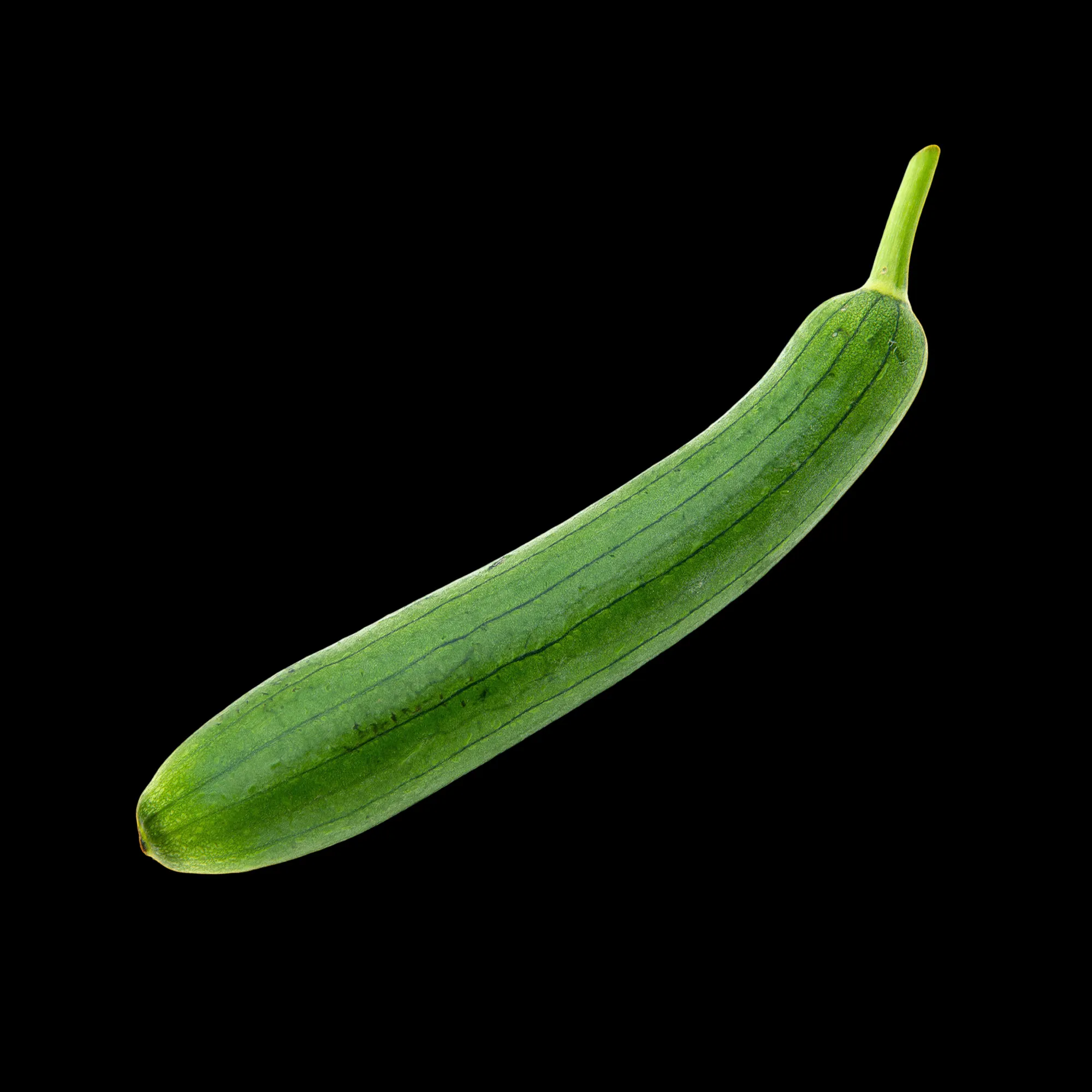
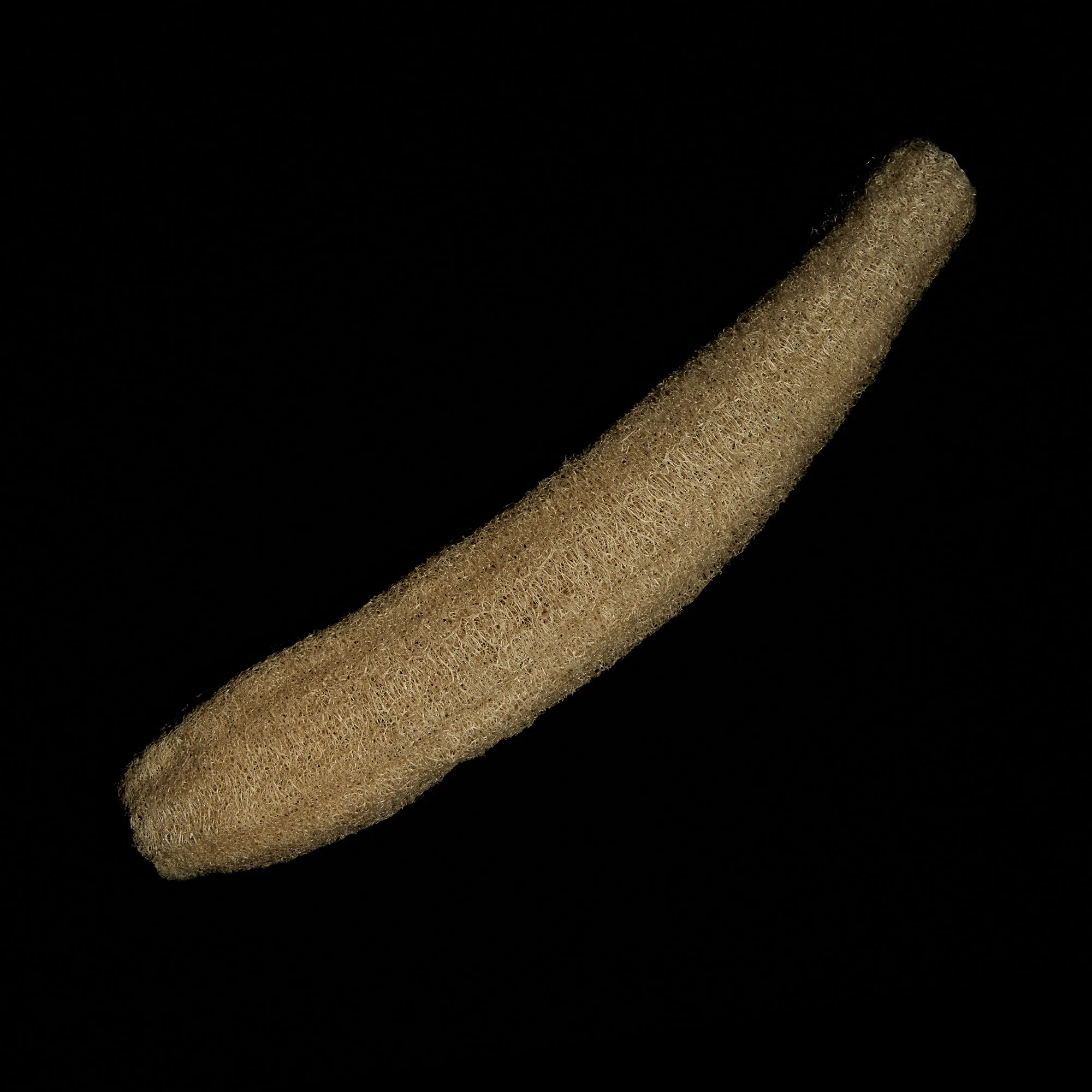
the loofah plant

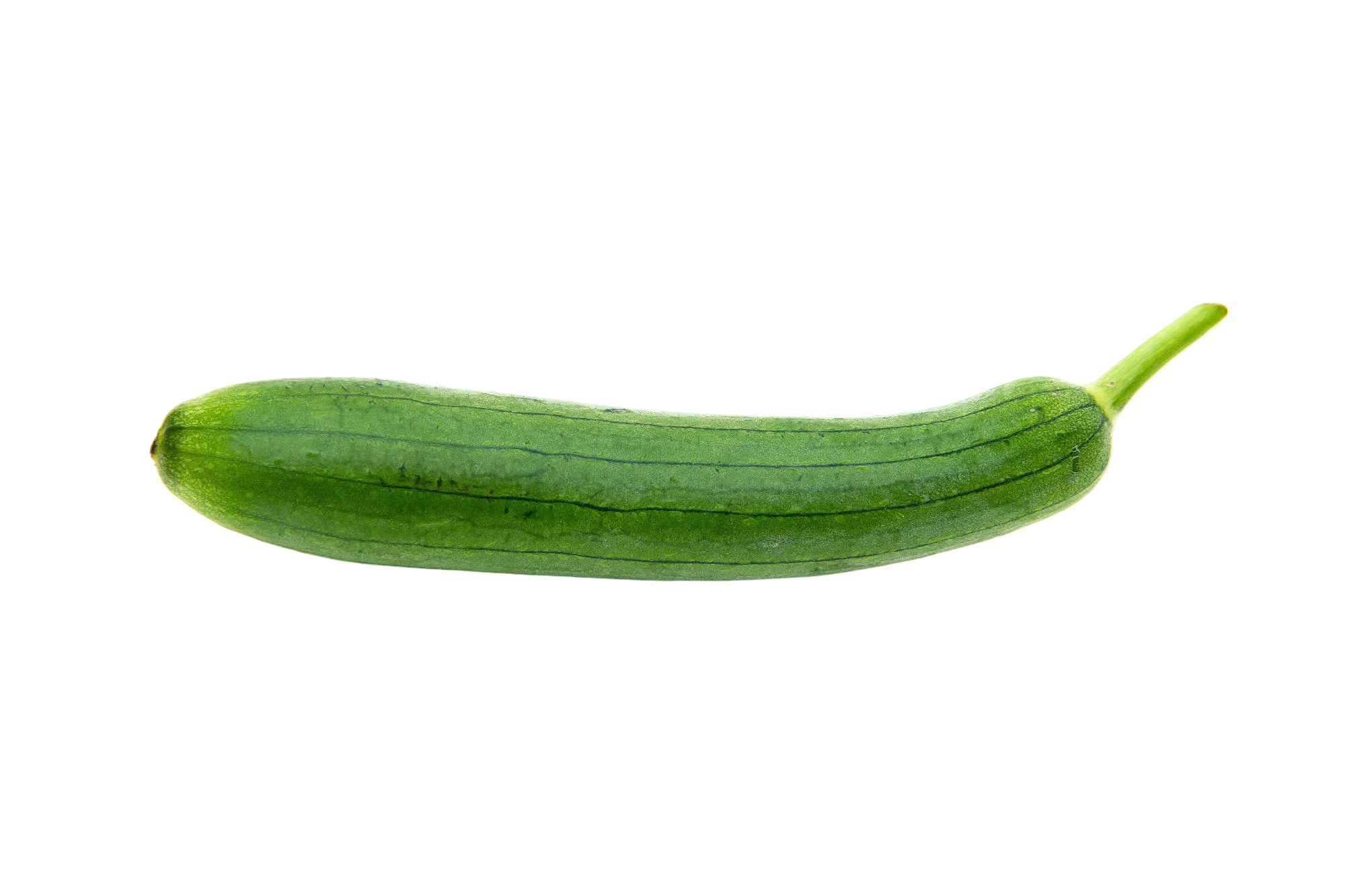
ripe state

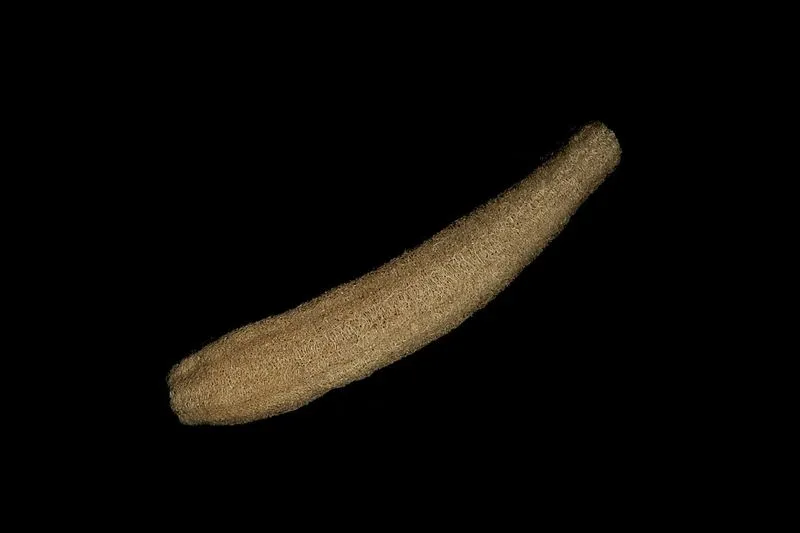
dry state

loofah, (genus Luffa), genus of seven species of annual climbing vines of the gourd family (Cucurbitaceae), native to the Old World tropics. Two species (Luffa acutangula and L. aegyptiaca) are commonly cultivated for their fruits, which are edible when young and have a fibrous sponge-like interior. Loofah vines are large aggressive climbers with coiling tendrils and unisexual yellow flowers. The plants are cold-sensitive and require a long growing season for the fruits to mature.
They are about 30 cm long and feature closely netted vascular bundles throughout, the complex of which resembles a sponge in texture when the skin, pulp, and seeds are removed. The oblong fruits are greenish when young and become straw-coloured with a brittle rind when mature.

the loofah

Def.: Encyclopedia Britannica
Loofah, (genus Luffa), genus of seven species of annual climbing vines of the gourd family (Cucurbitaceae), native to the Old World tropics.

Two species (Luffa acutangula and L. aegyptiaca) are commonly cultivated for their fruits, which are edible when young and have a fibrous sponge-like interior.

The plants are cold-sensitive and require a long growing season for the fruits to mature.

Loofah vines are large aggressive climbers with coiling tendrils and unisexual yellow flowers.
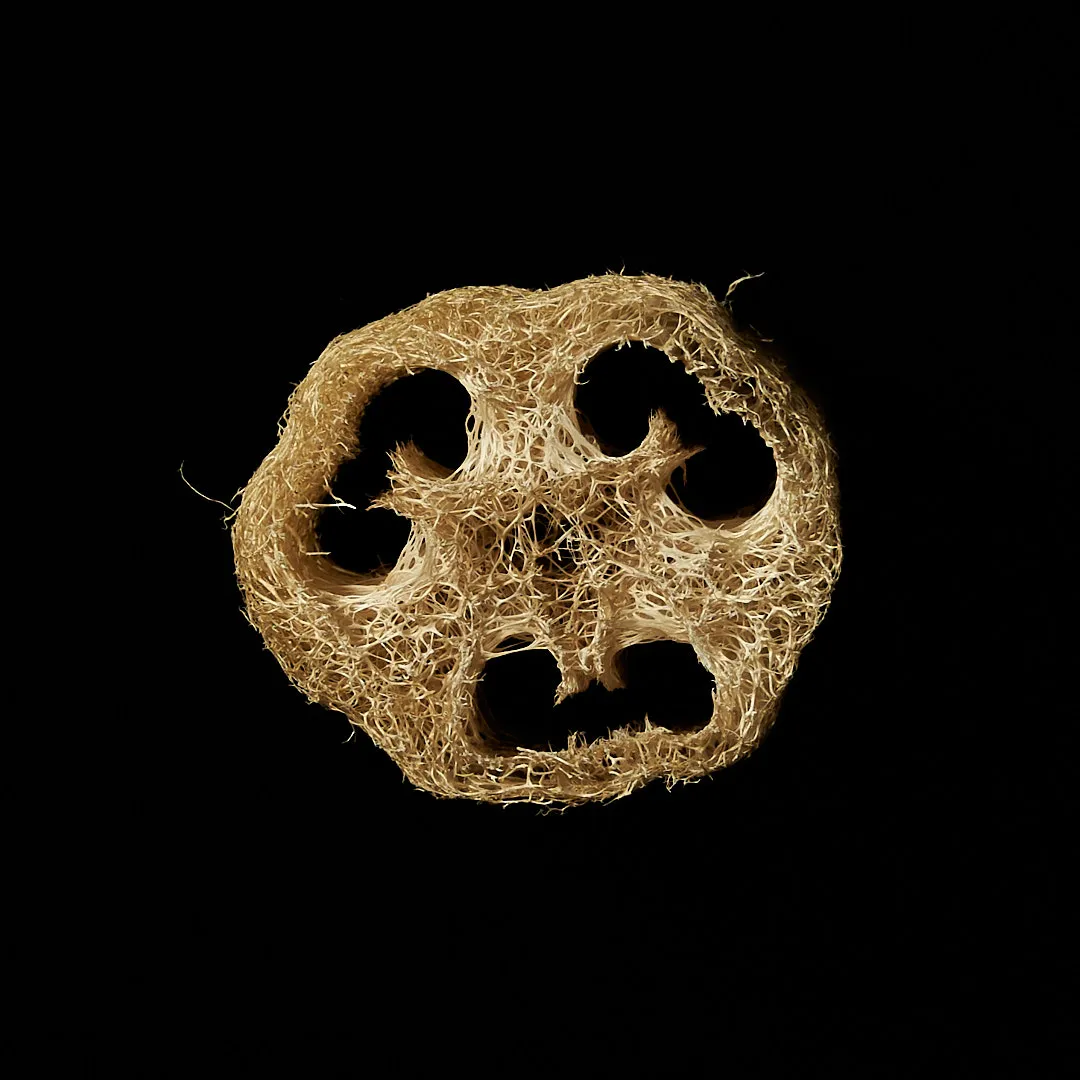
They are about 30 cm long and feature closely netted vascular bundles throughout, the complex of which resembles a sponge in texture when the skin, pulp, and seeds are removed.

The oblong fruits are greenish when young and become straw-coloured with a brittle rind when mature.
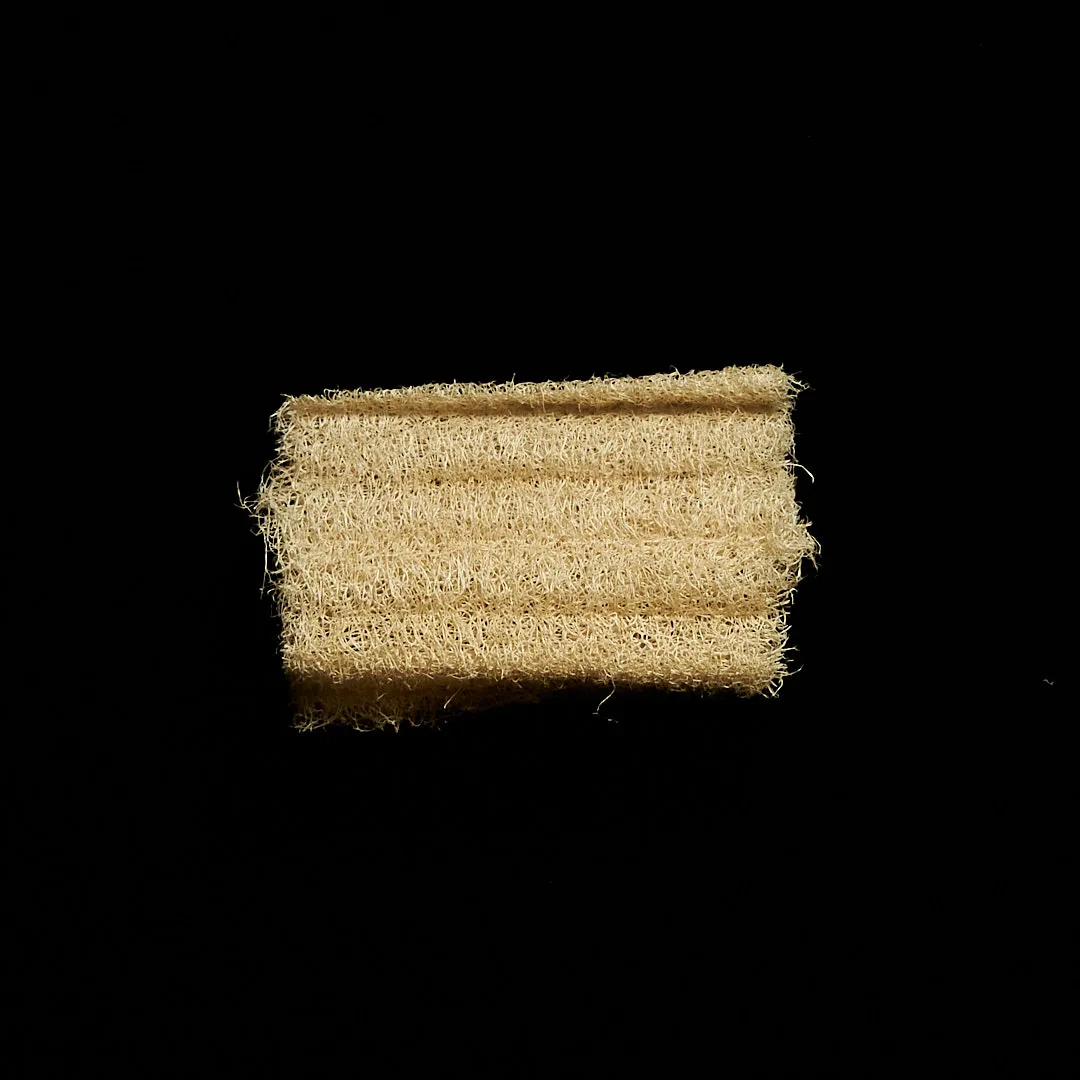
loofah sponge in its dry stateloofah plant in its ripe state
×
×
all
0
About the archive
bonding
0
Bonding category description
dyeing
0
Dyeing category description
objects
0
Objects category description
pressing
0
Pressing category description
sewing
0
Sewing category description
all
pressing
1
Heat-press
all
sewing
objects
2
Mop
all
dyeing
3
Paprika dye
all
dyeing
4
Turmeric dye
all
dyeing
5
Red cabbage tie-dye
all
dyeing
6
Red onion dye
all
dyeing
7
Parsley dye
all
dyeing
8
Pomegranate skin dye
all
sewing
objects
9
Parasol
all
sewing
objects
10
Pillow
all
pressing
11
Compressed core
all
pressing
12
Hydraulic pressing
all
bonding
13
Building blocks
all
bonding
14
Rigid & soft fold
all
pressing
15
Molding
all
uncategorized
16
Stamp
all
pressing
17
Embossing
all
dyeing
18
Gradient dye
all
bonding
19
Inner core velcro
all
sewing
objects
20
Hat
all
pressing
21
Heat pressed, burnt
all
dyeing
22
Pomegranate seed dye
all
dyeing
23
Pomegranate tie-dye
all
bonding
24
3D printed, fusing
all
objects
25
Pin cushion
all
dyeing
26
Iron oxide dye
all
dyeing
27
Avocado dye
all
dyeing
28
Rosemary dye
all
sewing
objects
29
Colander
all
uncategorized
30
Thin slice
all
dyeing
31
lavender dye
all
sewing
objects
32
Slippers
all
bonding
33
Rolled up ball
all
sewing
objects
34
Curtain
all
uncategorized
35
Hardened
all
uncategorized
36
Bronze spray paint
all
objects
37
Ear trumpet
all
objects
38
Ear protection
all
bonding
objects
39
Box
all
uncategorized
40
Tube
all
objects
41
Drip tray
all
objects
42
Bird nest
all
uncategorized
43
Crumble ball
all
uncategorized
44
Transparent lacquer
all
uncategorized
45
knot
all
uncategorized
46
Turning
all
objects
sewing
47
Glasses
all
bonding
48
Bounding
all
sewing
objects
49
Broom
all
objects
50
Protection
all
uncategorized
51
Acrylic sheet
all
uncategorized
52
Stainless steel sheet
all
uncategorized
53
Copper sheet
all
uncategorized
54
Wooden sheet
all
uncategorized
55
Aluminium sheet
About the archive

About the archive

The Loofah Lab Archive is a growing collection of material experiments exploring the structural, sensory, and functional properties of loofah. Each entry documents a single experiment, capturing the objective, materials, tools, methodology, and observations.
Together, the experiments serve as a material exploration and intended as a working reference and an invitation to see this everyday plant fiber as a versatile, sustainable medium.

Objects category description

Objects

Functional prototypes that use loofah as a primary material, exploring its suitability for everyday household and practical applications through direct use and observation.

Bonding category description

Bonding

Investigating how loofah pieces can be joined, held together.

Dyeing category description

Dyeing

Exploring loofah as a substrate for natural dyes, using mordants, dye baths, and immersion techniques with plant-based colorants to investigate how loofah absorbs and holds color.

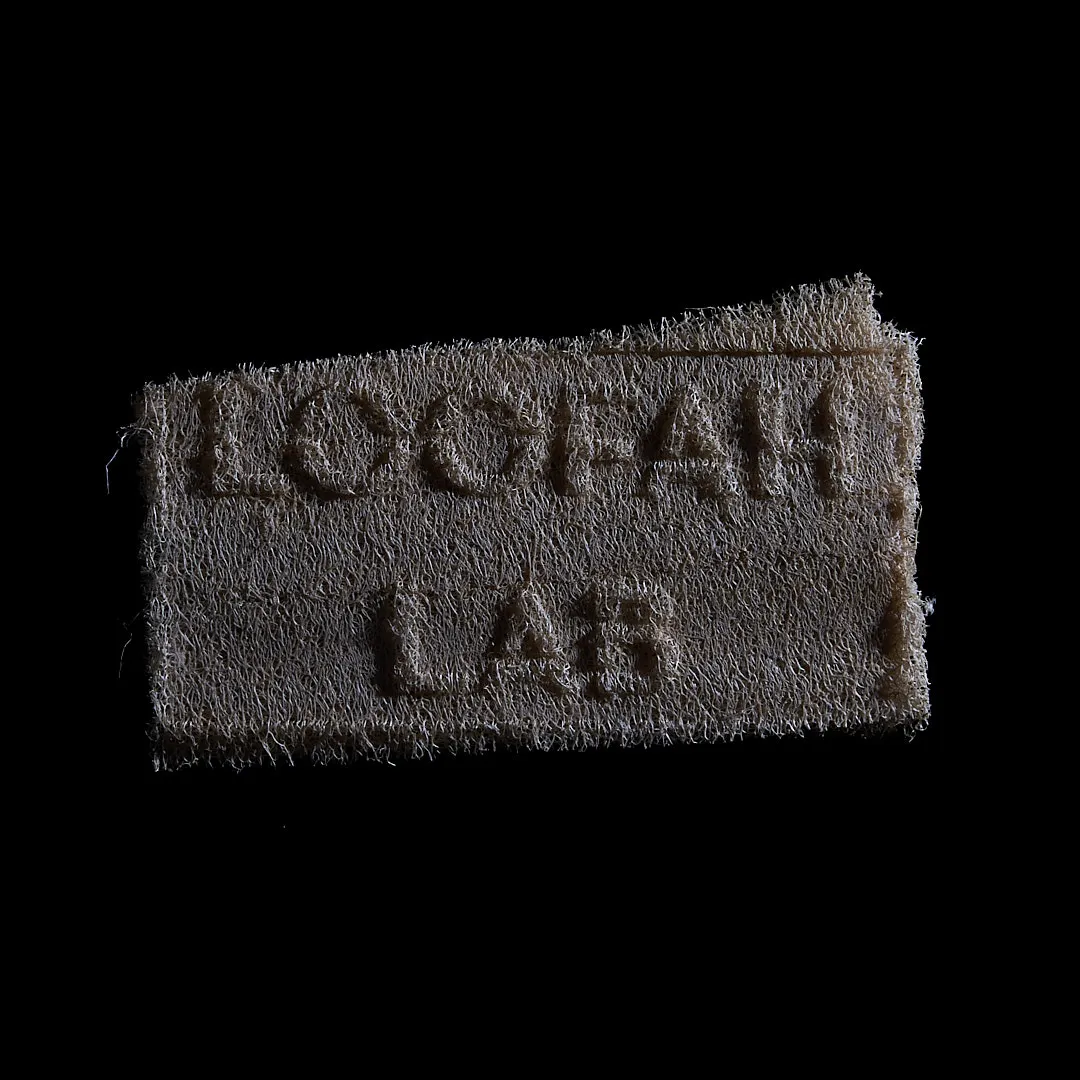
Pin cushion
3D printed, fusing
Pin cushion

Objective

  • To explore the suitability of loofah material for safely storing needles and pins.
  • To evaluate its functional performance as a pin cushion, specifically regarding needle insertion, stability, and ease of use.

Materials

  • Cylindrical loofah (a piece cut lengthwise)

Tools

  • Utility knife

Methodology

A piece of cylindrical loofah was cut in half lengthwise using a utility knife.
The experiment originated from the spontaneous act of sticking a needle into a piece of loofah during another sewing activity to prevent losing it.
This spontaneous use led to further observation and evaluation of the loofah's performance for needle and pin storage.

Observations & Results

The loofah effectively and safely held needles and pins, providing a convenient storage solution during sewing.
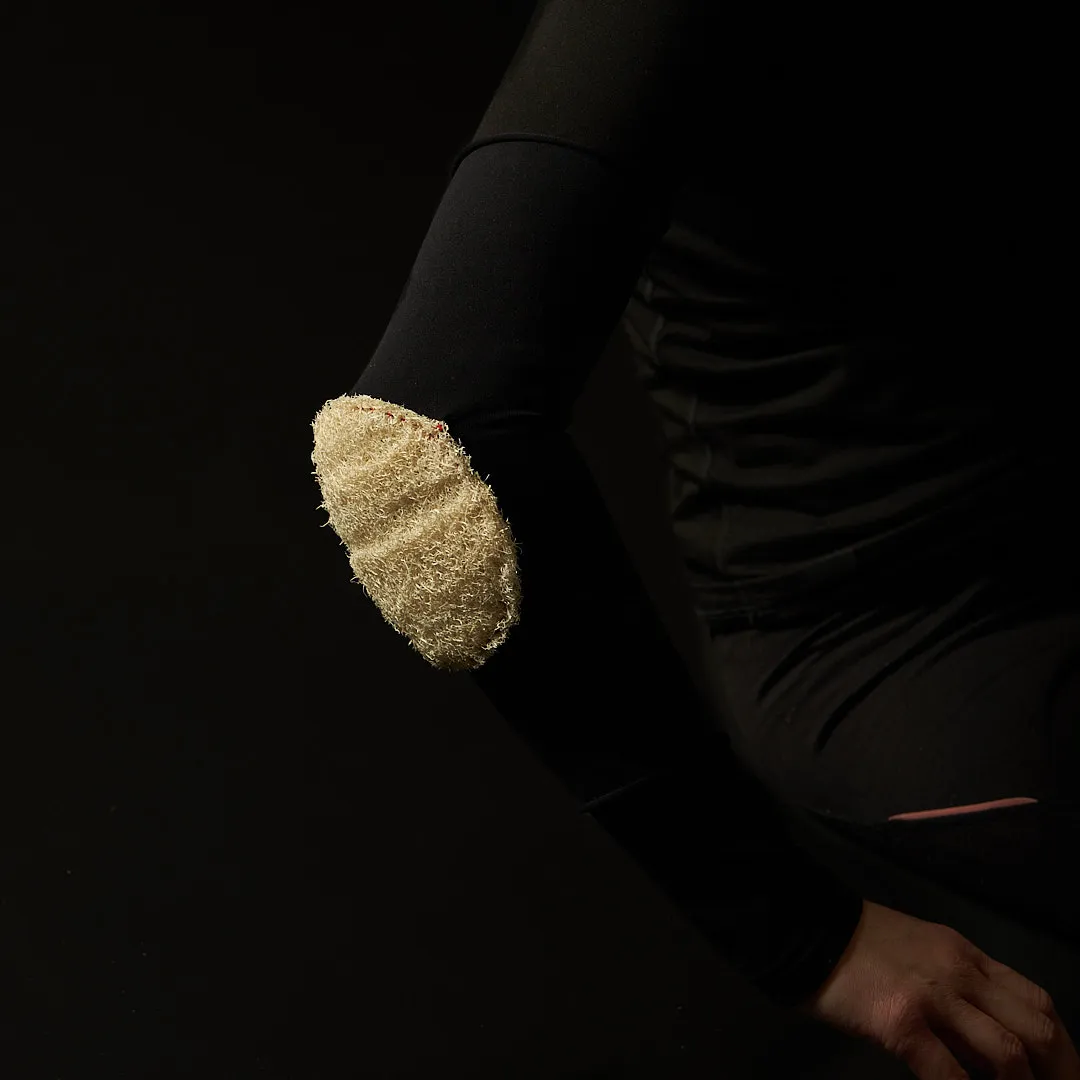
When cut lengthwise, one side of the loofah remained flat, allowing it to rest stably on a surface, while the top retained its natural curved shape.
The natural holes and fibrous structure within the loofah were particularly effective at holding needles upright and securely.

3D printed, fusing
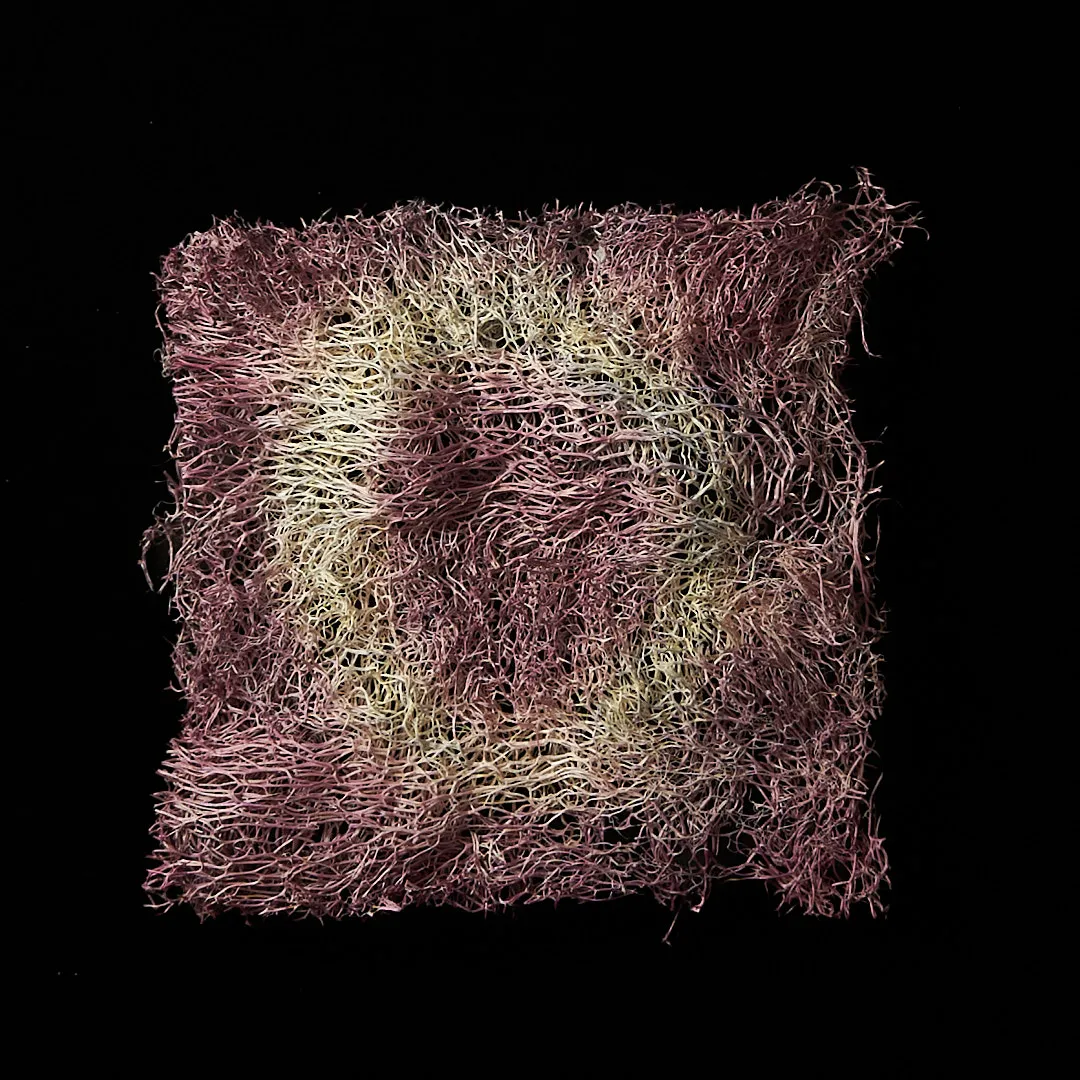
Pomegranate tie-dye
3D printed, fusing

Objective

  • To investigate methods for enabling loofah to maintain a given shape.
  • To explore how loofah can be hardened and utilized as a rigid building element.
  • To assess the compatibility and combination of loofah with biodegradable PHA filament for creating composite materials.

Materials

  • PHA filament (0.5 mm sheet)
  • Flattened loofah sheet

Tools

  • FDM 3D printer
  • Heat press
  • Baking paper

Methodology

A 0.5 mm sheet was 3D printed using PHA filament.
The printed PHA sheet was carefully placed on top of a flattened loofah sheet.
The combined sheets were then sandwiched between two pieces of baking paper to protect the surfaces of the heat press.
This layered assembly was placed into a heat press and subjected to compression at 200℃ for 30 seconds to facilitate fusion.
(Note: Prior attempts to 3D print directly onto loofah sheets were unsuccessful due to insufficient adhesion of the extruded filament and the difficulty of printing on the uneven fibrous structure of the loofah.)

Observations & Results

During the heat pressing process, the 3D printed PHA filament melted and partially flowed into the fibrous structure of the loofah.
The fused PHA filament successfully imparted significant rigidity to the loofah sheet.
The initial attempts to 3D print directly onto loofah were not successful because the extruded filament did not adequately stick to the loofah, and the unevenness of the loofah's fibrous surface made precise printing challenging.

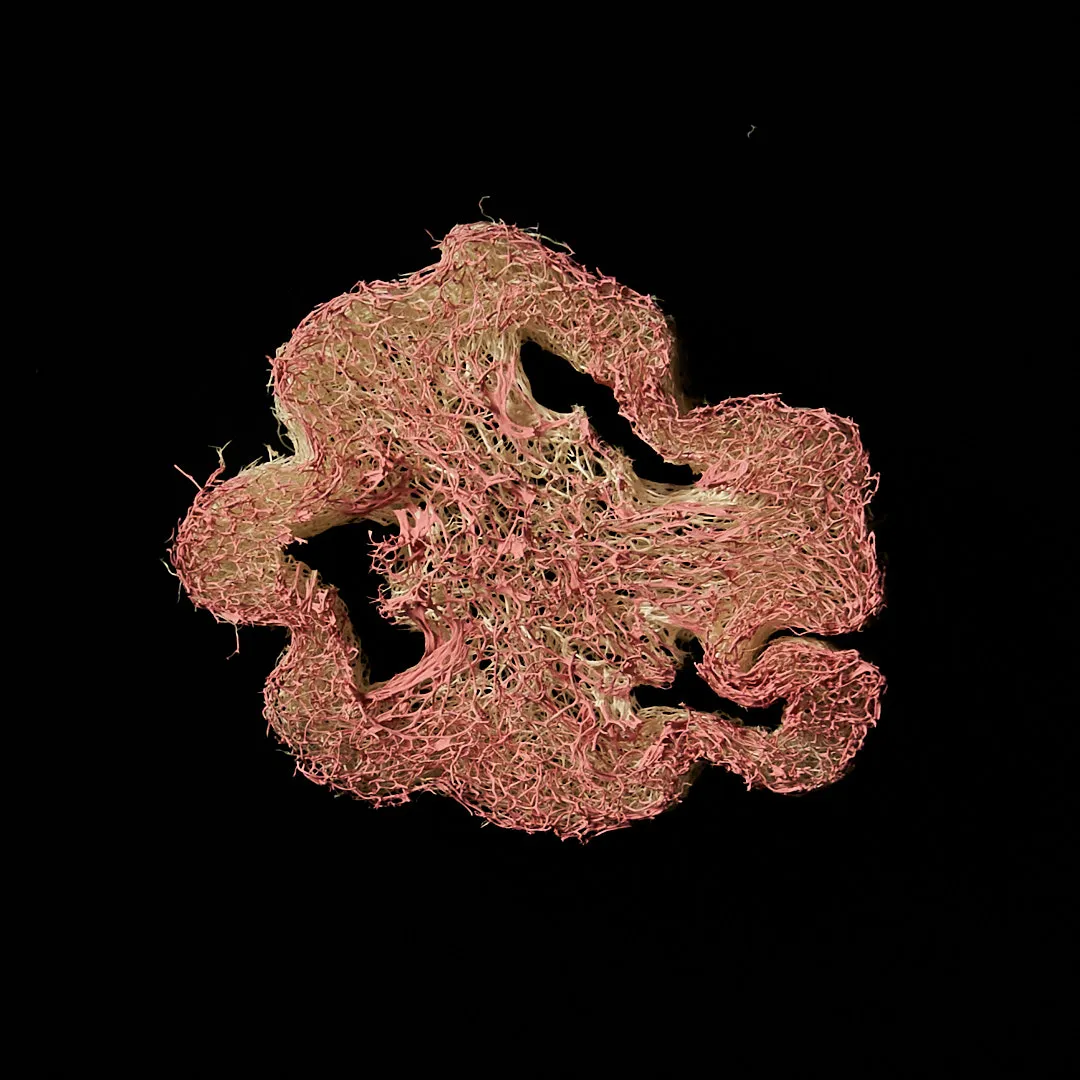
Pomegranate tie-dye

Objective

  • To investigate the effectiveness of fresh, mature pomegranate fruit seeds as a natural dye for loofah material when combined with a tie-dye technique.
  • To observe the resulting color hue and the pattern created by the resisted areas on the loofah.

Materials

  • Fresh, mature pomegranate fruit seeds (as colorant)
  • Loofah
  • Mordant solution
  • Thread (for tie-dyeing)
  • Clean water

Tools

  • Plastic bowl
  • Stainless steel pan
  • Gloves
  • Goggles
  • Mask
  • Wooden stirring spatula

(Note: Precautions are important when dyeing, similar to working with fabrics.)

Methodology

This standardized method was applied for all dyed loofah pieces, with an additional step for tie-dyeing:
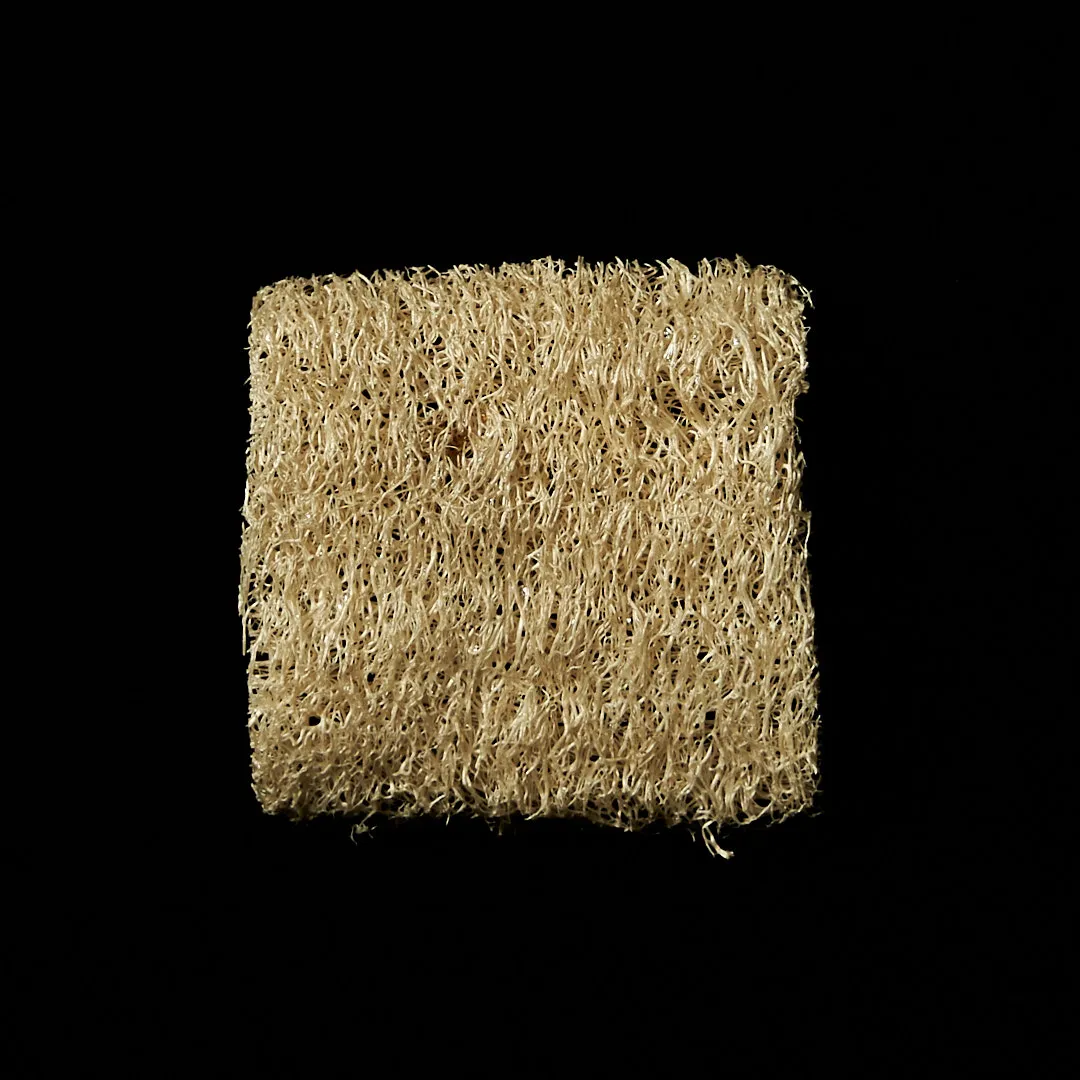
Loofah material was cut into 10x10 cm squares.
The loofah squares were soaked in a mordant solution for a period of 24 hours.
After mordanting, the loofah pieces were thoroughly washed with clean water.
Additional to usual dye bath: Thread was tightly wrapped around specific parts of the loofah piece to create resist areas for the tie-dye effect.
A dye bath was prepared using the fresh pomegranate fruit seeds. The prepared loofah pieces (with tied sections) were then introduced into this bath and cooked on low heat with the colorant for 1 hour.
The loofah was allowed to cool down in the dye bath and remained immersed for an additional 24 hours to maximize color absorption.
Finally, the dyed loofah piece was washed extensively with clean water to remove any unfixed dye, and the threads were removed.

Observations & Results

The loofah acquired a deep mauve color, consistent with previous observations of pomegranate seed dye.
The parts of the loofah where the material was tied with thread remained uncolored or significantly lighter, successfully creating a resist pattern.

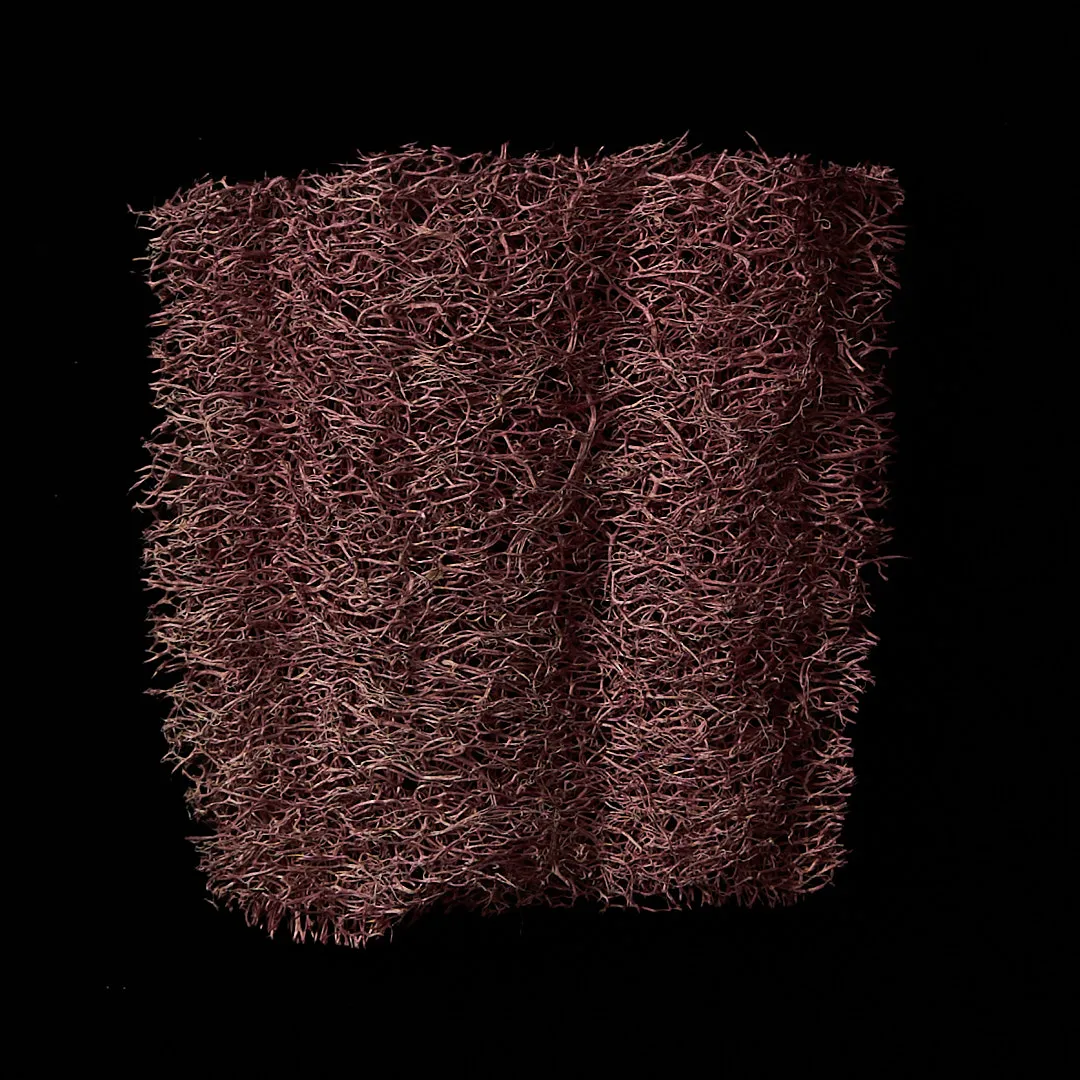
Pomegranate seed dye

Objective

  • To investigate the effectiveness of fresh, mature pomegranate fruit seeds as a natural dye for loofah material.
  • To observe the resulting color hue, vibrancy, and saturation imparted to loofah using a standardized mordant and dye bath process.

Materials

  • Fresh, mature pomegranate fruit seeds (as colorant)
  • Loofah
  • Mordant solution
  • Clean water

Tools

  • Plastic bowl
  • Stainless steel pan
  • Gloves
  • Goggles
  • Mask
  • Wooden stirring spatula

(Note: Precautions are important when dyeing, similar to working with fabrics.)

Methodology

This standardized method was applied for all dyed loofah pieces:
Loofah material was cut into 10x10 cm squares.
The loofah squares were soaked in a mordant solution for a period of 24 hours.
After mordanting, the loofah pieces were thoroughly washed with clean water.
A dye bath was prepared using the fresh pomegranate fruit seeds. The loofah pieces were then introduced into this bath and cooked on low heat with the colorant for 1 hour.
The loofah was allowed to cool down in the dye bath and remained immersed for an additional 24 hours to maximize color absorption.
Finally, the dyed loofah pieces were washed extensively with clean water to remove any unfixed dye.

Observations & Results

The dyeing process with pomegranate fruit seeds resulted in a deep mauve color on the loofah.

Heat pressed, burnt
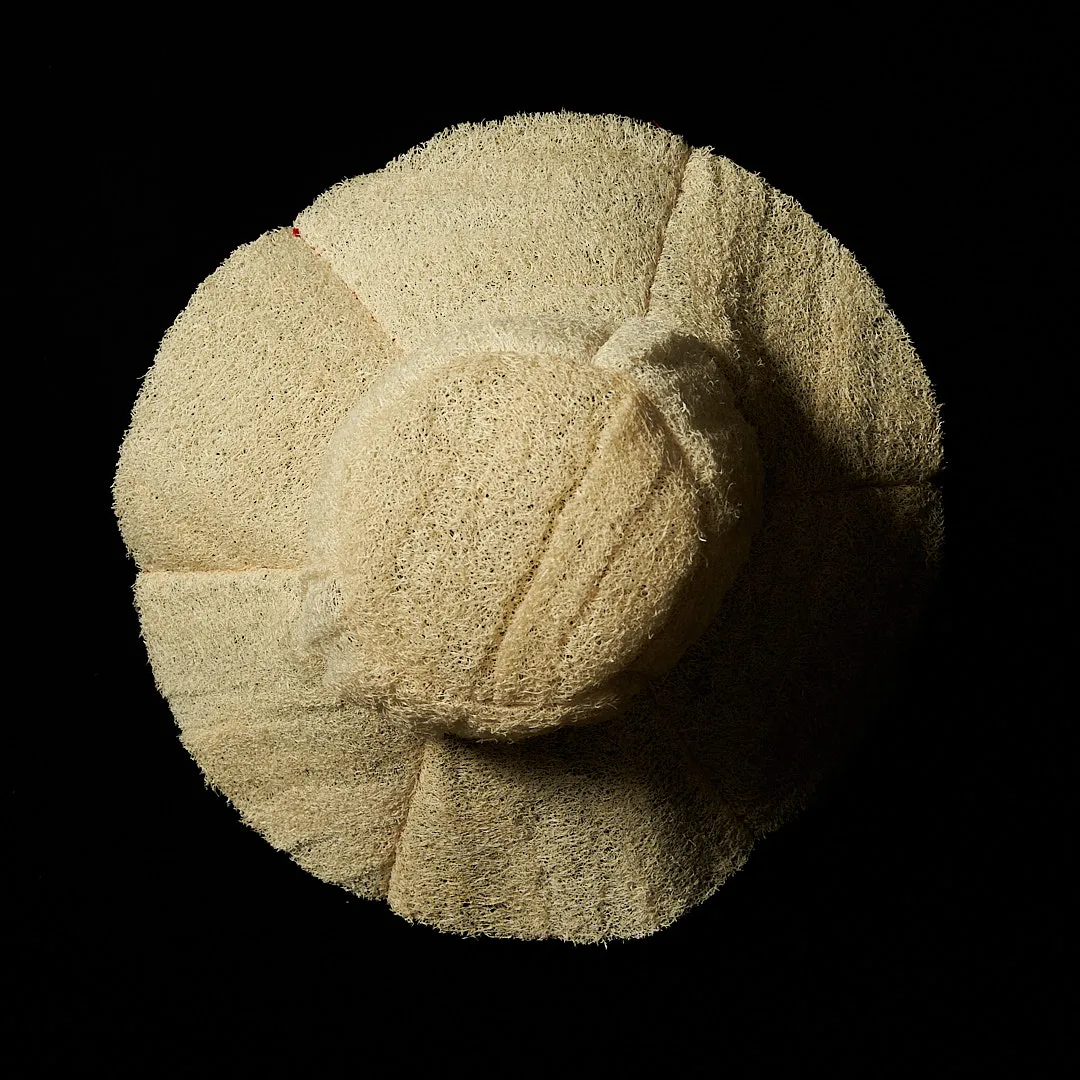
Hat
Hat
Heat pressed, burnt

Objective

  • To test the durability and heat resistance of loofah material when subjected to high temperatures from a heat press.
  • To determine the point at which loofah begins to discolor and/or burn under specific heat and time conditions.

Materials

  • Loofah sample: dry, flattened

Tools

  • Heat press

Methodology

The heat press was set to its maximum achievable temperature.
Loofah samples were placed in the heat press for incremental durations: 30 seconds, 60 seconds, 90 seconds, and 120 seconds, to observe the progressive effects of heat.

Observations & Results

The maximum temperature reached by the heat press was 220℃.
Significant discoloration and/or burning effects were observed when the loofah sample was exposed to 220℃ for 120 seconds. This indicates the material's threshold for maintaining its original appearance under intense heat.

Hat
Hat
Inner core velcro
Hat
Hat

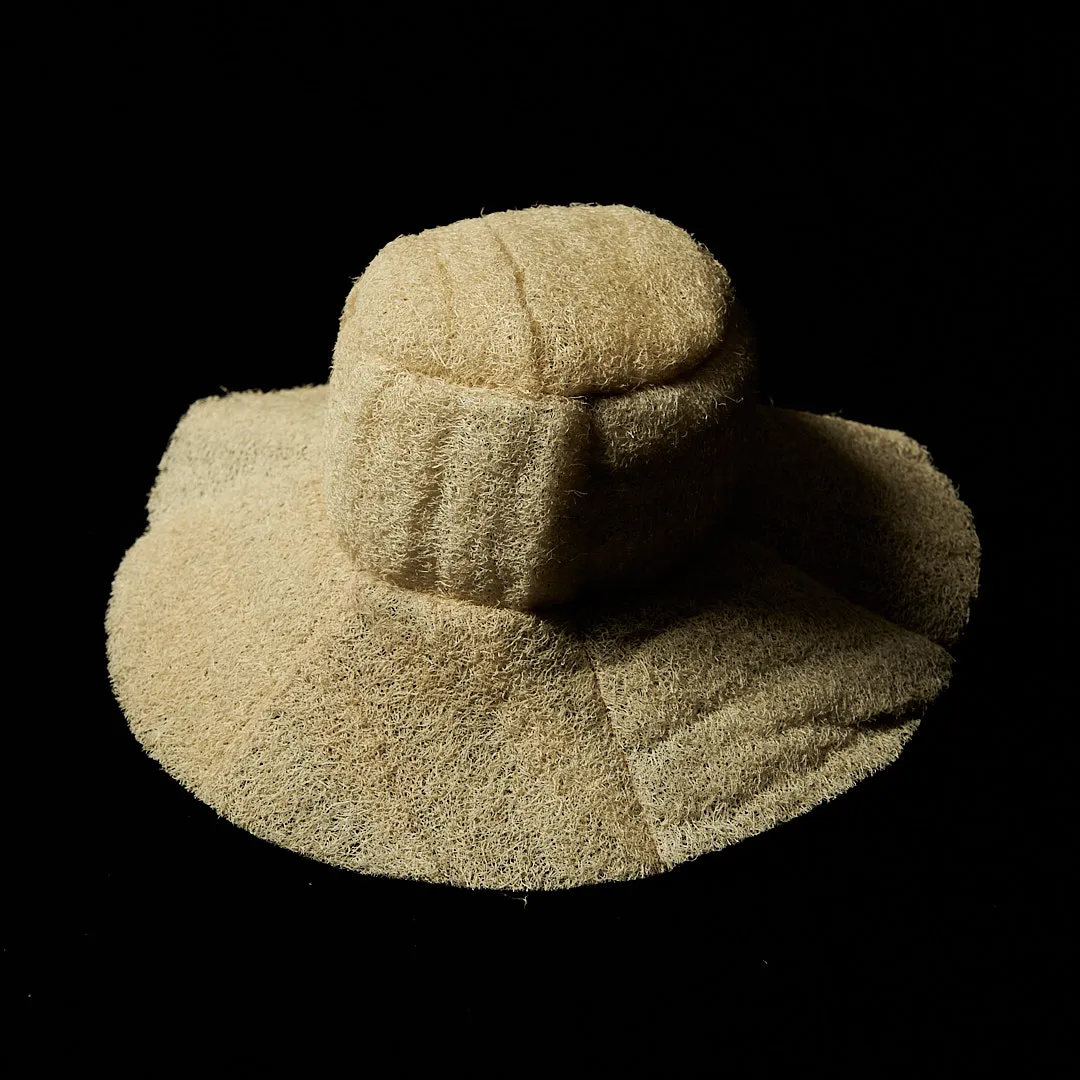
Objective

  • To utilize loofah's lightweight properties to create a wearable sunshade.
  • To develop a smaller and hands-free alternative to a parasol using loofah material.

Materials

  • Flattened loofah
  • Thread

Tools

  • Needle
  • Sewing pattern

Methodology

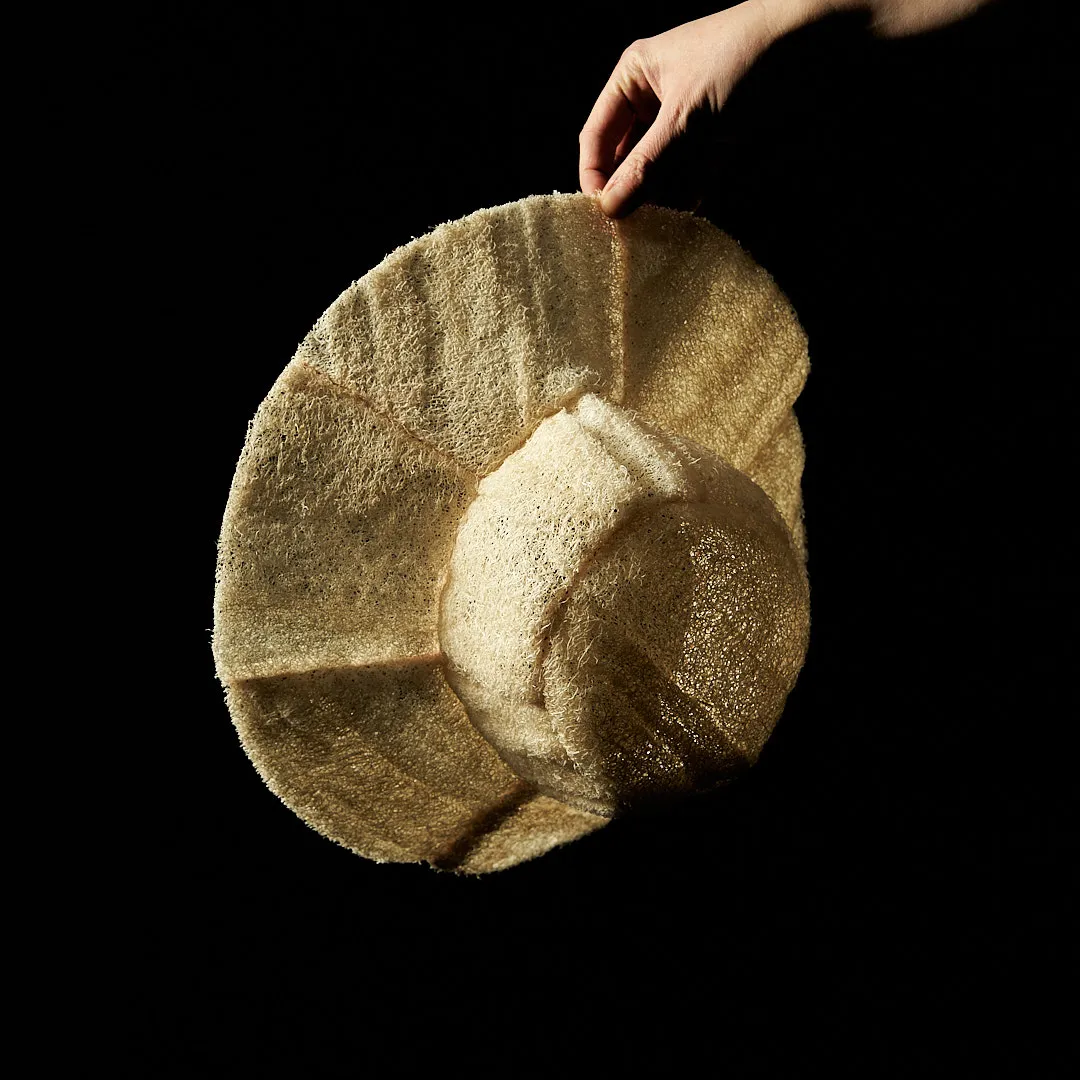
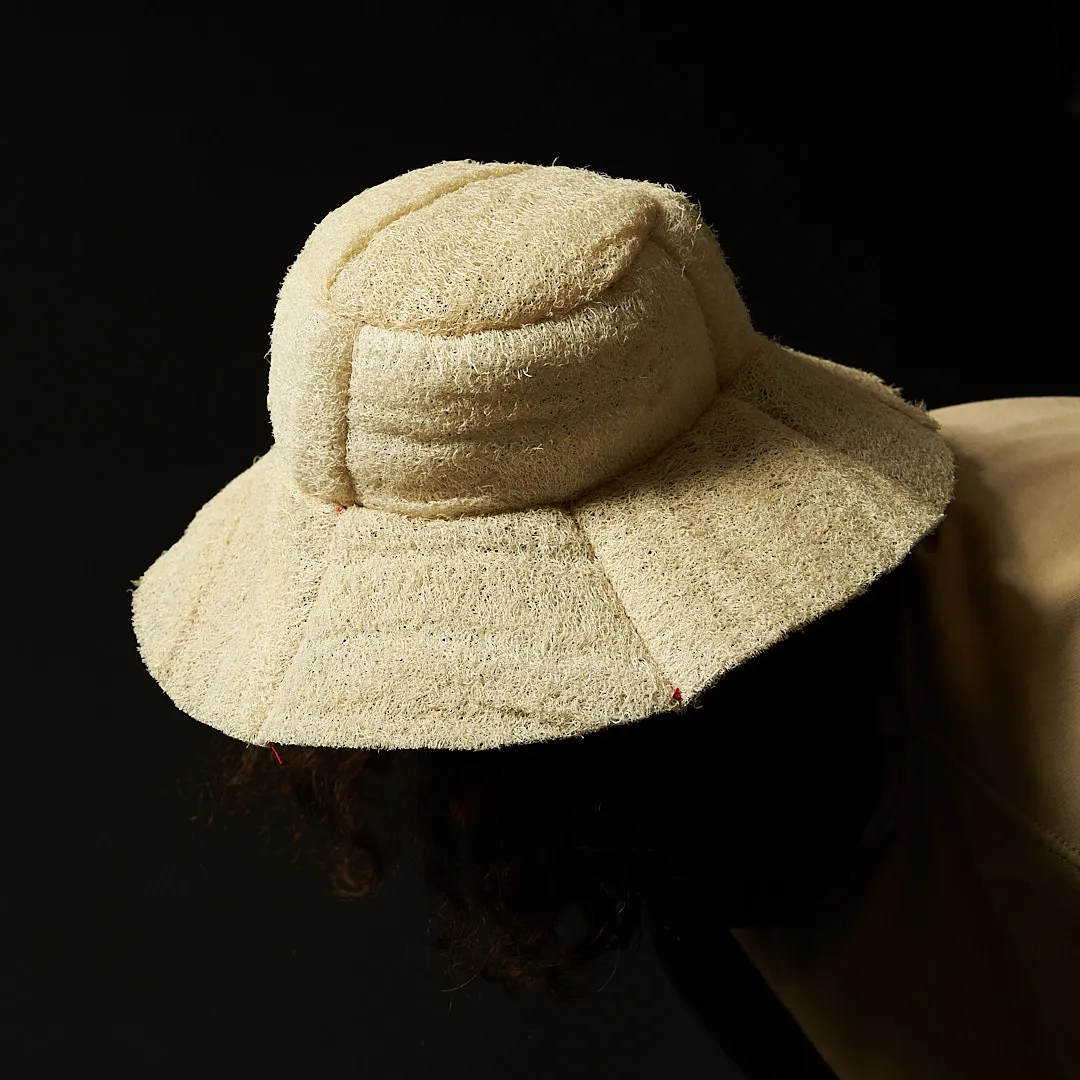
A free hat sewing pattern was sourced and downloaded.
The individual components of the hat pattern were carefully cut from sheets of flattened loofah material.
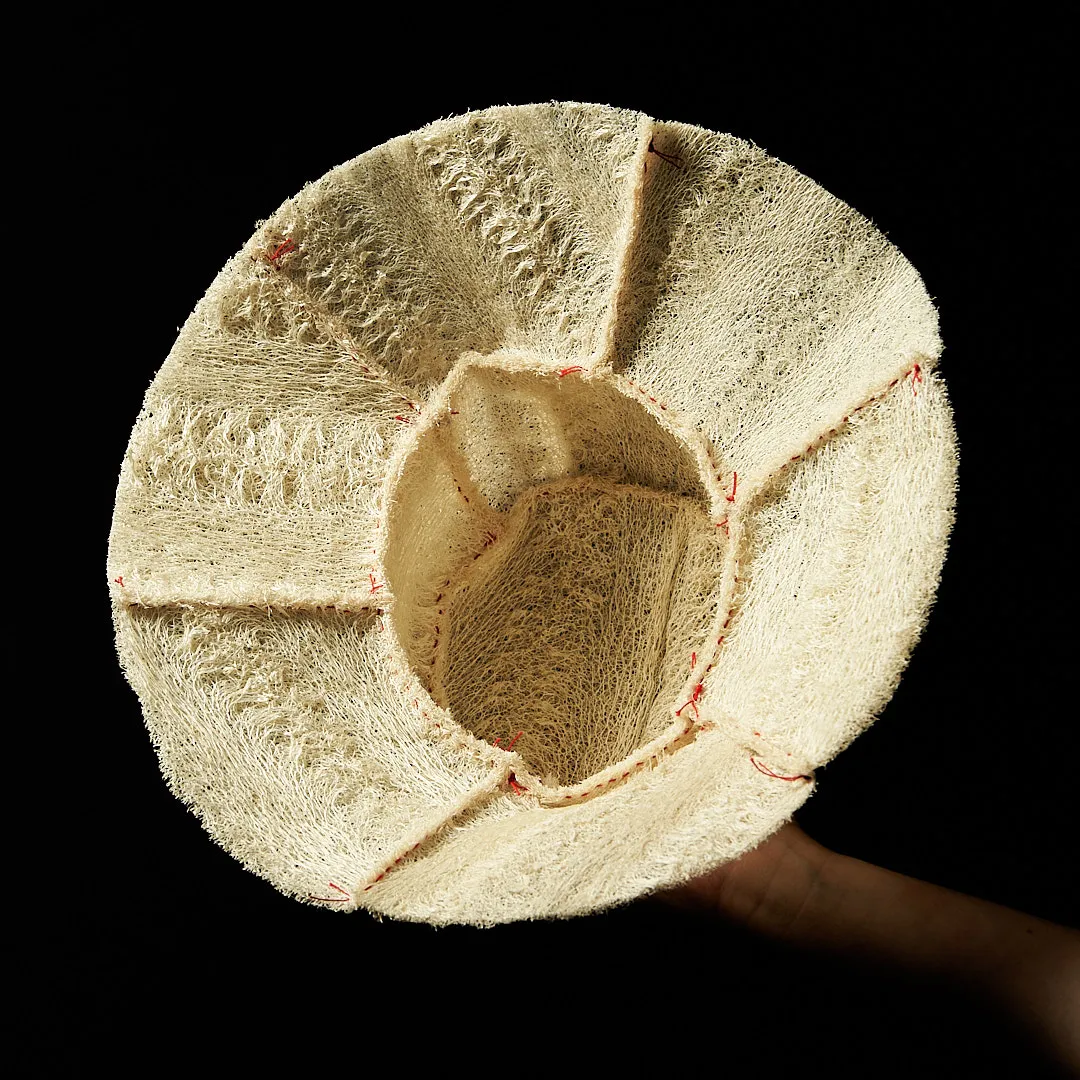
The cut loofah parts were then sewn together using a needle and thread, following the instructions of the sewing pattern, to assemble the complete hat.

Observations & Results

The flattened loofah material proved to be easy to sew, allowing for relatively straightforward assembly.
A notable observation was that the seams of the sewn loofah hat stuck out, which could potentially lead to discomfort when worn.

Inner core velcro
Inner core velcro

Objective

  • To explore alternative uses for the dry inner core of loofah plants.
  • To investigate methods for creating patterns and larger surface areas from individual loofah core pieces.
  • To assess the potential for loofah core composites to function as partitions, curtains, or shades, particularly focusing on self-adhering properties.

Materials

  • Dry loofah inner core

Tools

  • Heat press
  • Baking paper
  • Cutting tools

Methodology

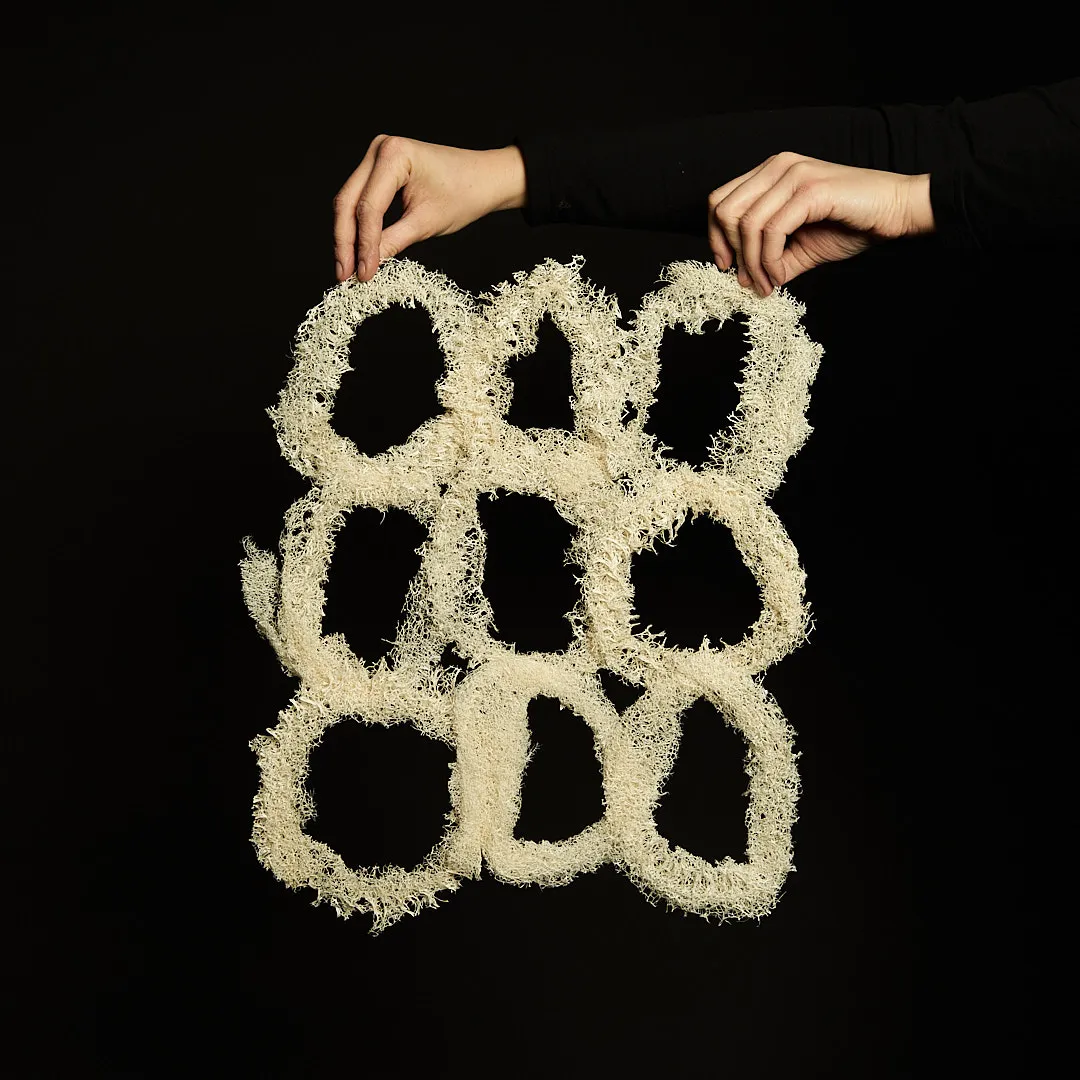
The inner cores were extracted from several dry loofah plants.
Individual circular pieces were cut from these inner cores.
These loofah circles were arranged and stacked with a slight overlap, creating a composite composition.
The layered loofah composition was then sandwiched between sheets of baking paper (to protect the heat press surface).
The assembly was compressed using a heat press at 90℃ for 60 seconds.

Observations & Results

The dry inner core of the loofah was found to be harder but less dense compared to the outer fibrous structure.
When compressed together, either gently or more firmly, the fibers of the loofah core easily adhered to each other.
The adhered pieces could be readily separated when pulled apart, exhibiting a behavior strongly reminiscent of a Velcro fastener.
Crucially, the compressed structure remained cohesive without the need for any glue or additional binders.

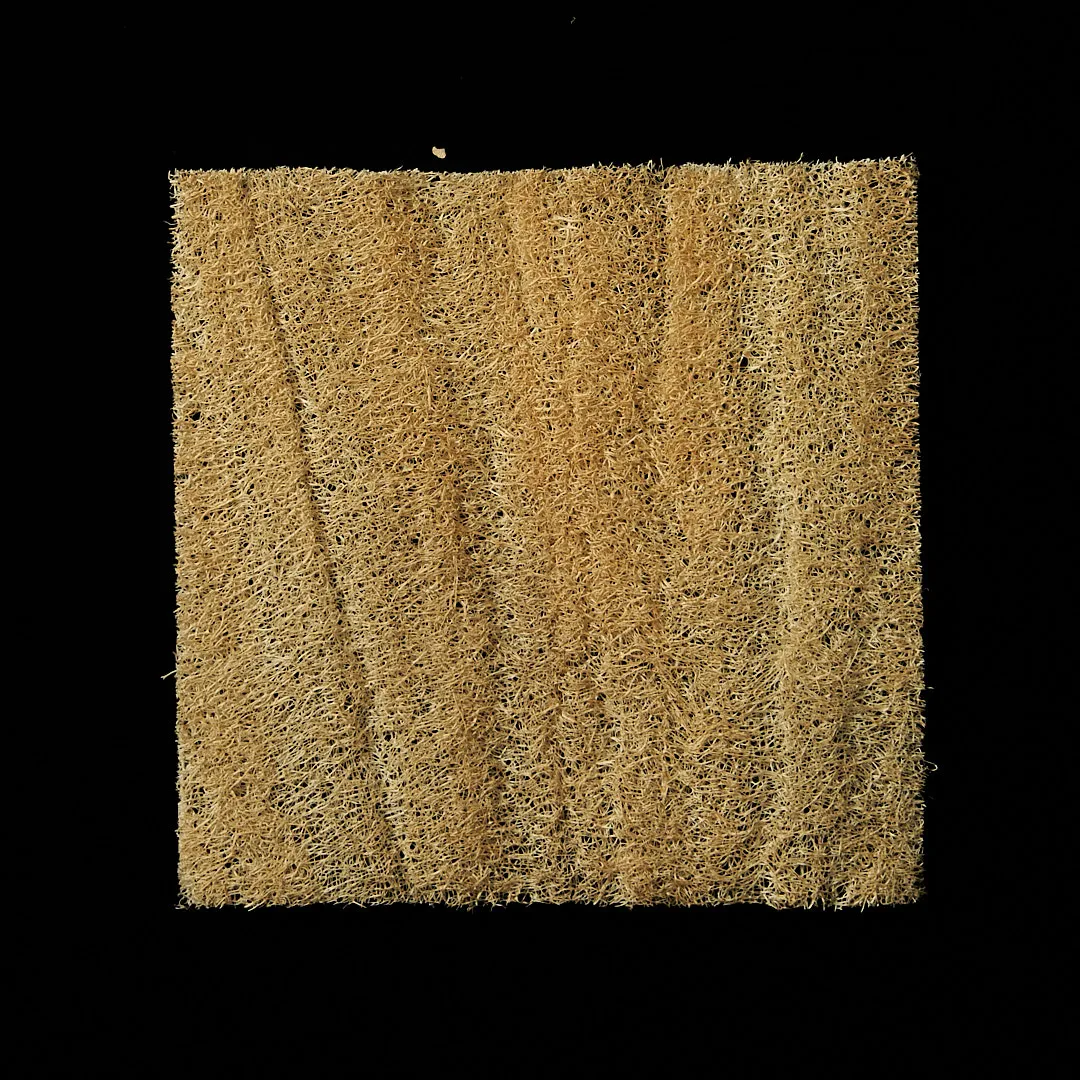
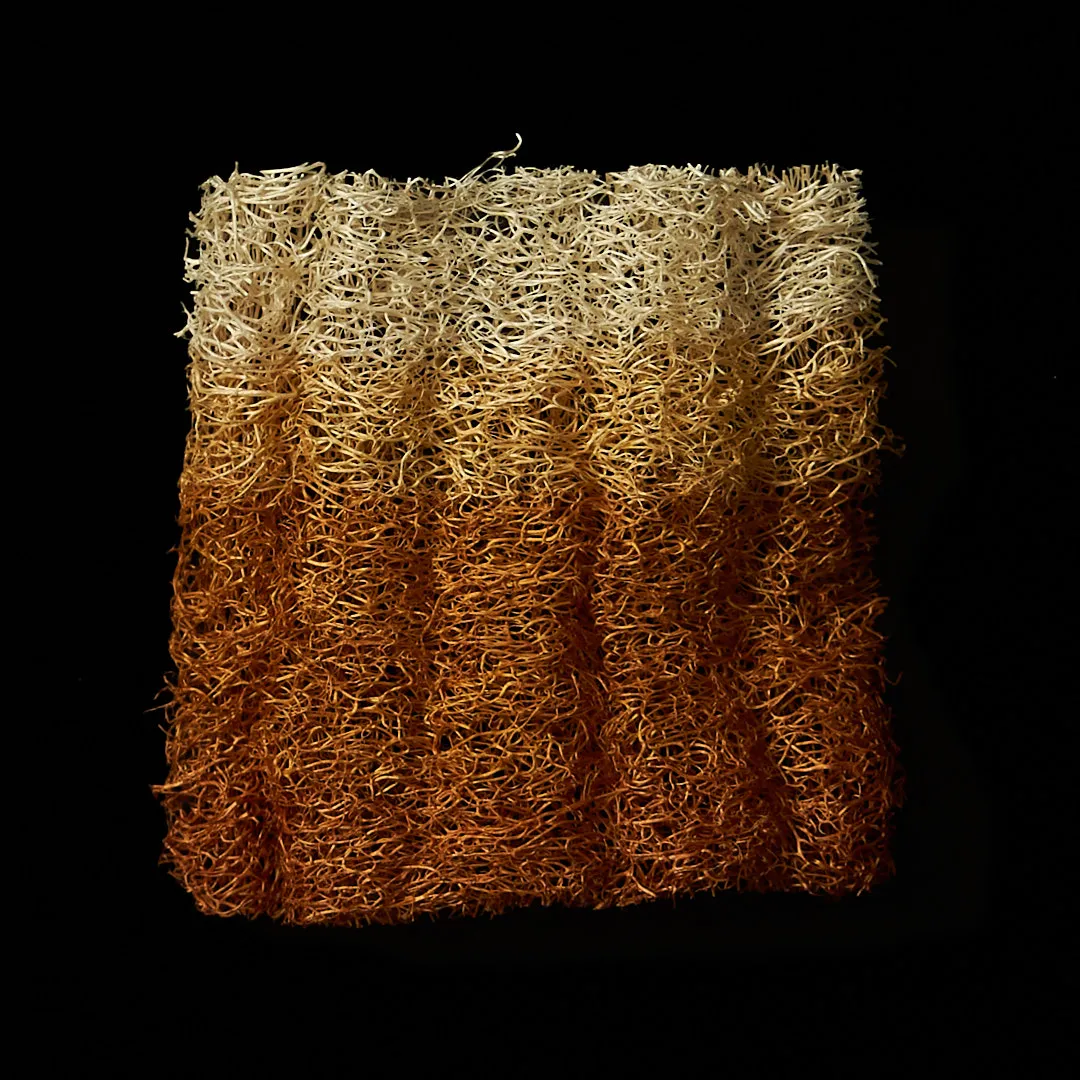
Gradient dye

Objective

  • To determine if loofah fibers effectively absorb pigmented water from a dye bath.
  • To investigate the possibility of creating a successful gradient color effect on loofah material using a stepped immersion dyeing technique.

Materials

  • Red onion skin (as colorant)
  • Loofah
  • Mordant solution
  • Clean water

Tools

  • Plastic bowl
  • Stainless steel pan
  • Gloves
  • Goggles
  • Mask
  • Wooden stirring spatula

(Note: Precautions are important when dyeing, similar to working with fabrics.)

Methodology

This modified dyeing method was applied for creating a gradient effect:
Loofah material was cut into 10x10 cm squares.
The loofah squares were soaked in a mordant solution for 24 hours.
After mordanting, they were thoroughly washed with clean water.
For the gradient, a prepared dye bath (using red onion skin as the colorant) was used.
One quarter of the loofah sample piece was first immersed into the dye pot for 20 minutes.
Subsequently, half of the same sample piece was immersed for an additional 20 minutes (meaning the first quarter was now in for 40 minutes total).
Finally, three quarters of the same piece were immersed for another 20 minutes (totaling 60 minutes for the first quarter, 40 for the second, and 20 for the third).
The loofah piece was then allowed to cool down while remaining in the dye bath for a further 24 hours to ensure maximum color setting.
The final dyed piece was washed with clean water.

Observations & Results

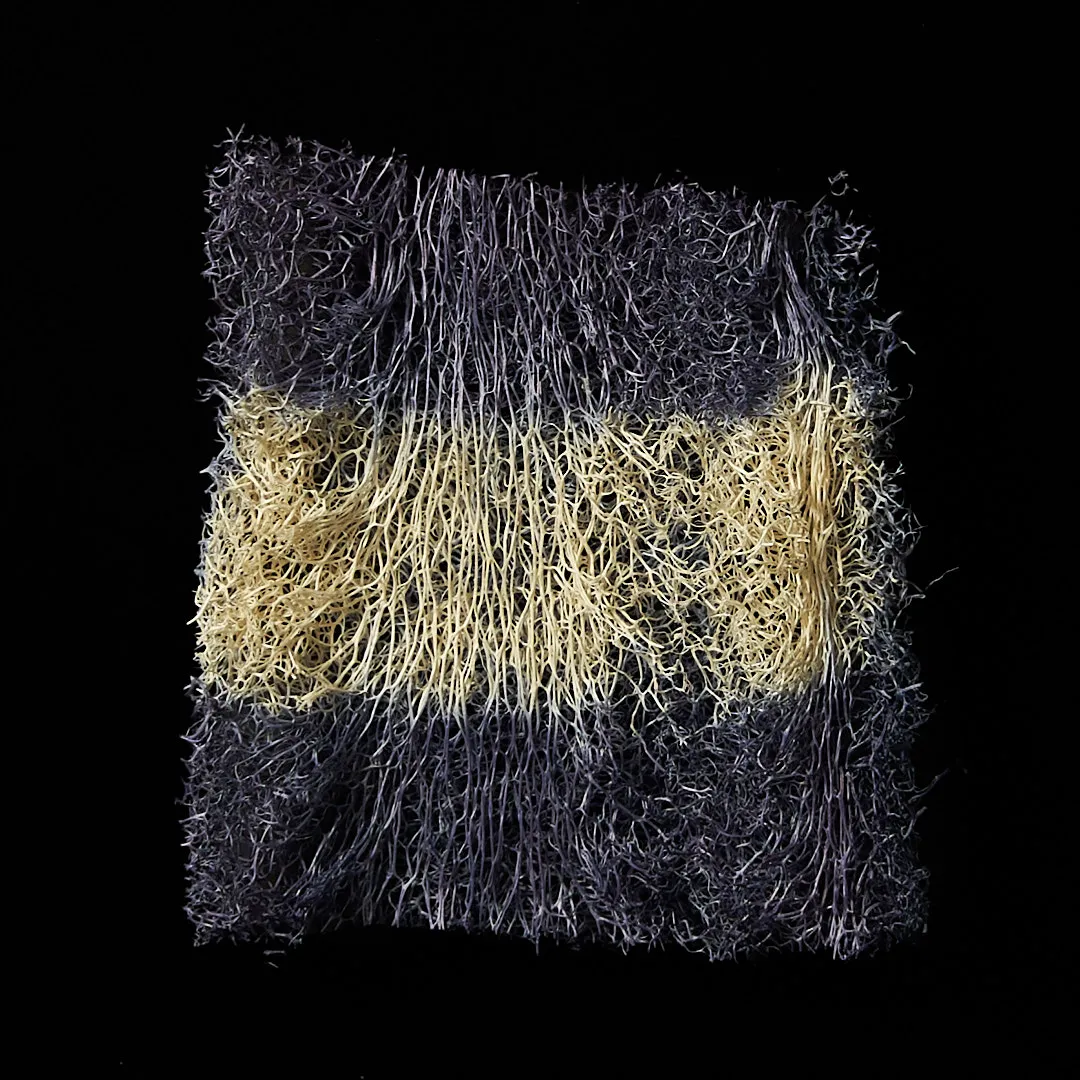
Contrary to initial expectations, the loofah fibers did not absorb the color gradually in a smooth, continuous transition from the dye bath using the stepped immersion method. The color lines might have been more distinct.
However, it was observed that a successful gradient effect could potentially be achieved by continuously and gradually lowering the material into the dye bath, rather than in discrete steps.
The experiment produced different and rich hues inherent to the red onion skin dye.

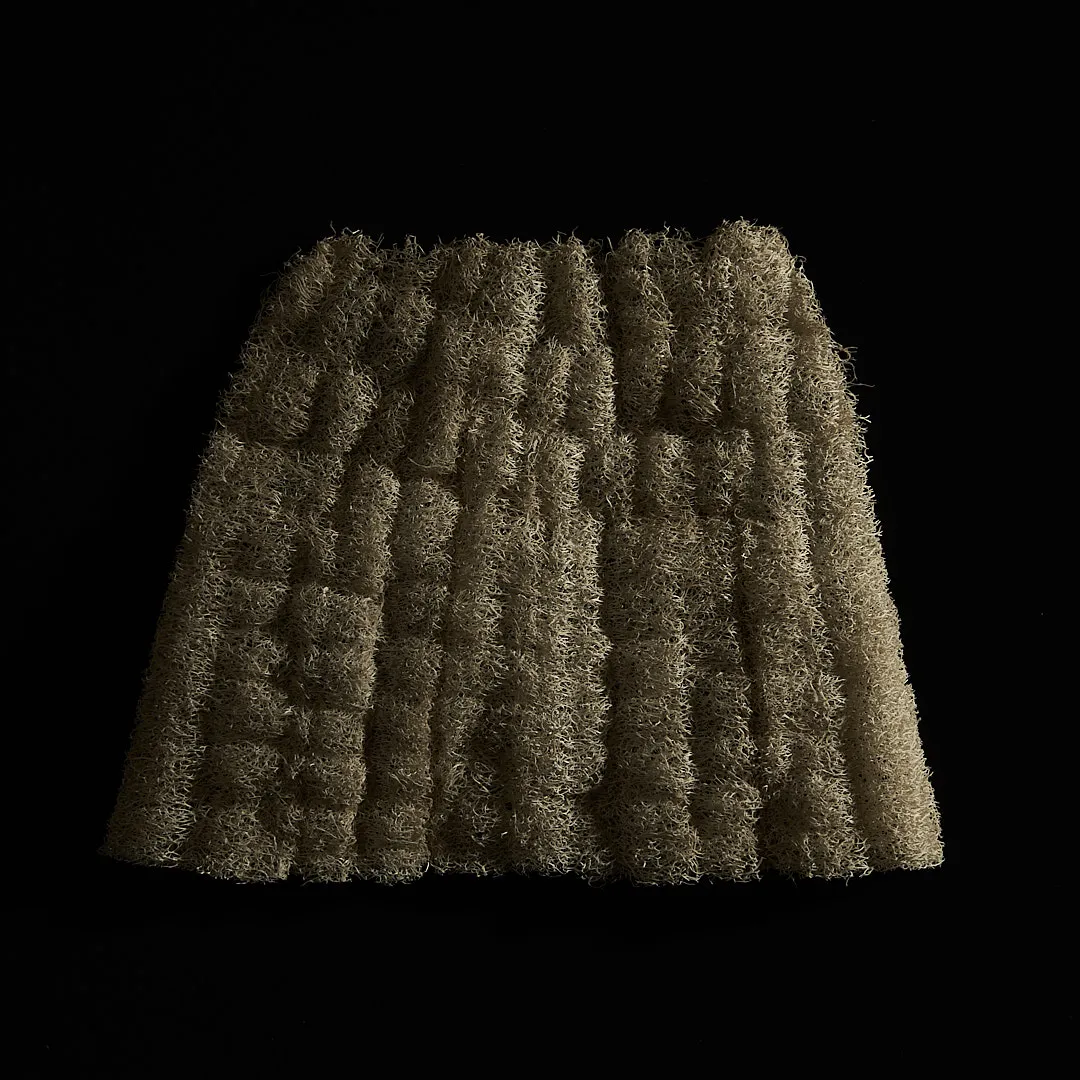
Embossing
Embossing

Objective

  • To investigate methods for leaving a distinct imprint on loofah material.
  • To determine the feasibility of creating repeat patterns on loofah surfaces through an embossing process.

Materials

  • Flattened loofah

Tools

  • FDM 3D printer (for creating molds)
  • Hydraulic press
  • 3D printed molds (double-sided, implying a positive and negative relief)

Methodology

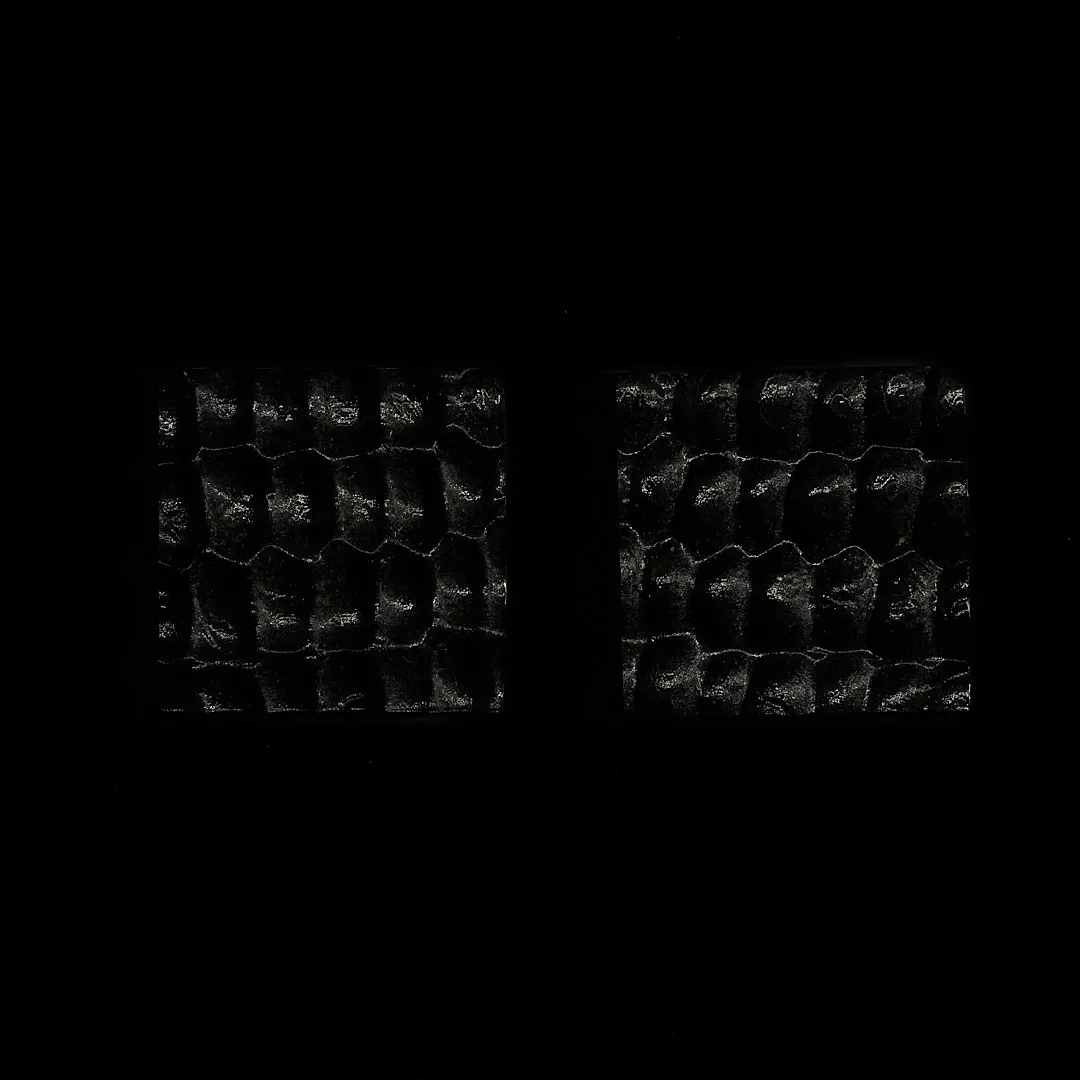
Double-sided molds with a desired pattern were designed and produced using a 3D printer.
A piece of loofah was positioned between the two parts of the 3D printed mold.
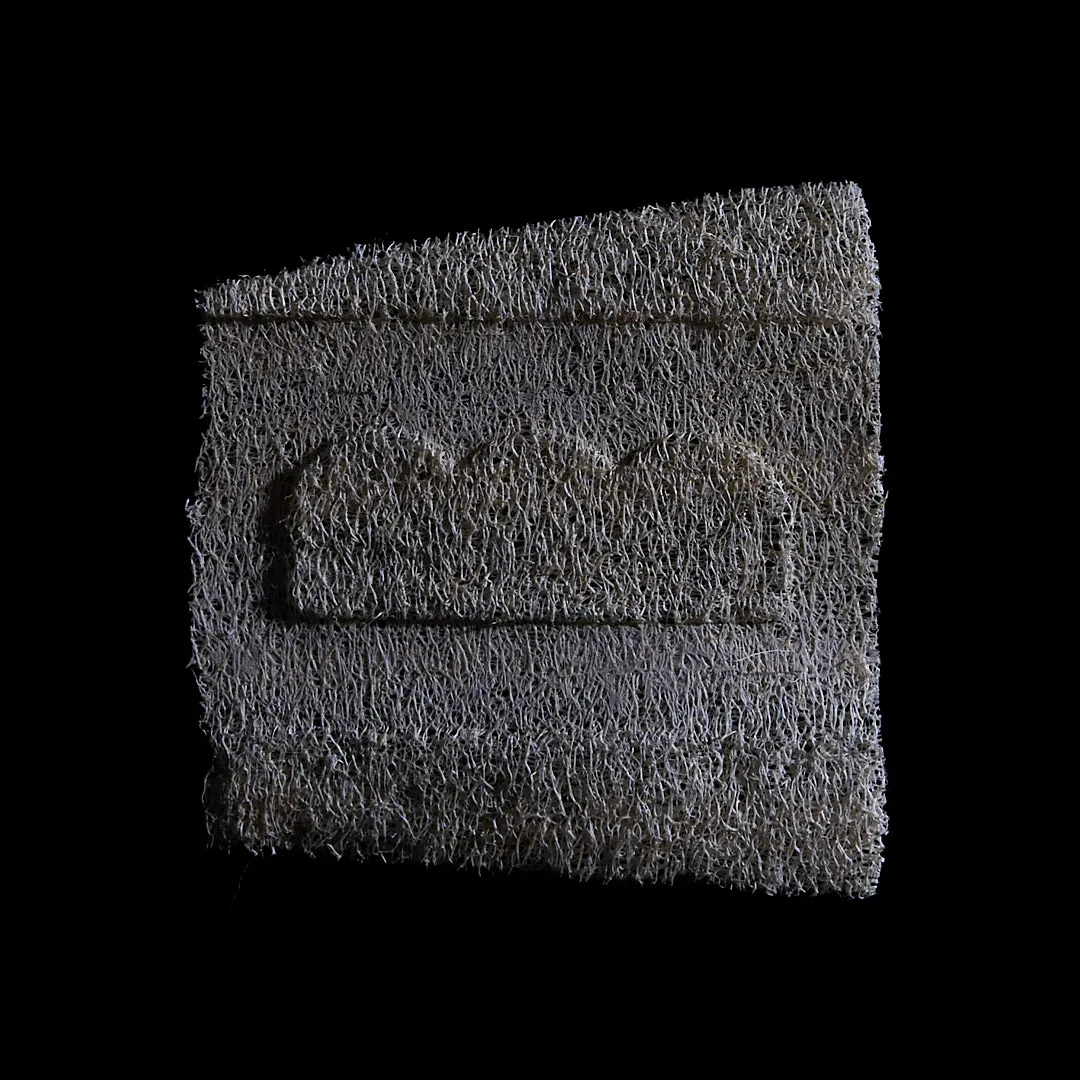
This assembly (loofah sandwiched in the mold) was then subjected to compression using a hydraulic press to transfer the mold's pattern onto the loofah surface. The process likely aimed to apply sufficient force to create a lasting impression.

Observations & Results

During the embossing process, the 3D printed plastic molds cracked, indicating significant pressure was applied and/or the molds were not robust enough for the force.
Despite the mold damage, a clear imprint of the pattern was successfully left in the loofah material.
It was confirmed that repeat patterns could be effectively created on the loofah surface

Embossing
Gradient dye
Embossing
Stamp

Objective

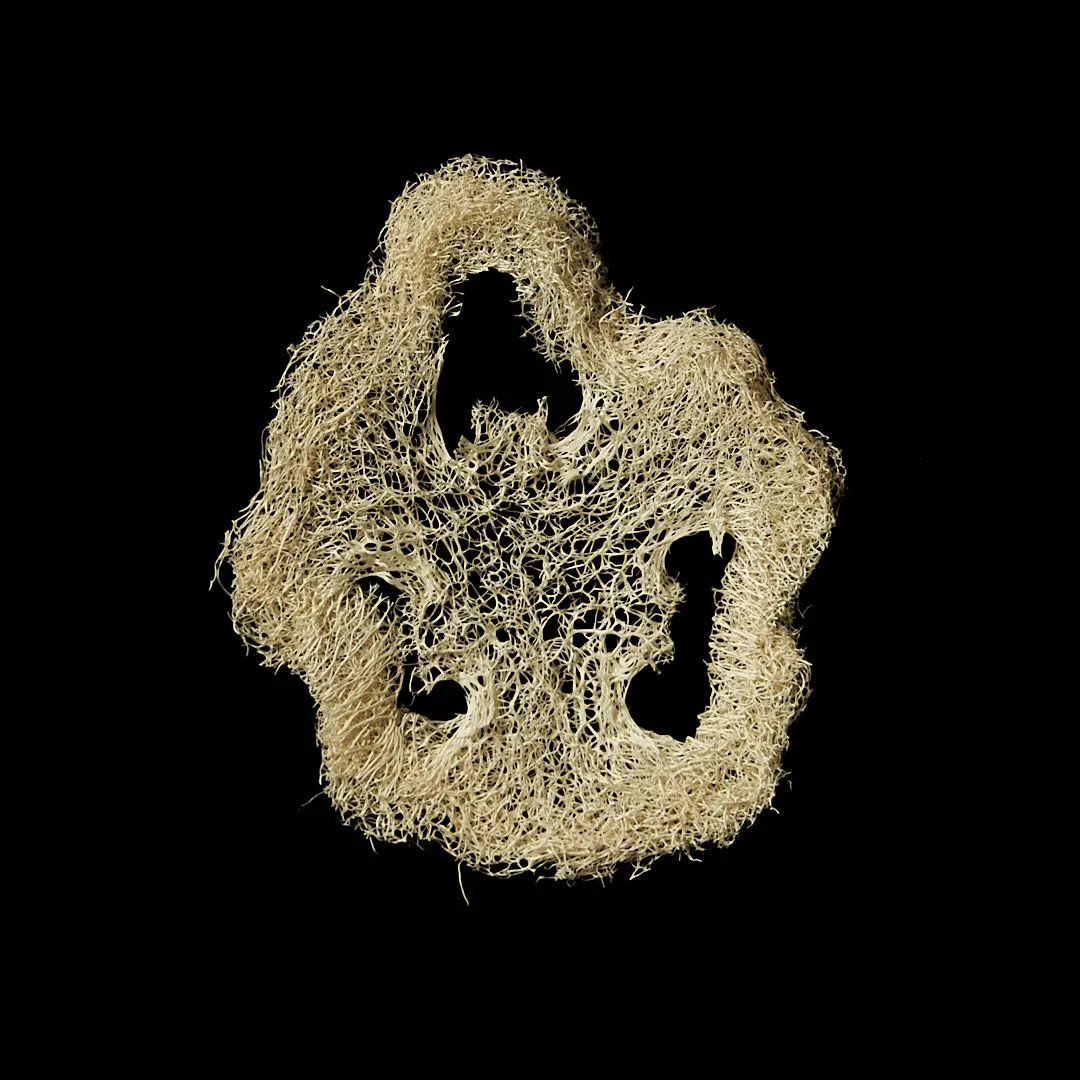
  • To explore the feasibility of using cross-sectioned loofah slices as a stamping tool.
  • To investigate the types of marks and patterns that can be created using loofah's natural fibrous texture.

Materials

  • Acrylic paint
  • Loofah (cut crosswise into slices)
  • Paper or other suitable stamping surfaces

Tools

  • Utility knife

Methodology

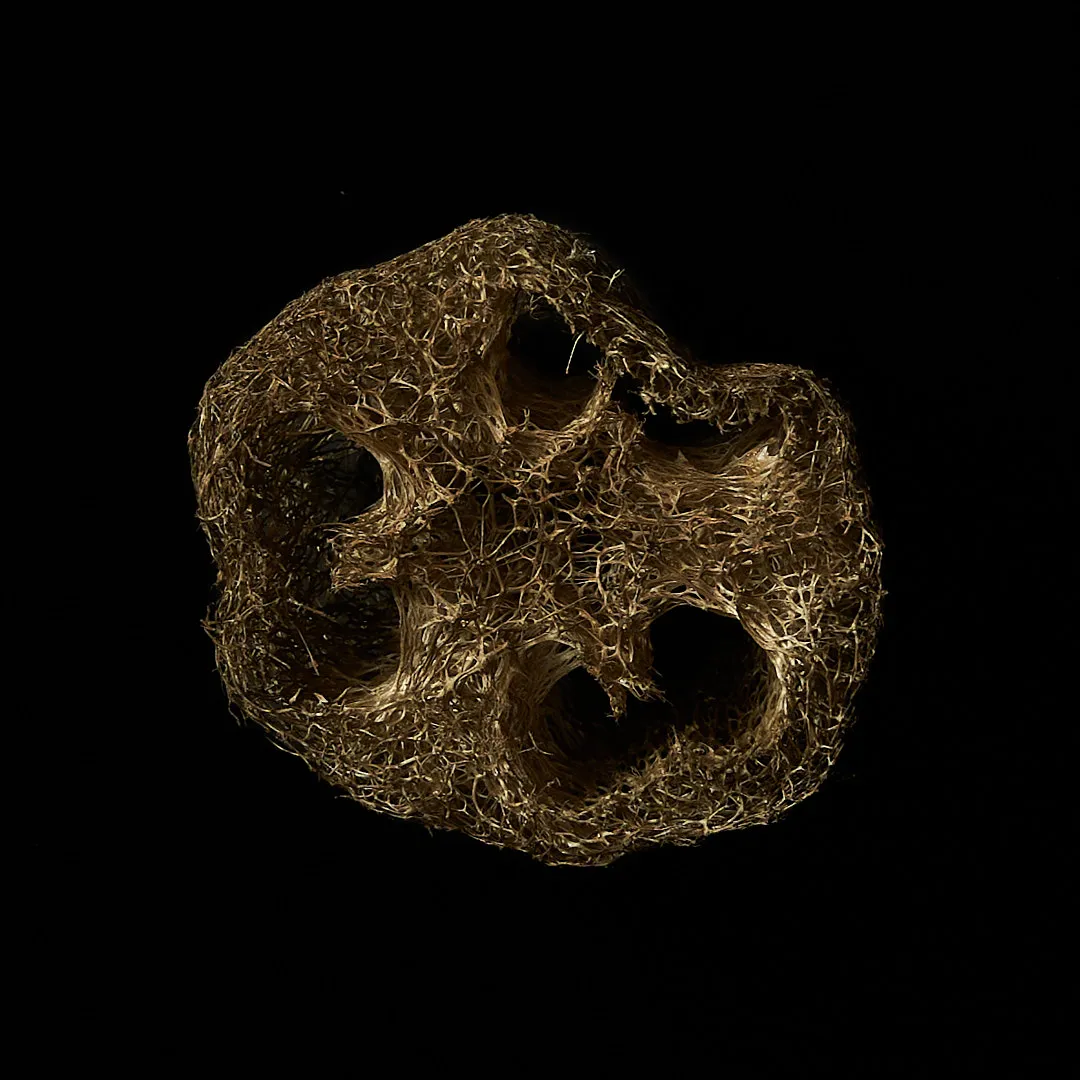
A loofah plant was cut crosswise into individual slices, exposing its internal fibrous network.
One side of a loofah slice was prepared by either dipping it directly into acrylic paint or rolling paint onto its surface to achieve an even coating.
The painted side of the loofah slice was then pressed onto paper or other desired surfaces to transfer the paint and create a stamped impression. This process was likely repeated to explore various patterns and application techniques.

Observations & Results

The loofah stamp consistently produced abstract marks.
The resulting patterns were often characterized by holes and dotted textures, reflecting the porous and fibrous nature of the loofah.
It was found to be difficult to apply even pressure across the entire surface of the loofah stamp, leading to variations in the density and completeness of the printed mark.

Molding
Molding
Stamp
Molding

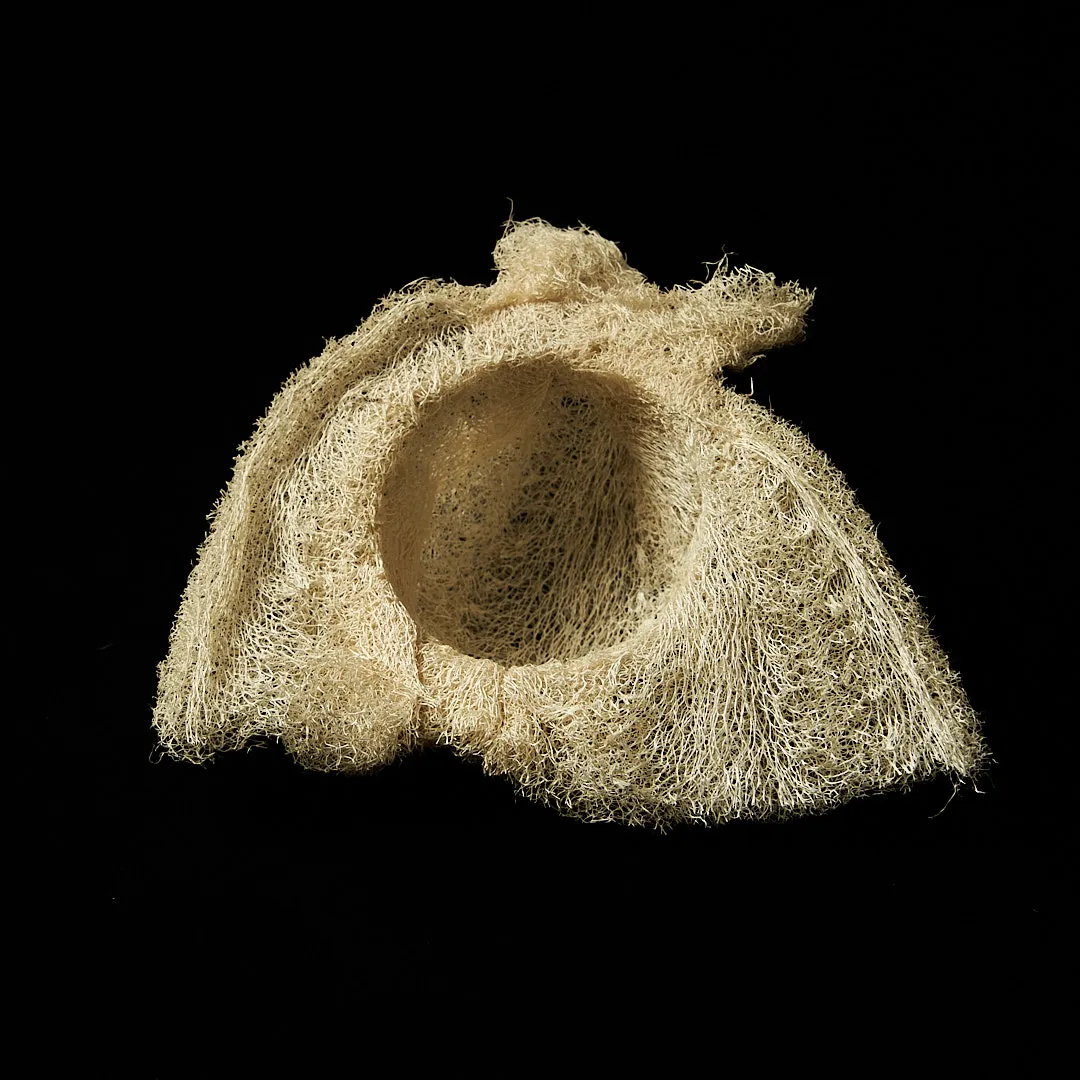
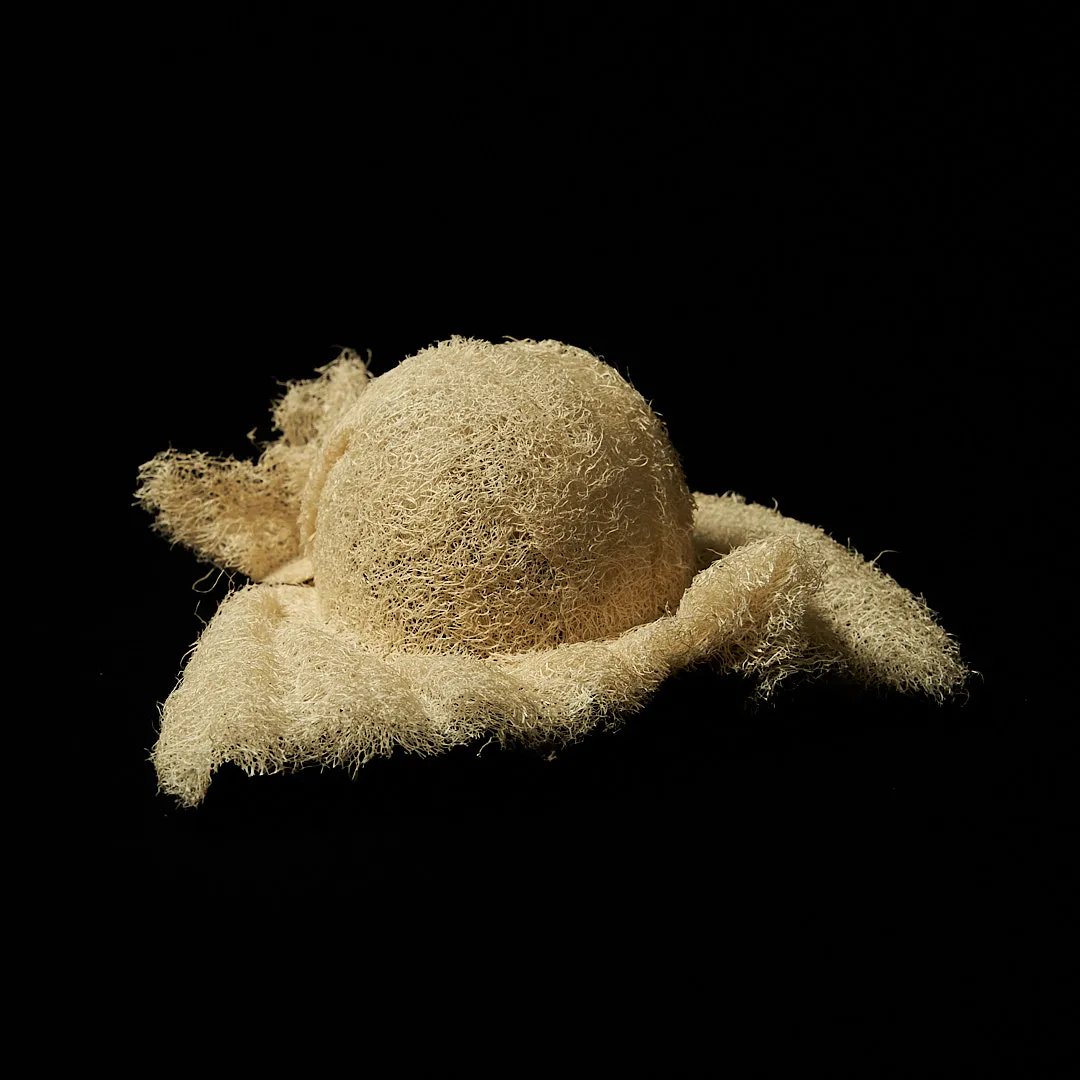
Objective

  • To investigate the feasibility of giving loofah different and specific shapes through a molding process.

Materials

  • Wet loofah
  • Plaster

Tools

  • 3D modeling software (for design)
  • FDM 3D printer
  • 3D printed double-walled bowl mold

Methodology

A hollow mold design, specifically a double-walled bowl, was created using 3D modeling software.
This model was then fabricated using a 3D printer.
To increase the weight and stability of the plastic molds, the internal void was filled with plaster.
A piece of loofah was thoroughly drenched in water to make it pliable.
The wet loofah was then carefully sandwiched between the two parts of the prepared mold.
The mold parts were gently pressed together to conform the loofah to the desired shape.
The loofah, still within the mold, was left to dry naturally for a period of several days to a week.
Once completely dry, the loofah was carefully removed from the mold.

Observations & Results

Wet loofah proved to be notably easier to shape within the mold, even with only gentle pressure applied.
The loofah successfully maintained the molded shape once it had fully dried.

Molding
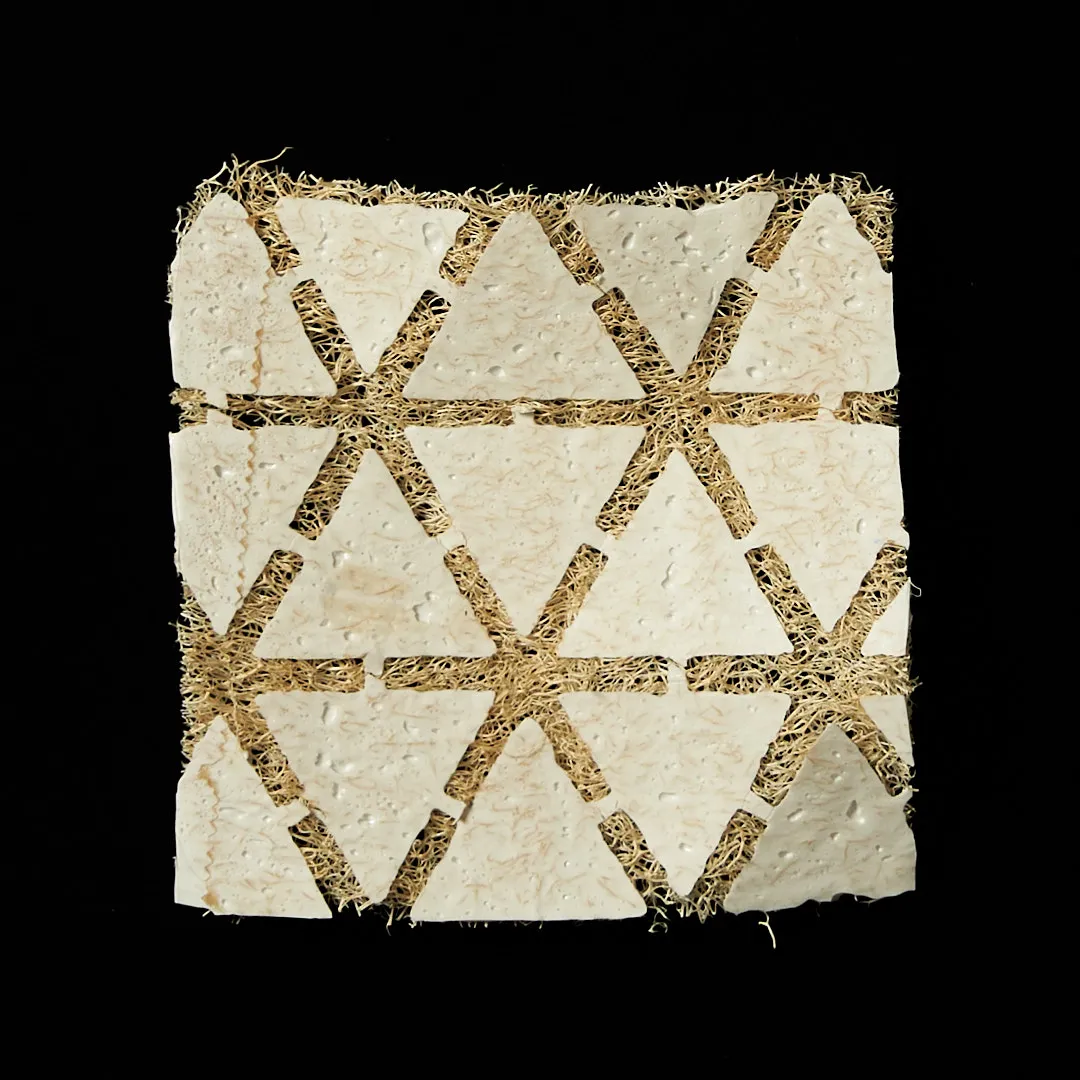
Rigid & soft fold

Objective

  • To investigate the feasibility of building structures by folding a single sheet of loofah material.
  • To determine if it is possible to selectively stiffen parts of the loofah material using heat pressing, while retaining softness in other areas, enabling controlled folding.

Materials

  • FDM 3D printer filaments (PHA,PLA, PETG)
  • Dry loofah (flattened)

Tools

  • 3D printer
  • Heat press
  • Baking paper

Methodology

A specific pattern, designed to facilitate folding and create localized stiffening, was first created using 3D software.
This pattern was then 3D printed as a flat plastic sheet.
A piece of flattened dry loofah was carefully sandwiched between the 3D printed plastic pattern and another sheet of baking paper (the baking paper served to protect the surface of the heat press).
This layered assembly was then placed into a heat press and compressed at 200℃ for 20 seconds. The compression was intended to fuse the plastic pattern with the loofah and selectively stiffen the areas in contact with the plastic.

Observations & Results

After the heat pressing process, folding remained possible in the areas of the loofah that were not fused with the 3D printed pattern (i.e., between the hardened parts).
It was observed that the heat press temperature is a critical parameter; it should be neither too high (which could damage or over-stiffen the loofah/plastic) nor too low (which would prevent effective fusion and stiffening).

Building blocks
Rigid & soft fold
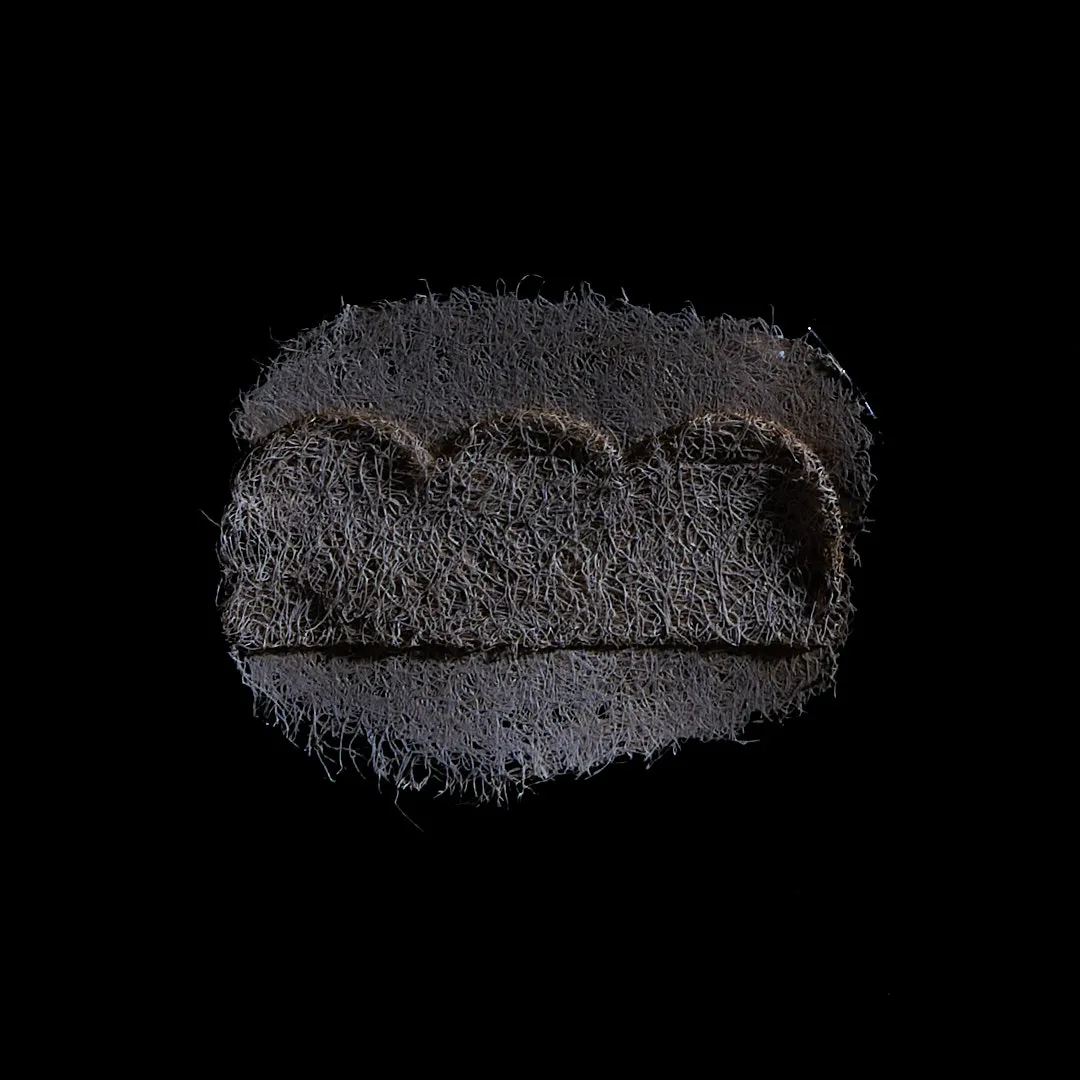
Hydraulic pressing
Building blocks
Building blocks

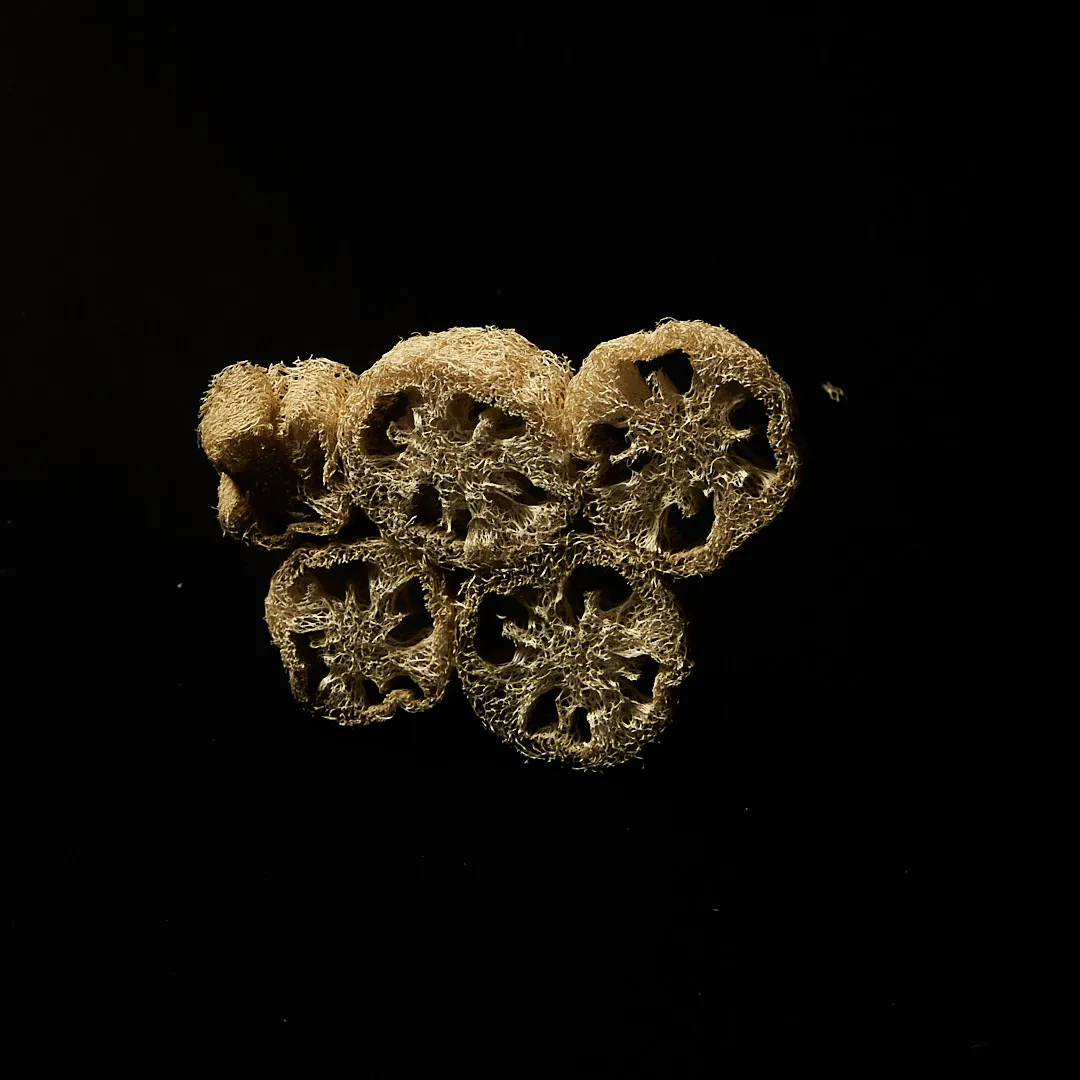
Objective

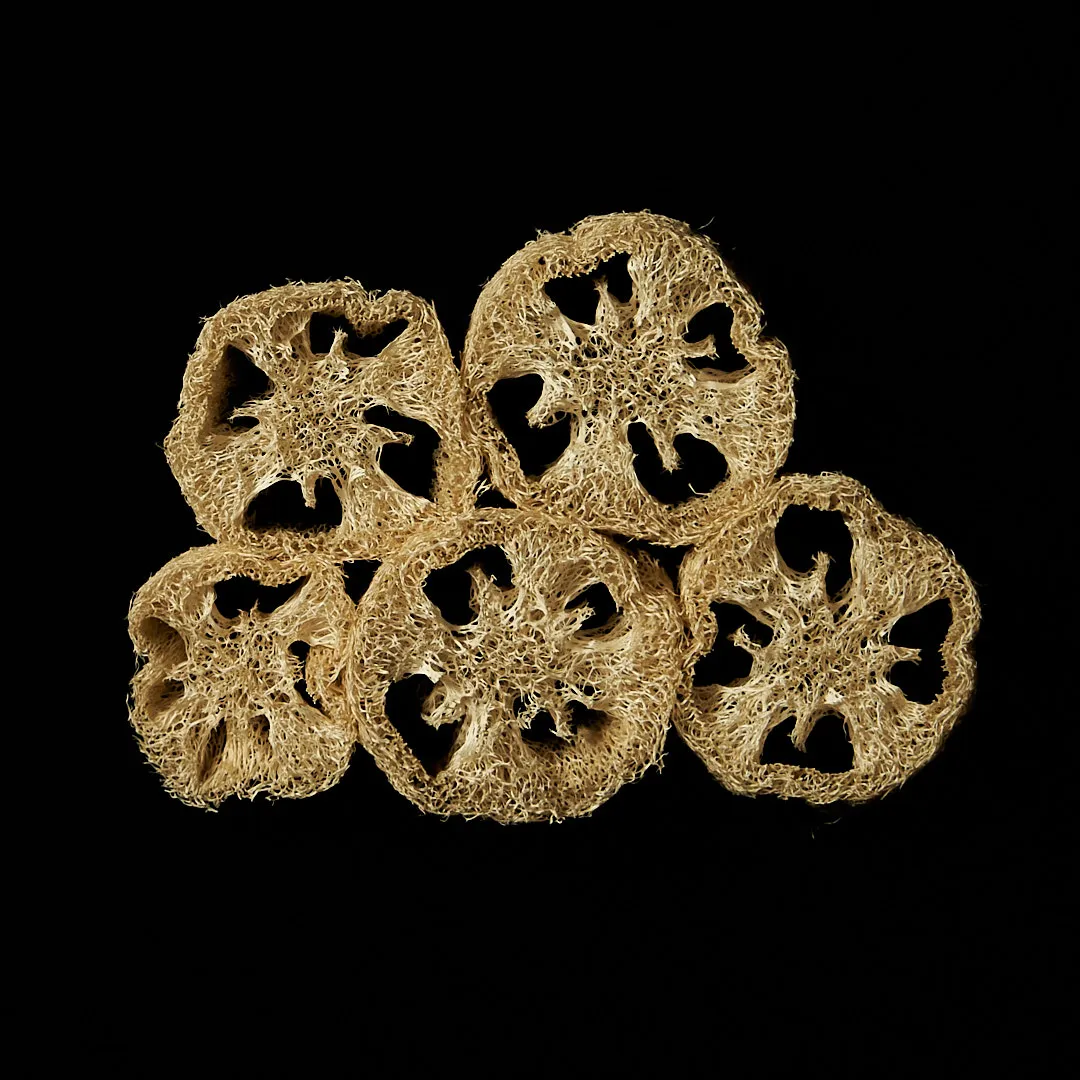
  • To test different visual and structural patterns achievable by assembling cross-sectioned loofah slices.
  • To explore methods for stacking and connecting loofah pieces to form larger structures.

Materials

  • Loofah (cut crosswise into slices)
  • Hot glue

Tools

  • Low temperature glue gun

Methodology

Loofah plants were prepared by cutting them crosswise into individual slices of varying thicknesses and diameters.
These loofah slices were then systematically arranged and connected using a low-temperature hot glue gun.
The assembly process involved experimenting with different stacking configurations and connection points to observe the resulting structural stability and visual patterns at both small and potentially larger scales.

Observations & Results

It was possible to construct self-standing structures from these loofah slices, particularly at a smaller scale.
Smaller and larger cross-section pieces demonstrated the ability to be combined and "even each other out" to maintain stability when building structures on a bigger scale.

Hydraulic pressing

Objective

  • To investigate the formability of both dry and wet loofah using a hydraulic press and custom metal molds.
  • To assess the ability of loofah to retain imprinted shapes and to identify challenges related to material integrity during the pressing process.

Materials

  • Dry loofah
  • Wet loofah

Tools

  • Metal molds (specifically, wave and double-walled bowl designs were used)
  • Hydraulic press

Methodology

Either dry or wet loofah material was carefully placed between two parts of a chosen metal mold (e.g., wave pattern or double-walled bowl).
The mold assembly, containing the loofah, was then subjected to compression using a hydraulic press for a duration of 10 seconds.
This process was repeated for both dry and wet loofah materials with different mold shapes to observe variations in results.

Observations & Results

An imprint of the mold's shape was successfully left on the loofah material in both wet and dry states.
When using the curved (double-walled bowl) mold, the dry loofah easily sustained damage, specifically developing holes, indicating it was less stretchy and more brittle under concentrated force.
It was noted that the hydraulic press is capable of exerting a significant amount of force on the materials, potentially exceeding the material's tolerance if not carefully controlled.

Hydraulic pressing
Compressed core

Objective

  • To investigate the compressibility of the fibrous inner structure of dry loofah.
  • To determine the potential hardness and rigidity achievable by compressing the loofah inner core.

Materials

  • Dry loofah core (long sections)

Tools

  • Hydraulic press

Methodology

A long section of dry loofah core was coiled into a compact ball shape. This coiled loofah ball was then placed under a hydraulic press and compressed for 10 seconds.

Observations & Results

Once compressed with the hydraulic press, the inner loofah core transformed into a rigid sheet and maintained a flat shape.

Compressed core
Pillow
Pillow
Pillow
Parasol
Pillow

Objective

  • To investigate the comfort and practicality of using loofah as a pillow material.
  • To explore loofah as a natural, sustainable alternative to synthetic stuffing materials for bedding.
  • To assess the experience of sleeping on loofah-filled objects for a prolonged period (one night).

Materials

  • Dry loofah plant (outer fibrous part and inner core)
  • Thread

Tools

  • Cutting tools (utility knife, scissors)
  • Sewing tools (needle, sewing machine)

Methodology

A dry loofah plant was cut lengthwise, and its inner core was carefully removed and set aside.
Two identical square pieces were cut from the flattened outer part of the loofah.
These two square loofah pieces were sewn together along three of their edges, forming a pouch.
The pillow pouch was then stuffed with the previously removed inner core of the dry loofah.
The fourth edge of the pillow was subsequently sewn to fully enclose the stuffing.

Observations & Results

The loofah pillow was found to be moderately comfortable.
Adding a fabric cover significantly improved the comfort level of the pillow.
The pillow was remarkably lightweight.
It provided an "airy" feeling, distinct from that of regular, synthetically-filled pillows.

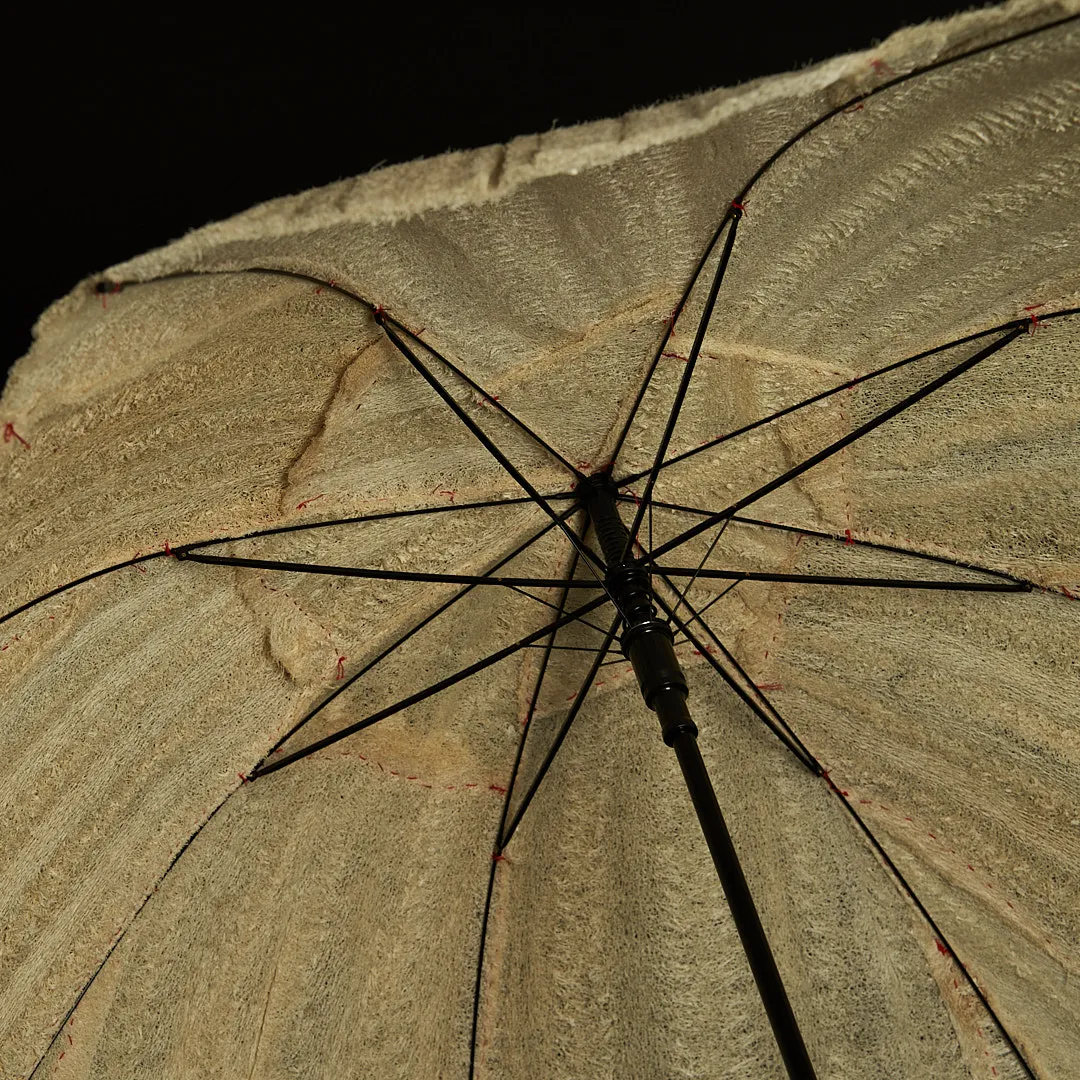
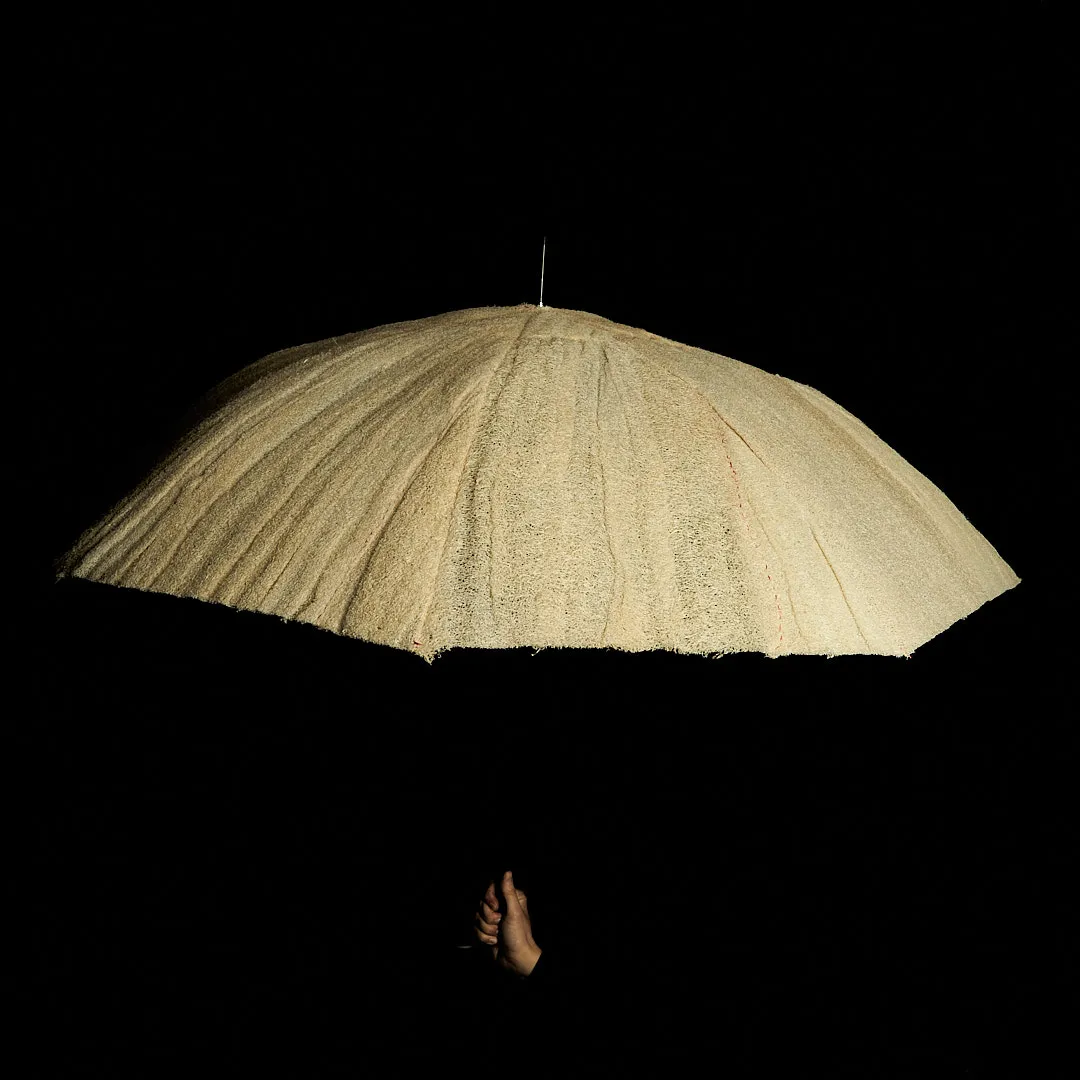
Parasol
Parasol
Parasol
Pomegranate skin dye
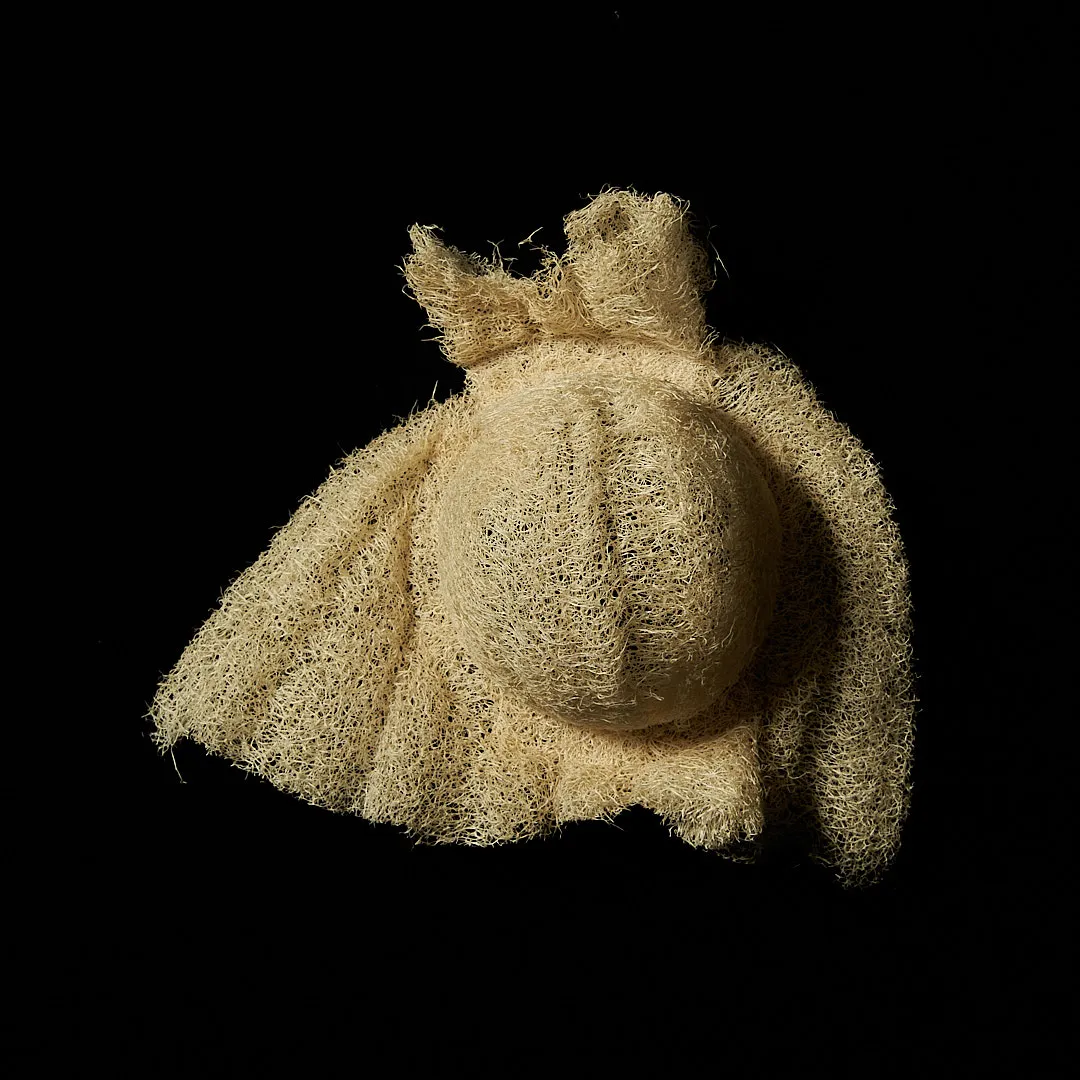
Parasol

Objective

  • To test the light transmission capacity of flattened loofah material when used as a parasol
  • To evaluate the potential durability and suitability of loofah's fibrous structure compared to regular parasol fabrics in windy environments.

Materials

  • Ready-made umbrella skeleton
  • Flattened loofah (heat pressing from Experiment 001)
  • Thread

Tools

  • Tracing paper
  • Utility knife
  • Sewing needle

Methodology

A pattern for the parasol was drawn onto tracing paper, based on the dimensions and segments of the existing umbrella skeleton.
Individual sections were cut from the pre-flattened loofah material according to the drafted pattern.
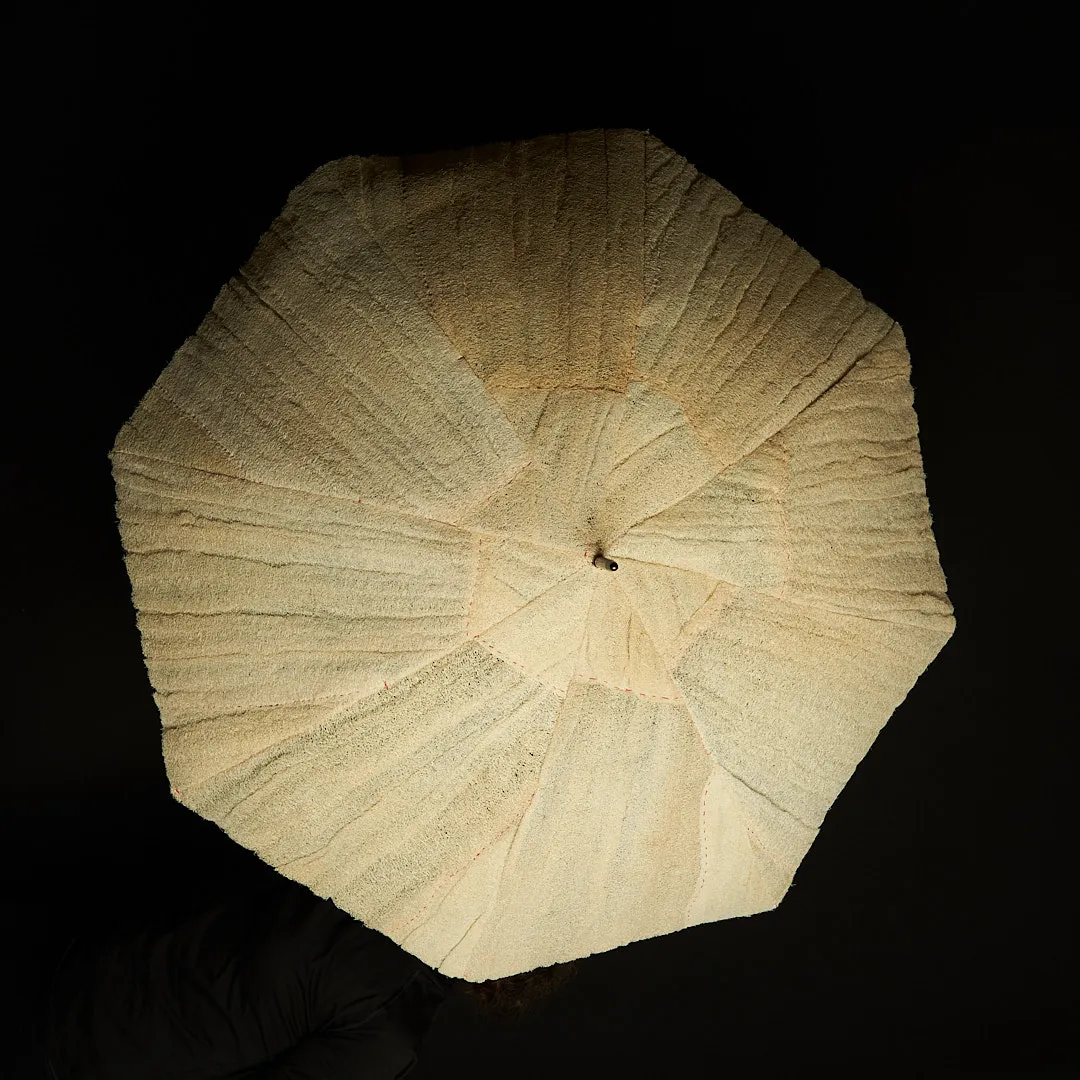
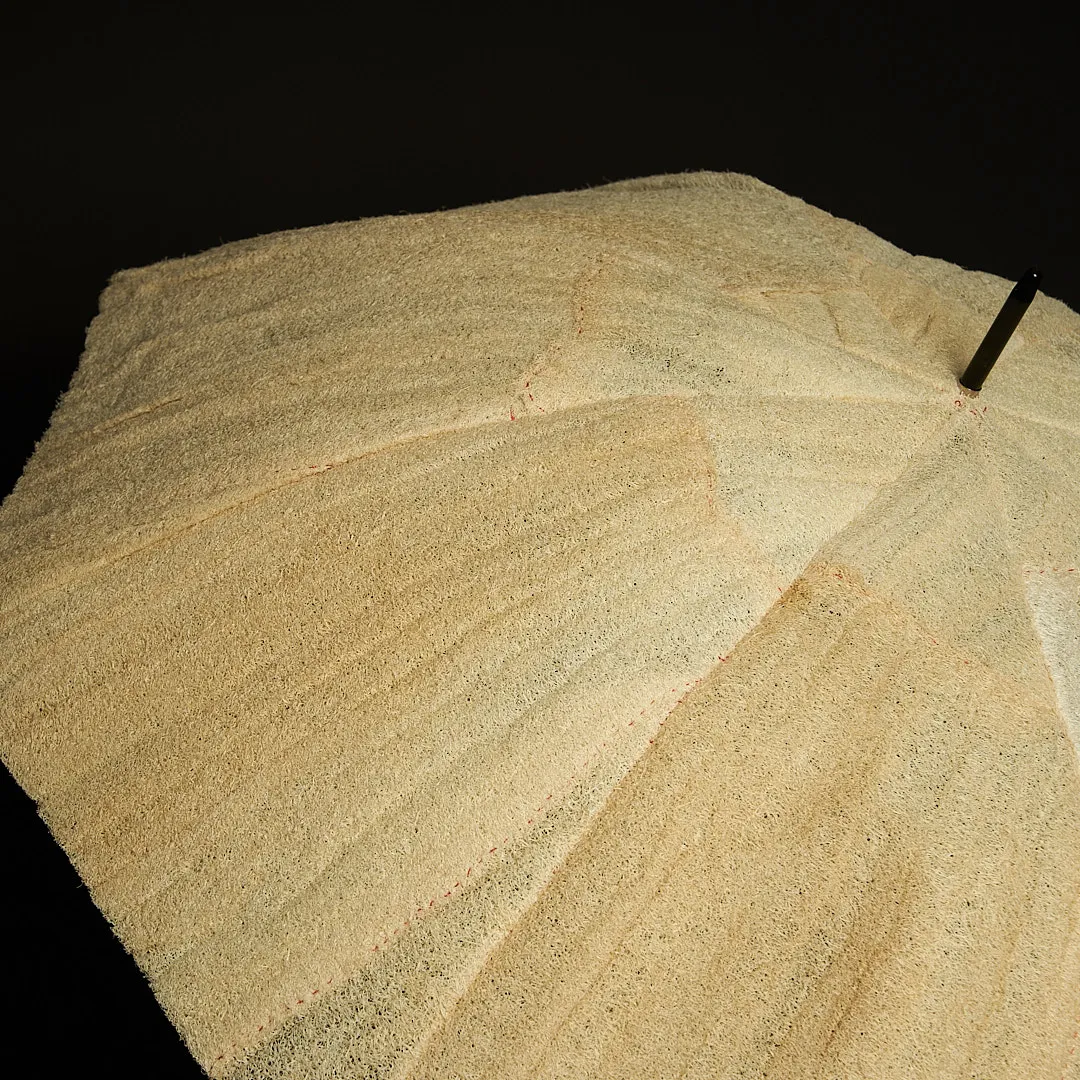
Eight loofah sections were sewn together to form the complete shape.
The assembled parts were then attached to the umbrella skeleton.

Observations & Results

The process of cutting and sewing loofah based on a pattern was found to be similar to working with conventional fabrics.
The loofah material, when flattened, demonstrated suitability for this application.
The loofah parasol provided moderate protection from sunlight.
The resulting parasol was difficult to close and exhibited less flexibility compared to parasols made with traditional fabric materials.

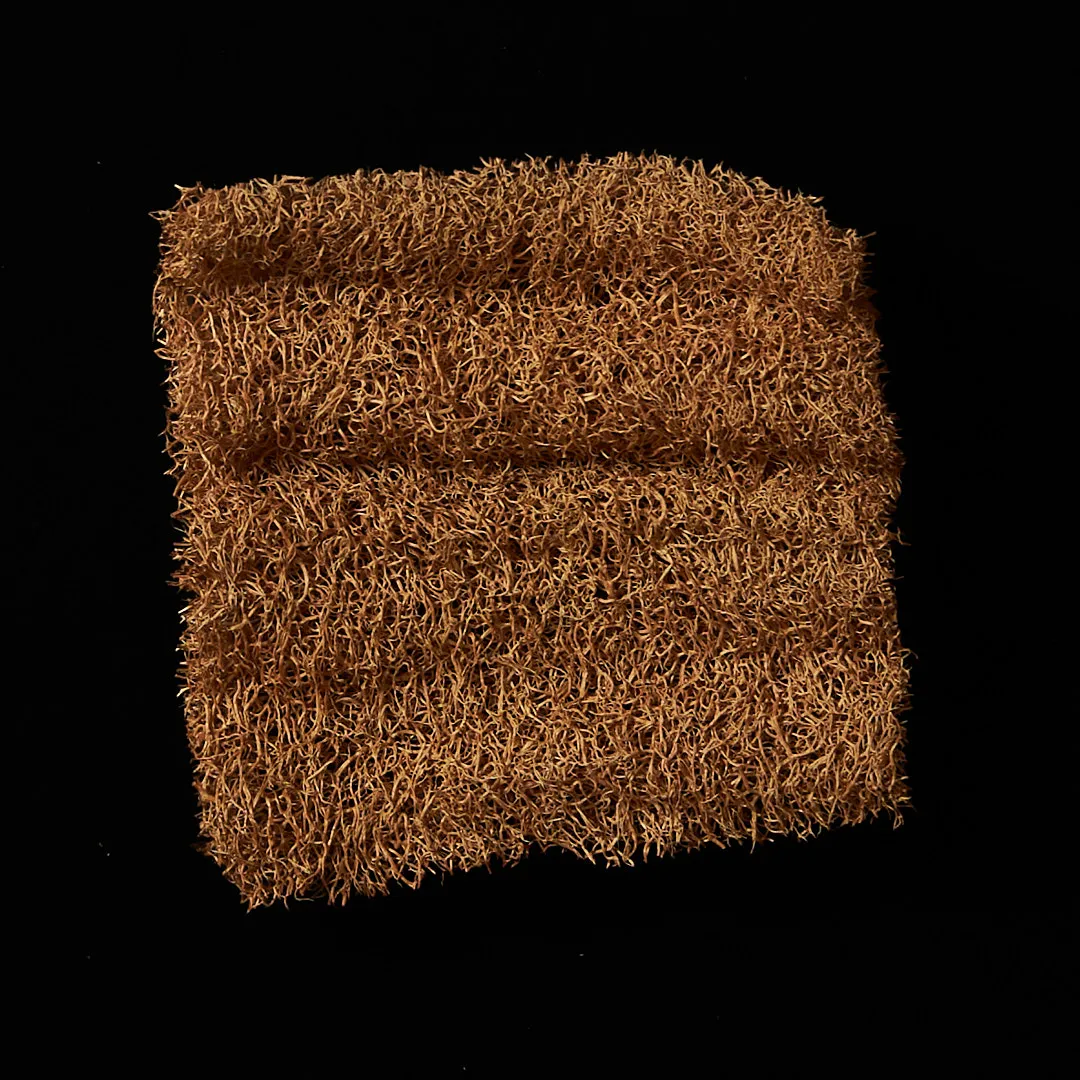
Pomegranate skin dye

Objective

  • To investigate the effectiveness of pomegranate skin as a natural dye for loofah material.
  • To observe the resulting color hue and intensity imparted to loofah using a standardized mordant and dye bath process.

Materials

  • Pomegranate skin
  • Mordant solution
  • Loofah
  • Clean water

Tools

  • Plastic bowl
  • Stainless steel pan
  • Gloves
  • Goggles
  • Mask
  • Wooden stirring spatula

(Note: Precautions are important when dyeing, similar to working with fabrics.)

Methodology

This standardized method was applied for all dyed loofah pieces:
Loofah material was cut into 10x10 cm squares.
The loofah squares were soaked in a mordant solution for a period of 24 hours.
After mordanting, the loofah pieces were thoroughly washed with clean water.
A dye bath was prepared using pomegranate skin. The loofah pieces were then introduced into this bath and cooked on low heat with the colorant for 1 hour.
The loofah was allowed to cool down in the dye bath and remained immersed for an additional 24 hours to maximize color absorption.
Finally, the dyed loofah pieces were washed extensively with clean water to remove any unfixed dye.
Observations & Results

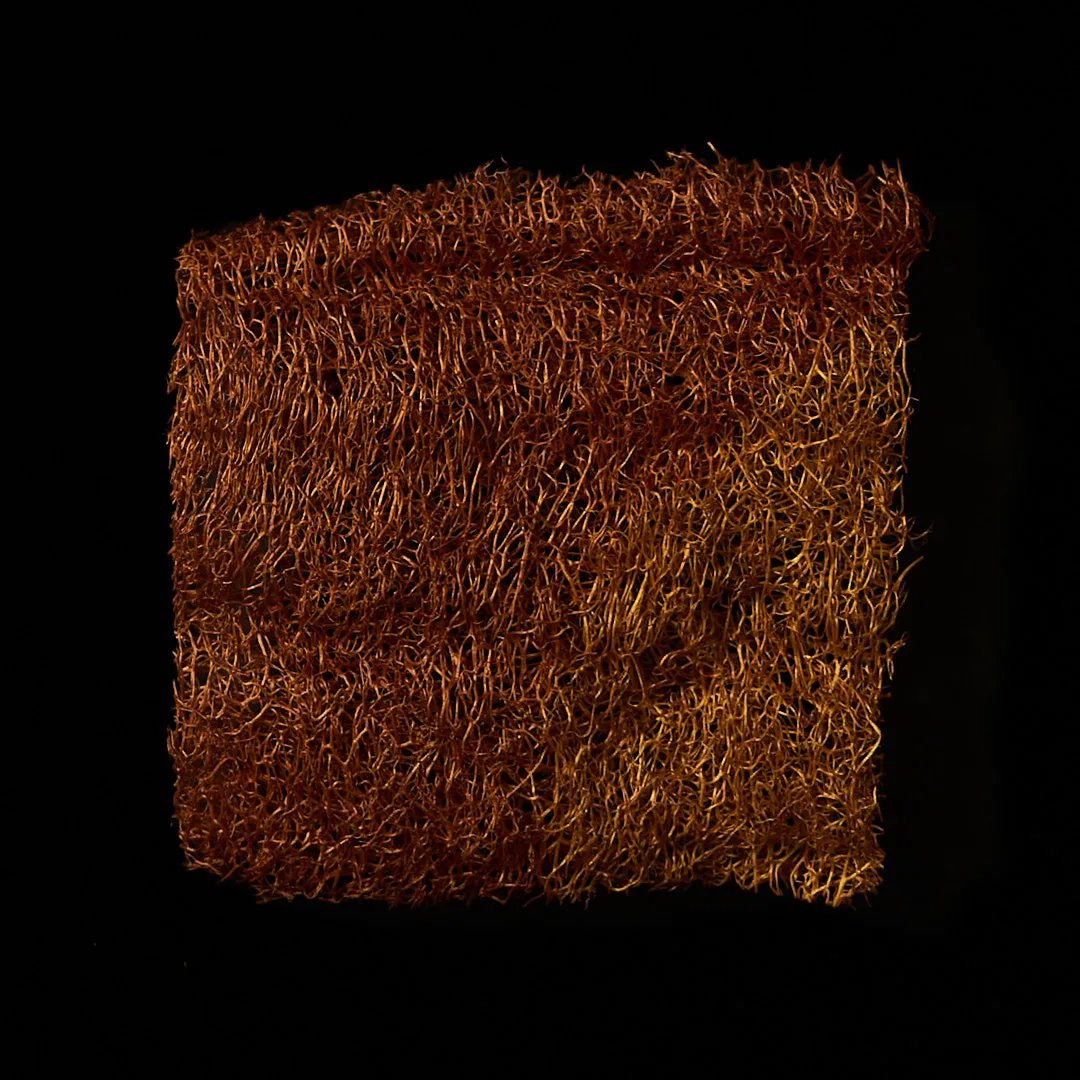
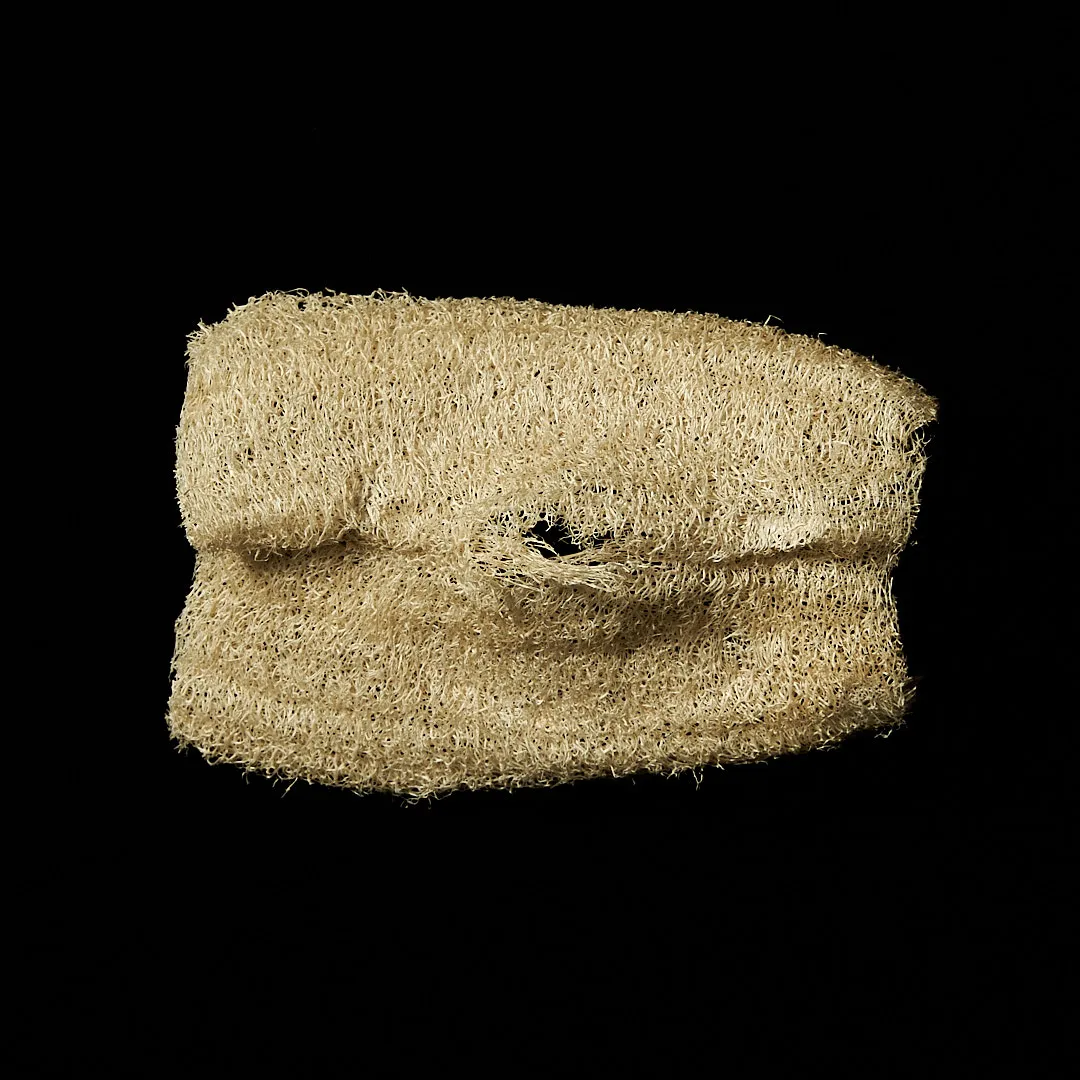
The dyeing process with pomegranate skin resulted in a light reddish-brown color on the loofah.

Parsley dye

Objective

  • To investigate the effectiveness of fresh parsley as a natural dye for loofah material.
  • To observe the resulting color hue and intensity imparted to loofah using a standardized mordant and dye bath process.

Materials

  • Fresh parsley
  • Mordant solution
  • Loofah
  • Clean water

Tools

  • Plastic bowl
  • Stainless steel pan
  • Gloves
  • Goggles
  • Mask
  • Wooden stirring spatula

(Note: Precautions are important when dyeing, similar to working with fabrics.)

Methodology

This standardized method was applied for all dyed loofah pieces:
Loofah material was cut into 10x10 cm squares.
The loofah squares were soaked in a mordant solution for a period of 24 hours.
After mordanting, the loofah pieces were thoroughly washed with clean water.
A dye bath was prepared using fresh parsley. The loofah pieces were then introduced into this bath and cooked on low heat with the colorant for 1 hour.
The loofah was allowed to cool down in the dye bath and remained immersed for an additional 24 hours to maximize color absorption.
Finally, the dyed loofah pieces were washed extensively with clean water to remove any unfixed dye.
Observations & Results

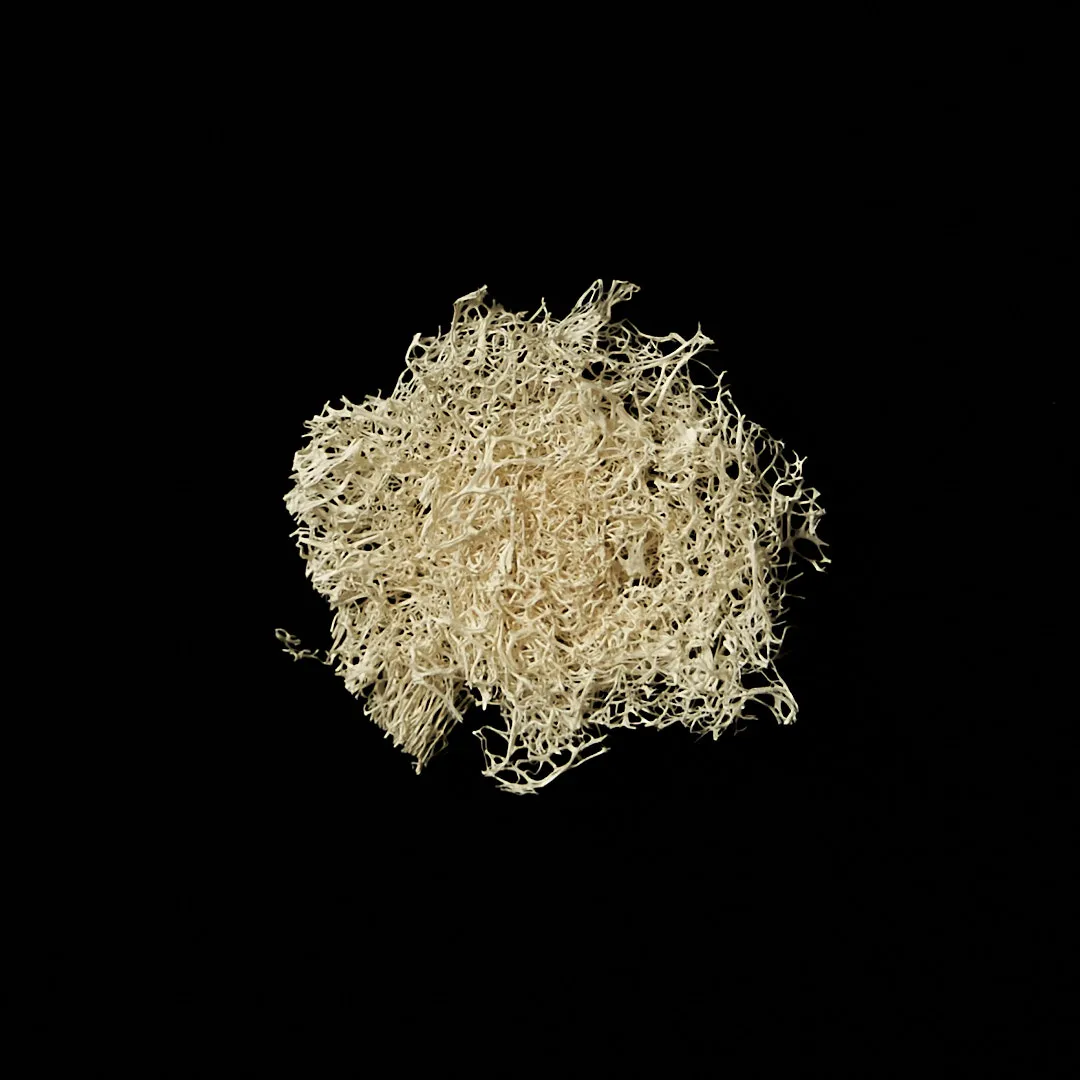
The dyeing process with parsley resulted in a very light, greenish, yellowish discoloration on the loofah.

Parsley dye
Red onion dye
Red cabbage tie-dye
Red onion dye

Objective

  • To investigate the effectiveness of red onion skin as a natural dye for loofah material.
  • To observe the resulting color hue, vibrancy, and saturation imparted to loofah using a standardized mordant and dye bath process.

Materials

  • Red onion skin
  • Mordant solution
  • Loofah
  • Clean water

Tools

  • Plastic bowl
  • Stainless steel pan
  • Gloves
  • Goggles
  • Mask
  • Wooden stirring spatula

(Note: Precautions are important when dyeing, similar to working with fabrics.)

Methodology

This standardized method was applied for all dyed loofah pieces:
Loofah material was cut into 10x10 cm squares.
The loofah squares were soaked in a mordant solution for a period of 24 hours.
After mordanting, the loofah pieces were thoroughly washed with clean water.
A dye bath was prepared using red onion skins. The loofah pieces were then introduced into this bath and cooked on low heat with the colorant for 1 hour.
The loofah was allowed to cool down in the dye bath and remained immersed for an additional 24 hours to maximize color absorption.
Finally, the dyed loofah pieces were washed extensively with clean water to remove any unfixed dye.
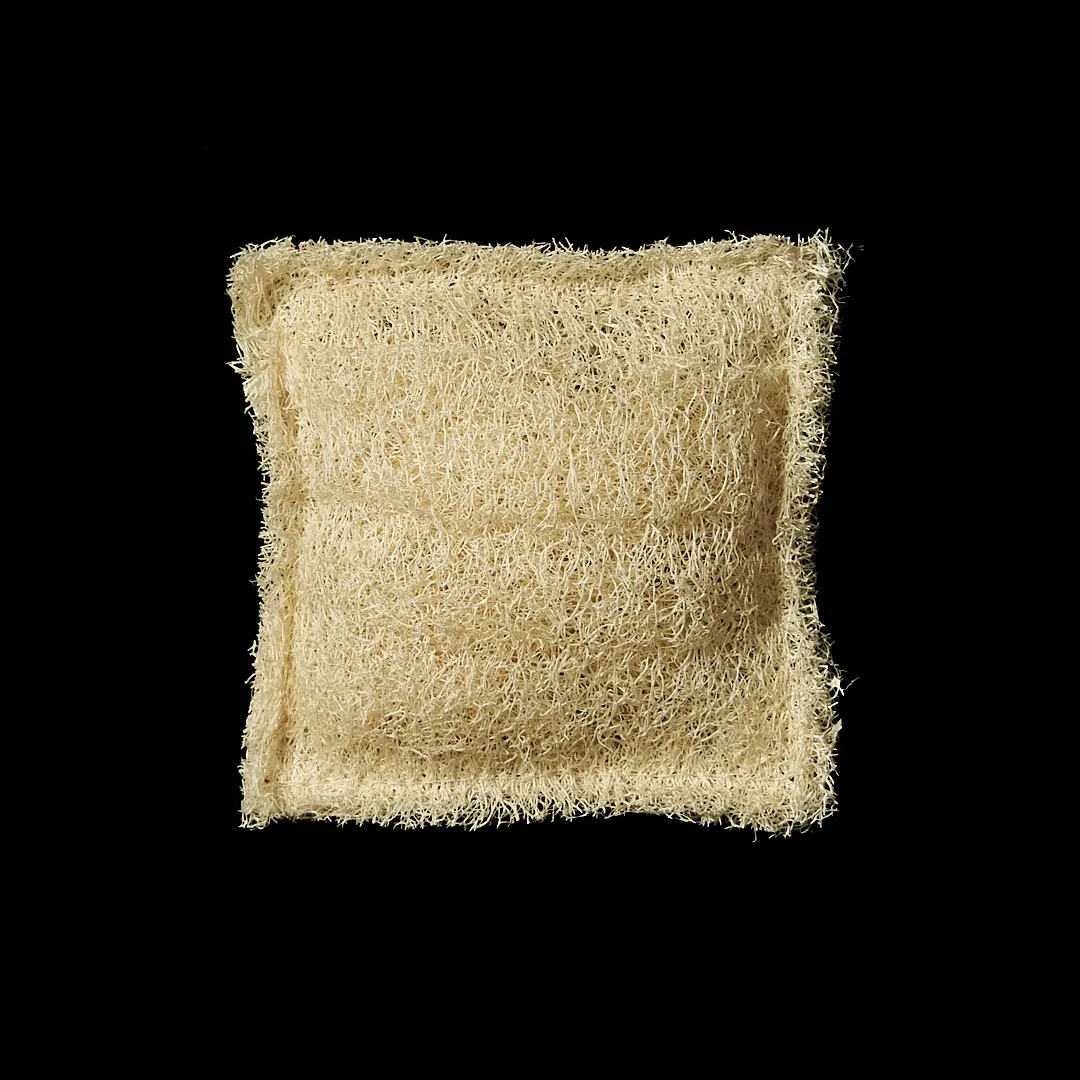
Observations & Results

The dyeing process with red onion skin resulted in a rich, bright, vibrant dark orange color on the loofah.

Red cabbage tie-dye

Objective

  • To investigate the effectiveness of fresh red cabbage as a natural dye for loofah material.
  • To explore the creation of patterned color effects on loofah using a tie-dyeing technique.
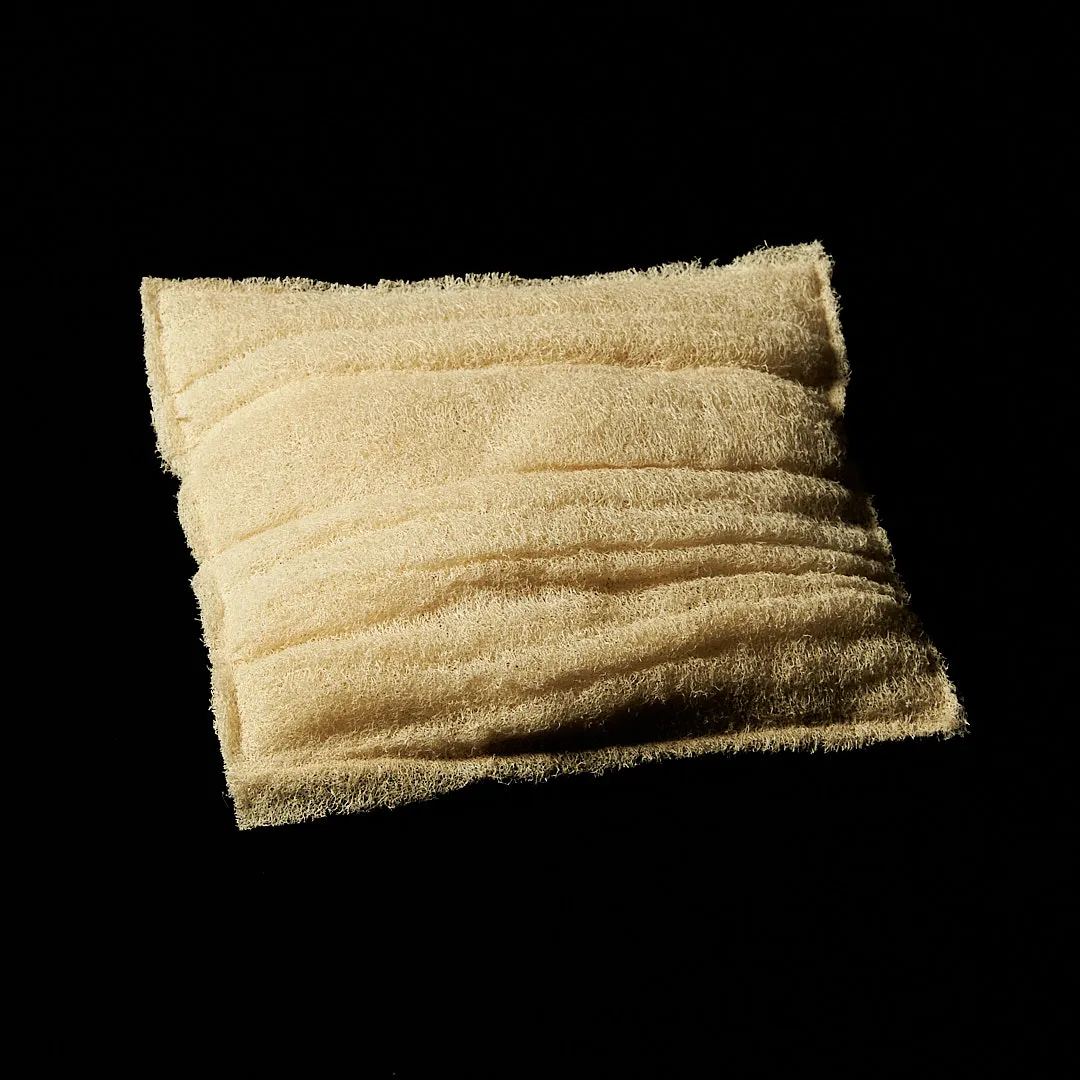
  • To observe the resulting color hue and the success of resisting dye in tied areas.
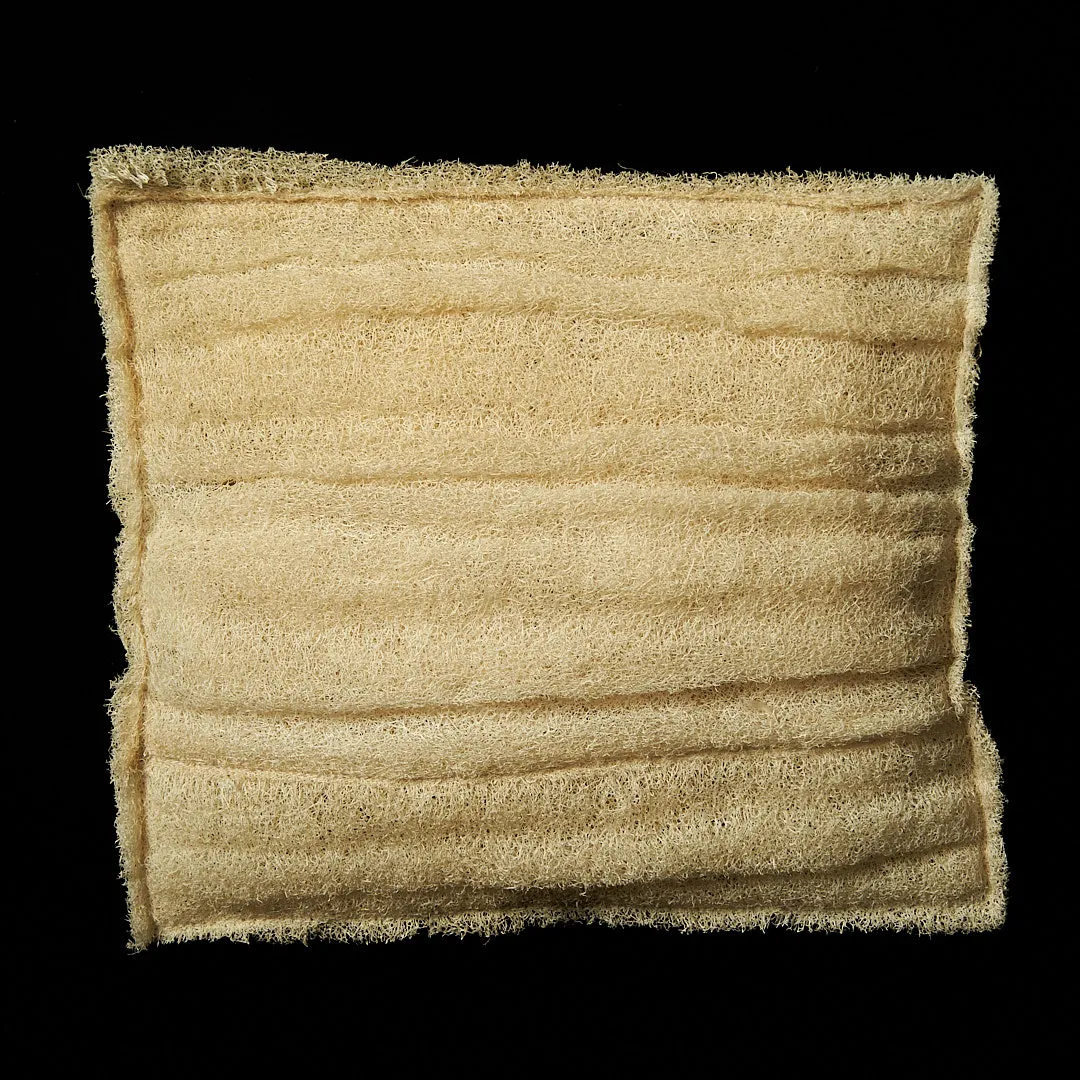
Materials

  • Fresh red cabbage
  • Mordant solution
  • Thread
  • Loofah
  • Clean water

Tools

  • Plastic bowl
  • Stainless steel pan
  • Gloves
  • Goggles
  • Mask
  • Wooden stirring spatula

(Note: Precautions are important when dyeing, similar to working with fabrics.)

Methodology

This standardized method was applied for dyeing loofah pieces, with an additional step for tie-dyeing:
Loofah material was cut into 10x10 cm squares.
For tie-dye effect: Thread was tightly wrapped around specific parts of the loofah pieces.
The loofah squares (including the tied sections) were soaked in a mordant solution for a period of 24 hours.
After mordanting, the loofah pieces were thoroughly washed with clean water.
A dye bath was prepared using fresh red cabbage. The loofah pieces were then introduced into this bath and cooked on low heat with the colorant for 1 hour.
The loofah was allowed to cool down in the dye bath and remained immersed for an additional 24 hours to maximize color absorption.
Finally, the dyed loofah pieces were thoroughly washed with clean water to remove any unfixed dye.
Observations & Results

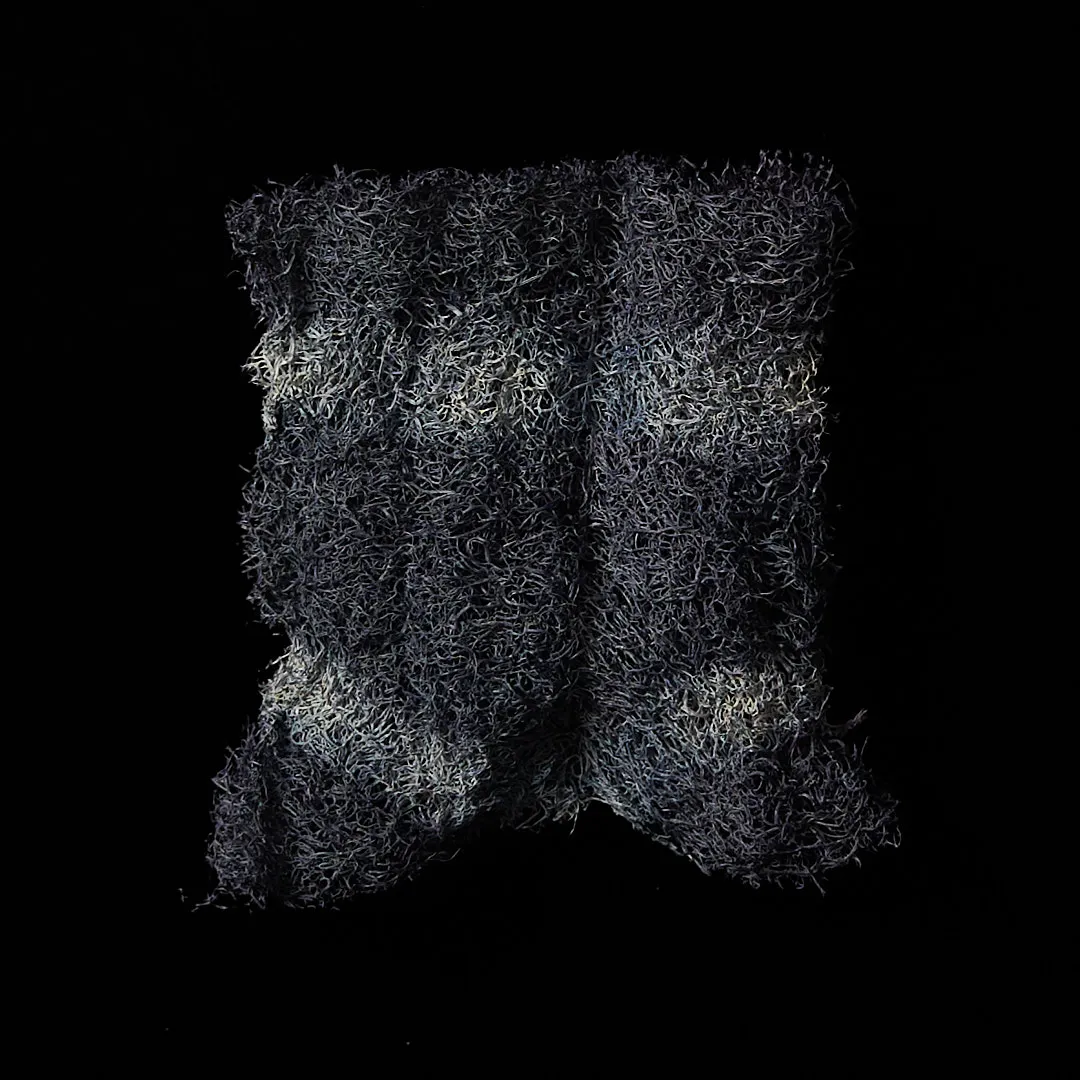
The dyeing process with red cabbage resulted in a dark, bright bluish-purple color on the loofah.
The areas of the loofah where the material was tightly tied with thread remained uncolored, successfully creating a tie-dye pattern.

Red cabbage tie-dye
Turmeric dye

Objective

  • To investigate the effectiveness of powdered turmeric spice as a natural dye for loofah material.
  • To observe the resulting color saturation and hue imparted to loofah using a mordant and dye bath process.

Materials

  • Powdered turmeric spice
  • Mordant solution
  • Loofah
  • Clean water

Tools

  • Plastic bowl
  • Stainless steel pan
  • Gloves
  • Goggles
  • Mask
  • Wooden stirring spatula

(Note: Precautions are important when dyeing, similar to working with fabrics.)

Methodology

This standardized method was applied for all dyed loofah pieces:
Loofah material was cut into 10x10 cm squares.
The loofah squares were soaked in a mordant solution for a period of 24 hours.
After mordanting, the loofah pieces were thoroughly washed with clean water.
A dye bath was prepared with the powdered turmeric. The loofah pieces were then cooked on low heat within this bath with the colorant for 1 hour.
The loofah was allowed to cool down in the dye bath and remained immersed for an additional 24 hours to maximize color absorption.
Finally, the dyed loofah pieces were washed extensively with clean water to remove any unfixed dye.
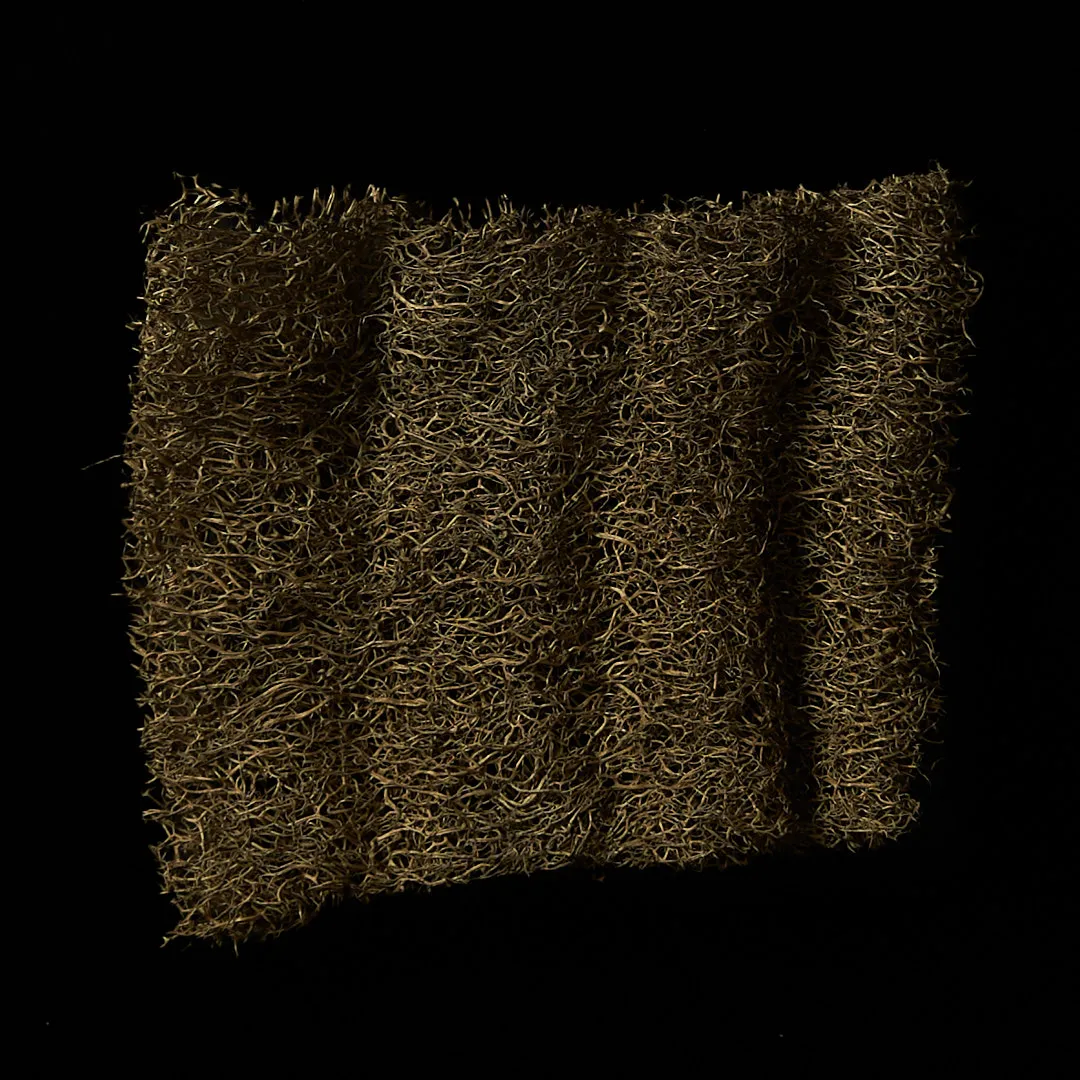
Observations & Results

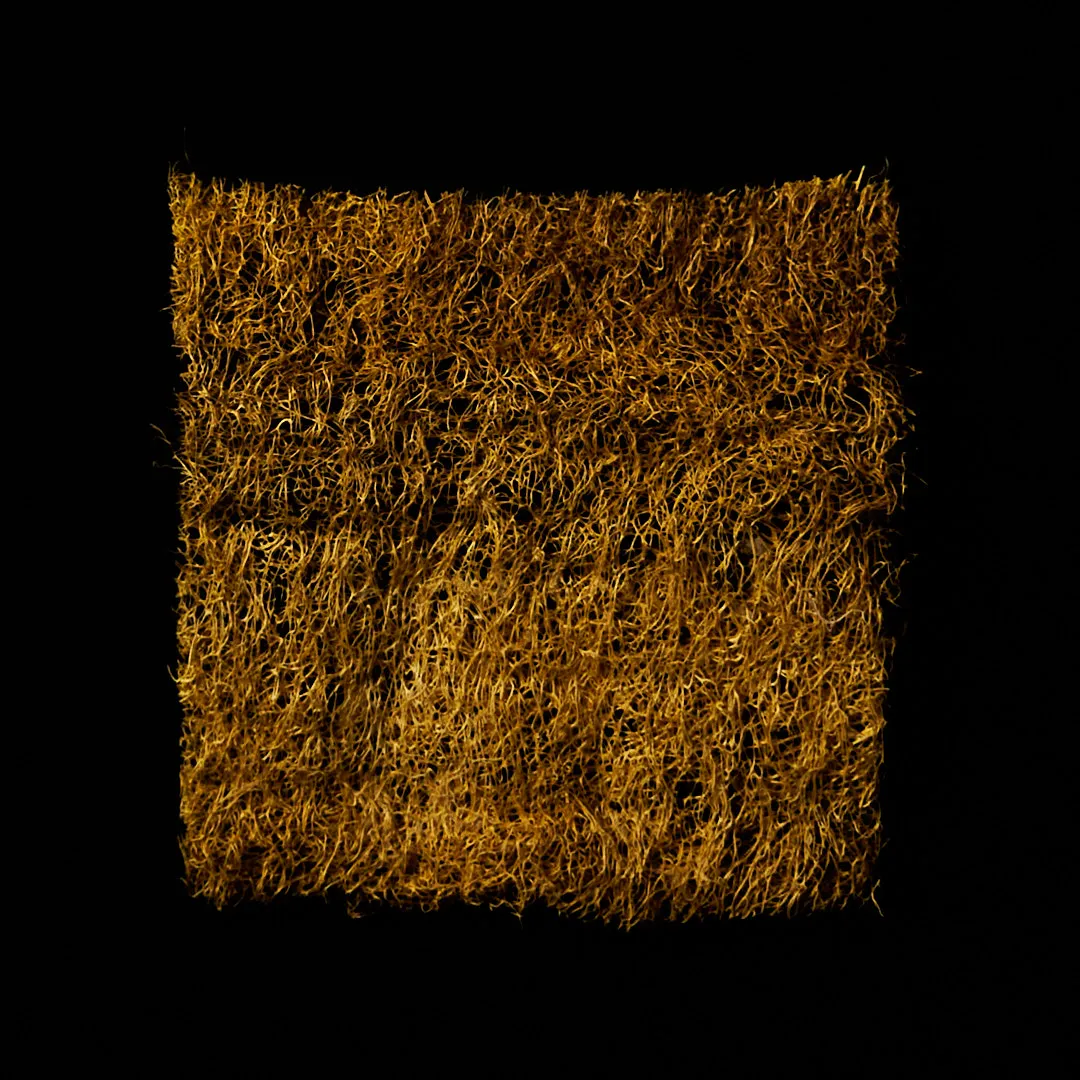
The dyeing process with turmeric resulted in a bright, strong yellow color on the loofah.

Turmeric dye
Paprika dye

Objective

  • To assess the efficacy of dried powdered paprika spice as a natural dye for loofah material.
  • To observe the resulting color hue imparted to loofah using a standard mordant and dye bath process.

Materials

  • Dried powdered paprika spice
  • Mordant solution
  • Loofah
  • Clean water

Tools

  • Plastic bowl
  • Stainless steel pan
  • Gloves
  • Goggles
  • Mask
  • Wooden stirring spatula

(Note: Precautions are important when dyeing, similar to working with fabrics.)

Methodology

This consistent method was employed for all dyed loofah pieces:
Loofah material was precisely cut into 10x10 cm squares.
The loofah squares were immersed and soaked in a mordant solution for a duration of 24 hours.
Following mordanting, the loofah pieces were thoroughly washed with clean water to remove any excess mordant.
A dye bath was prepared with the dried powdered paprika spice. The loofah pieces were then introduced into this bath and cooked on low heat for 1 hour.
After the cooking period, the loofah was allowed to cool down naturally within the dye bath and remained submerged for an additional 24 hours to ensure maximum color absorption.
Finally, the dyed loofah pieces were washed extensively with clean water to remove any unfixed dye.
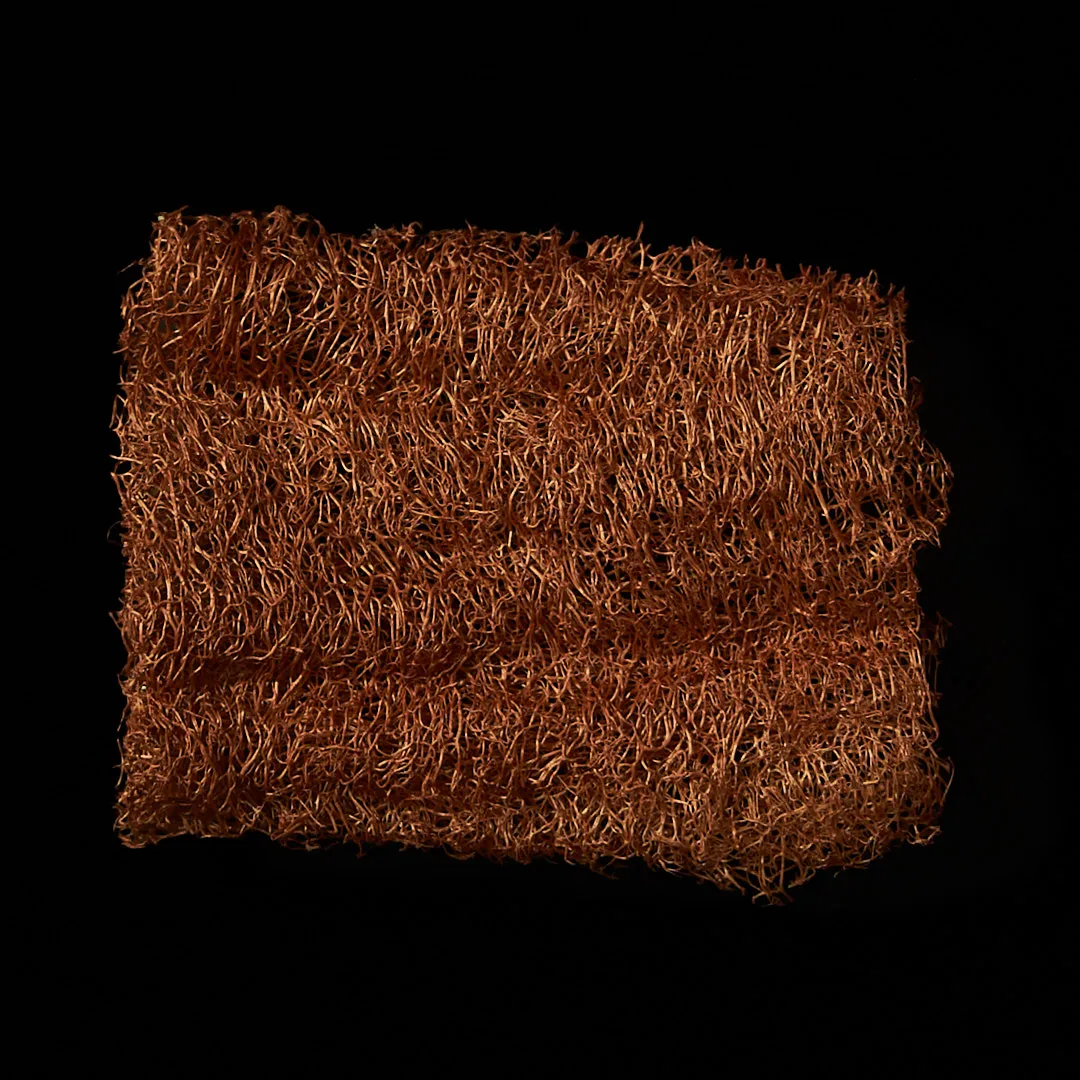
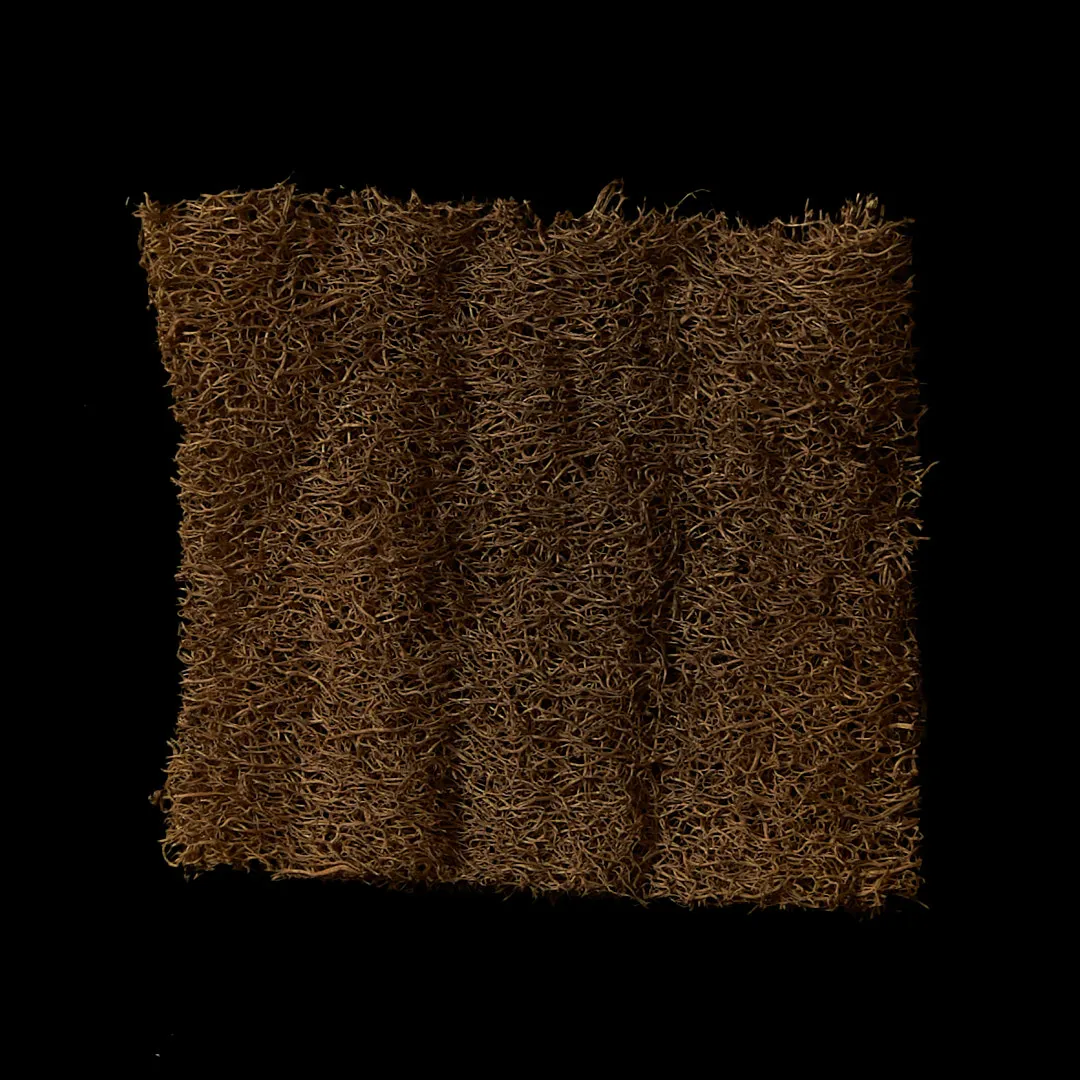
Observations & Results

The dyeing process with paprika resulted in the loofah acquiring a light orange hue.
Paprika dye
Mop
Mop
Mop
Mop
Heat-press
Mop

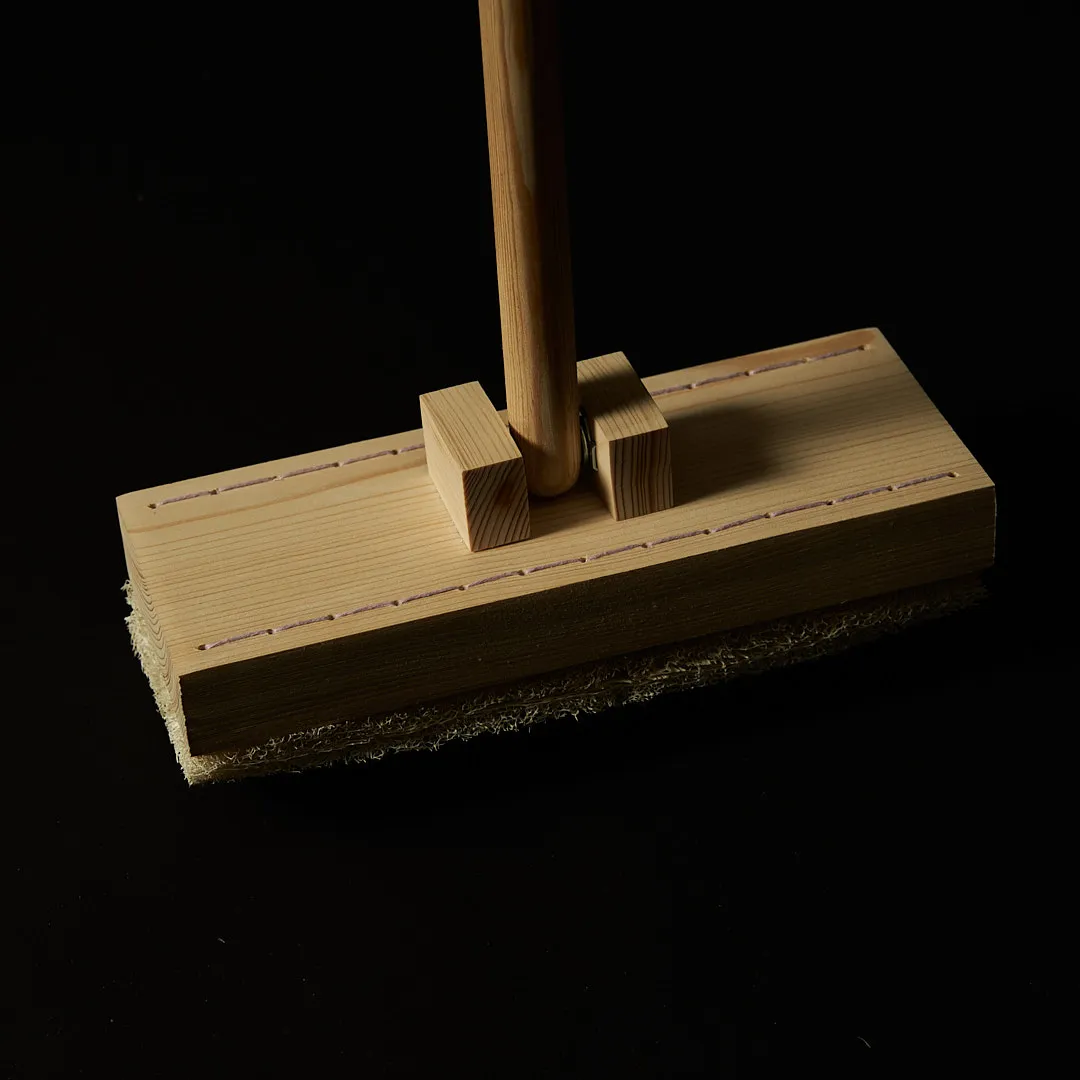
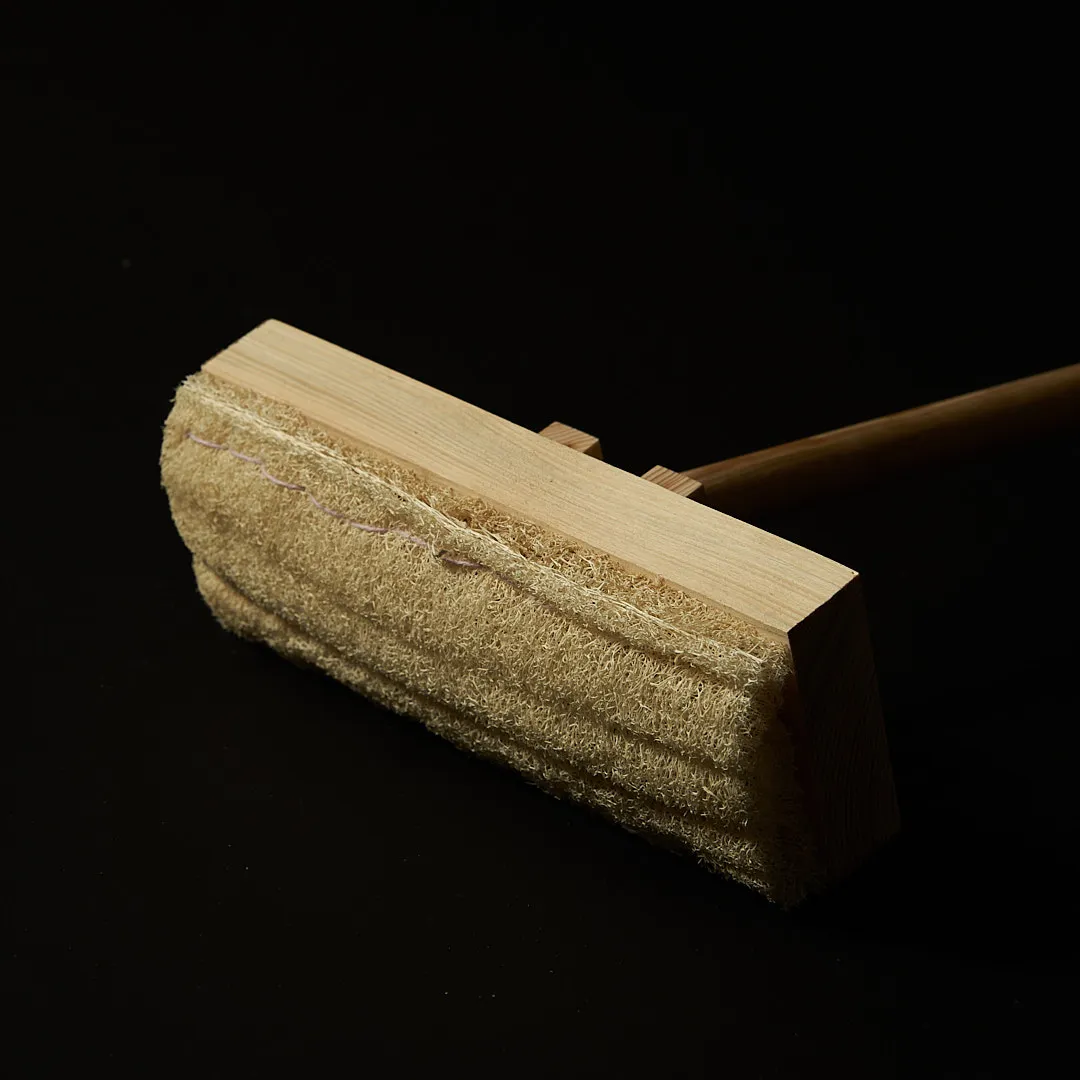
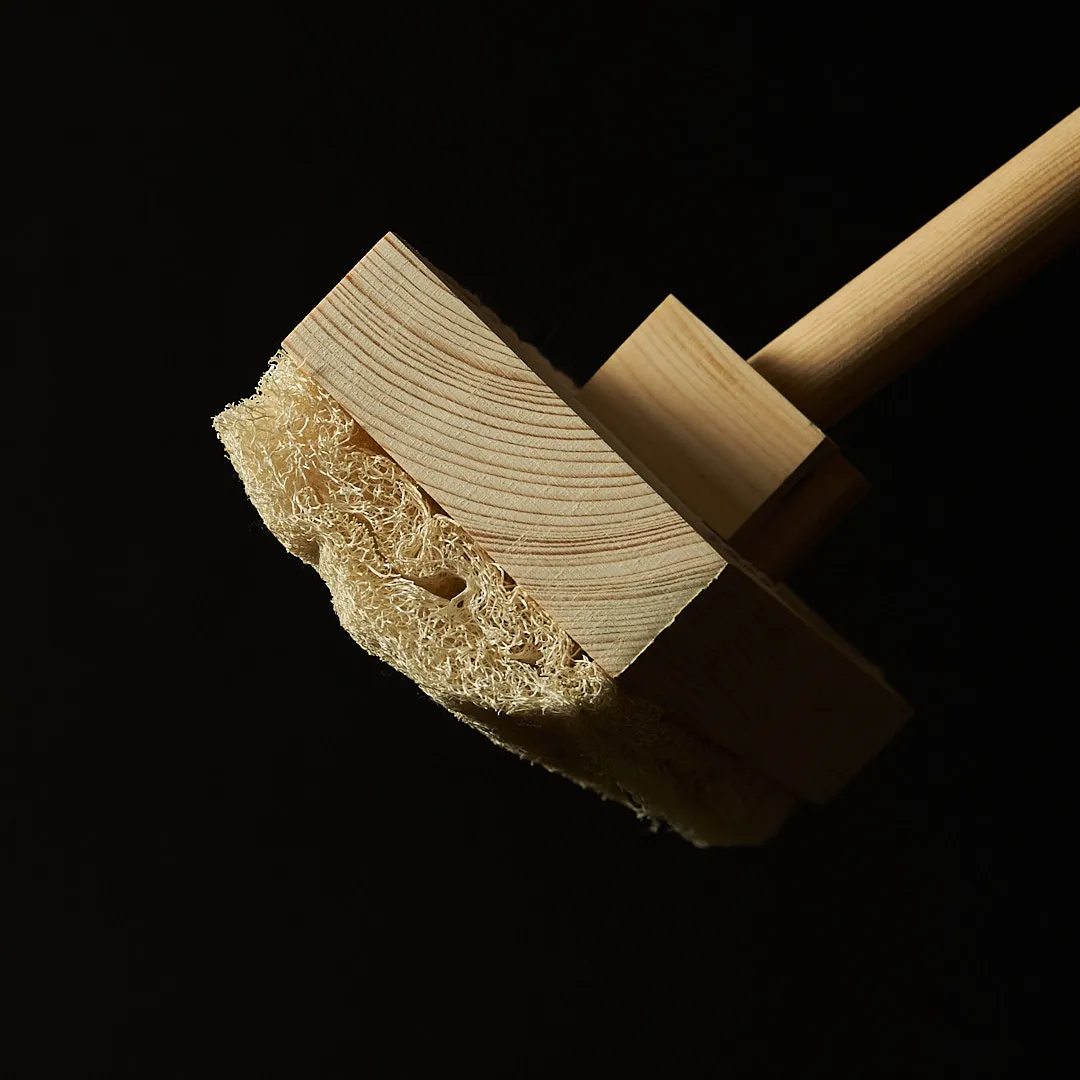
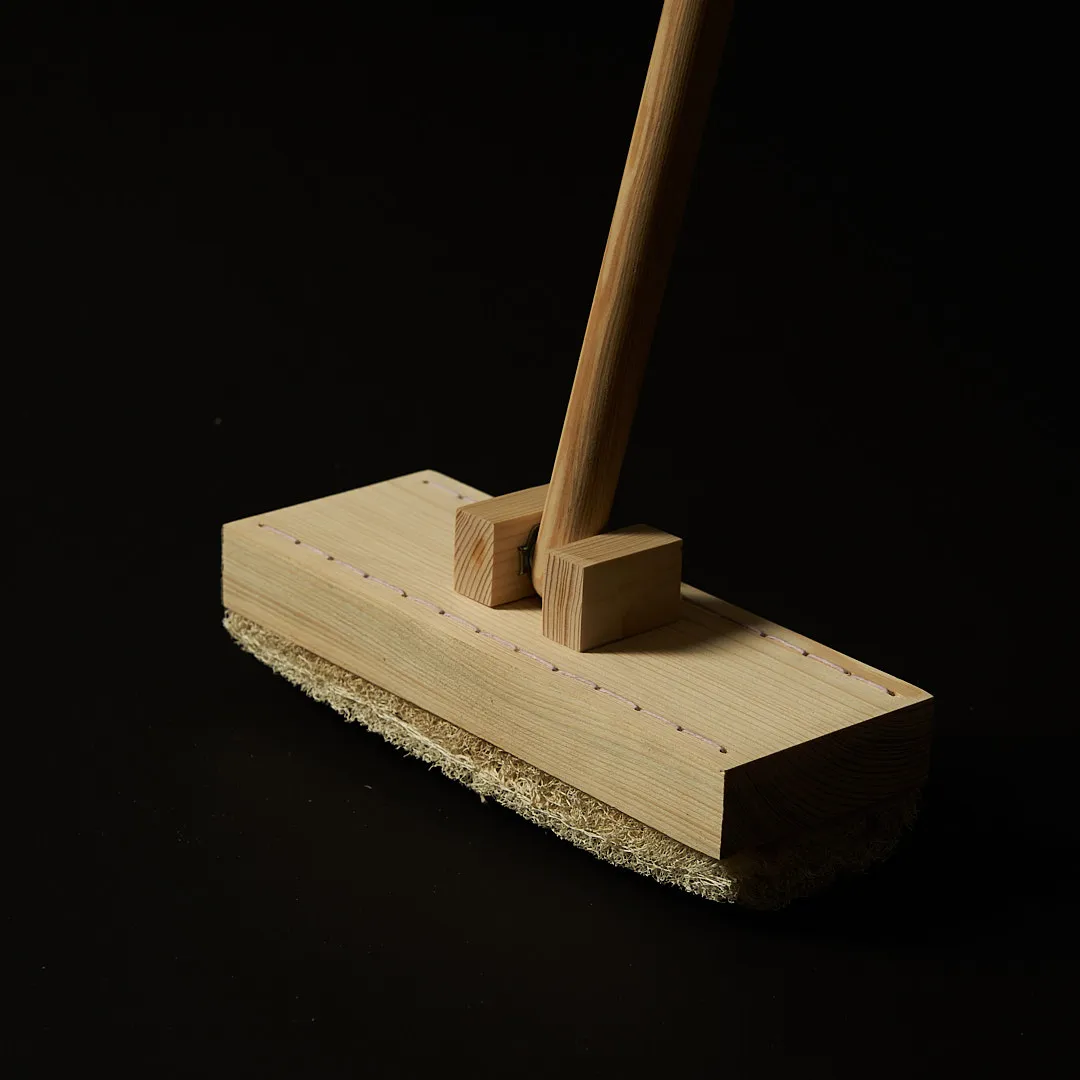
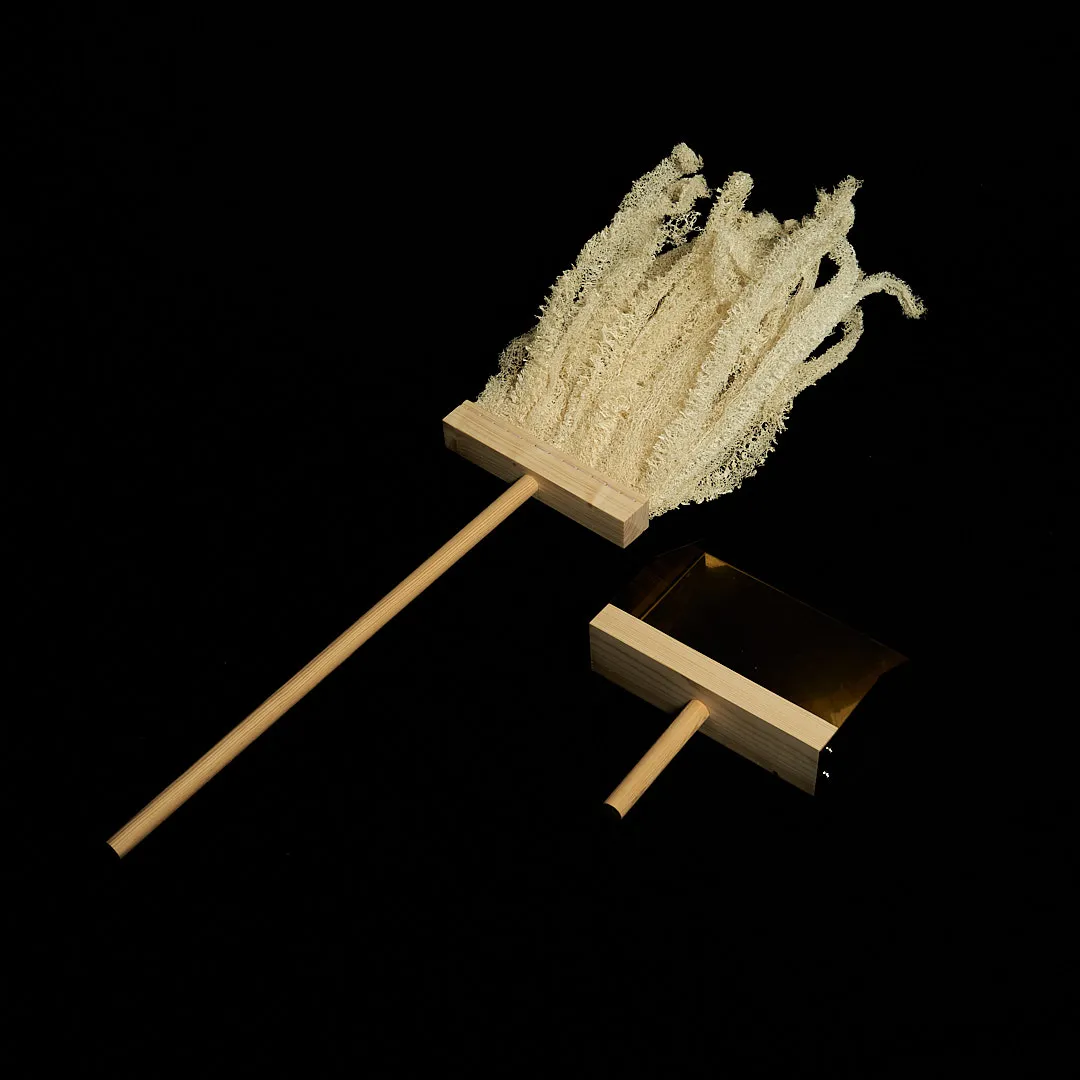
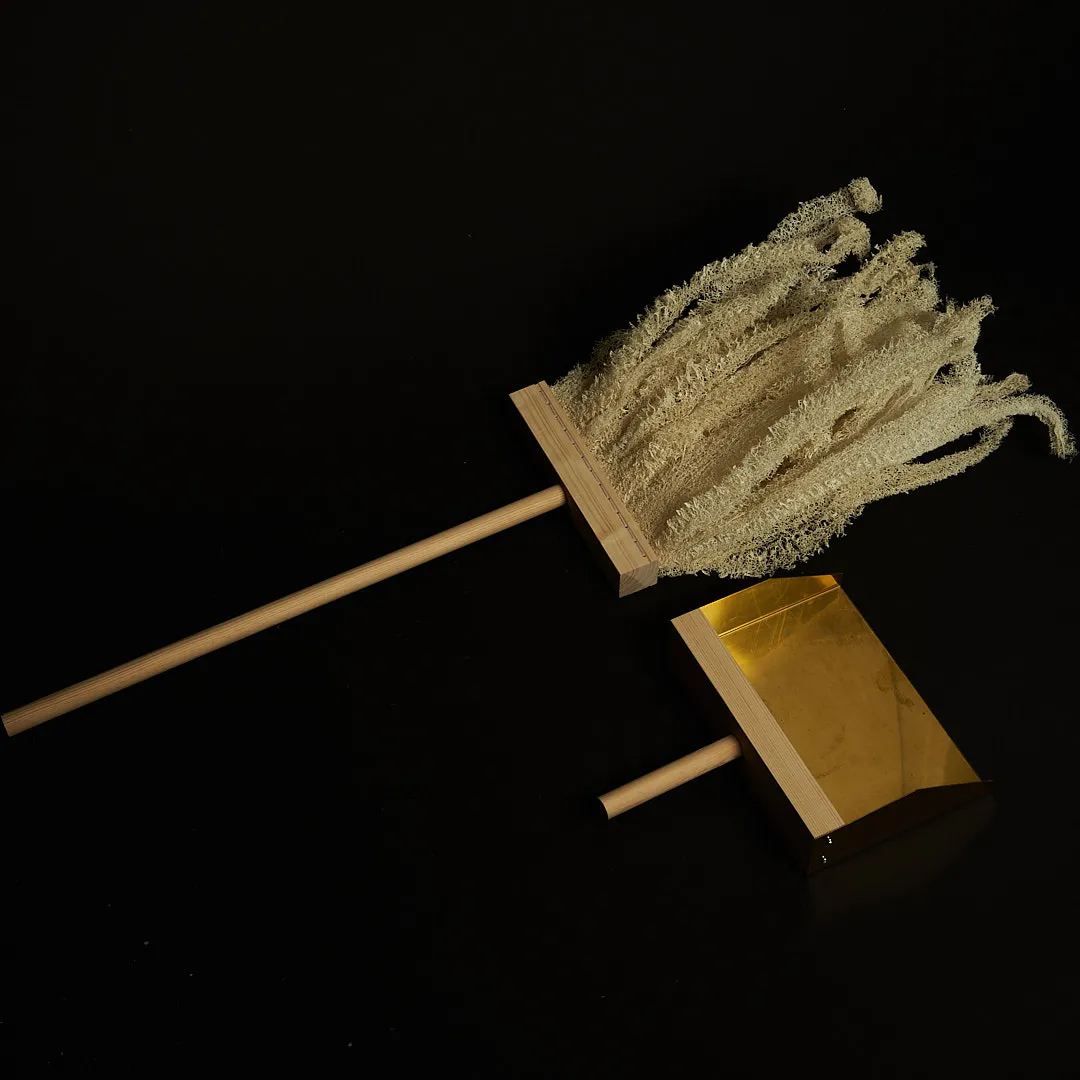
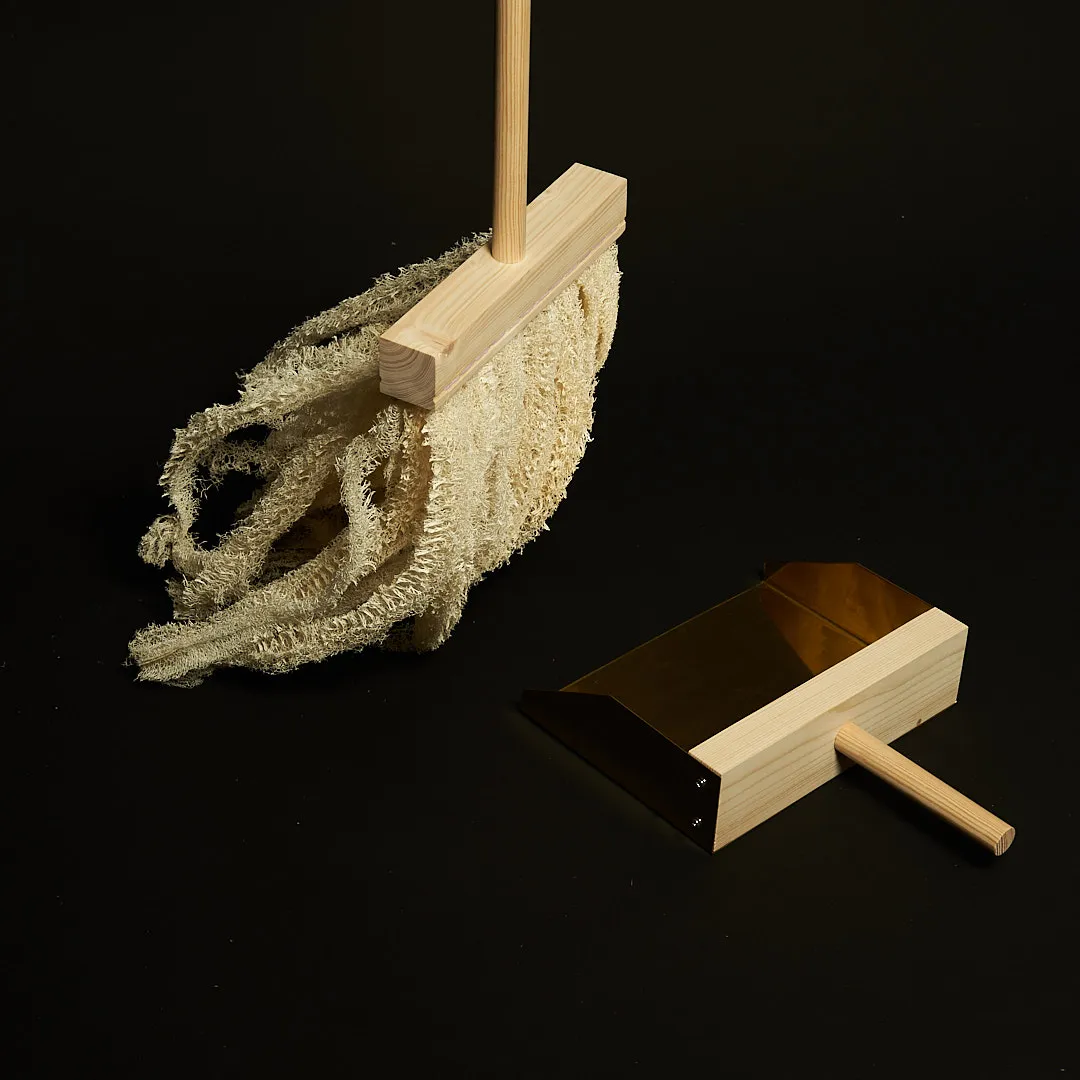
Objective

  • To evaluate the absorptive capacity of loofah material when used in a cleaning tool.
  • To assess the scrubbing performance of loofah as a replacement for conventional mop bristles or sponges.

Materials

  • Loofah
  • Wood
  • Threaded insert
  • Threaded rod
  • Thread

Tools

  • Saw
  • Utility knife
  • Needle
  • Drill
  • Chisel
  • Wood glue

Methodology

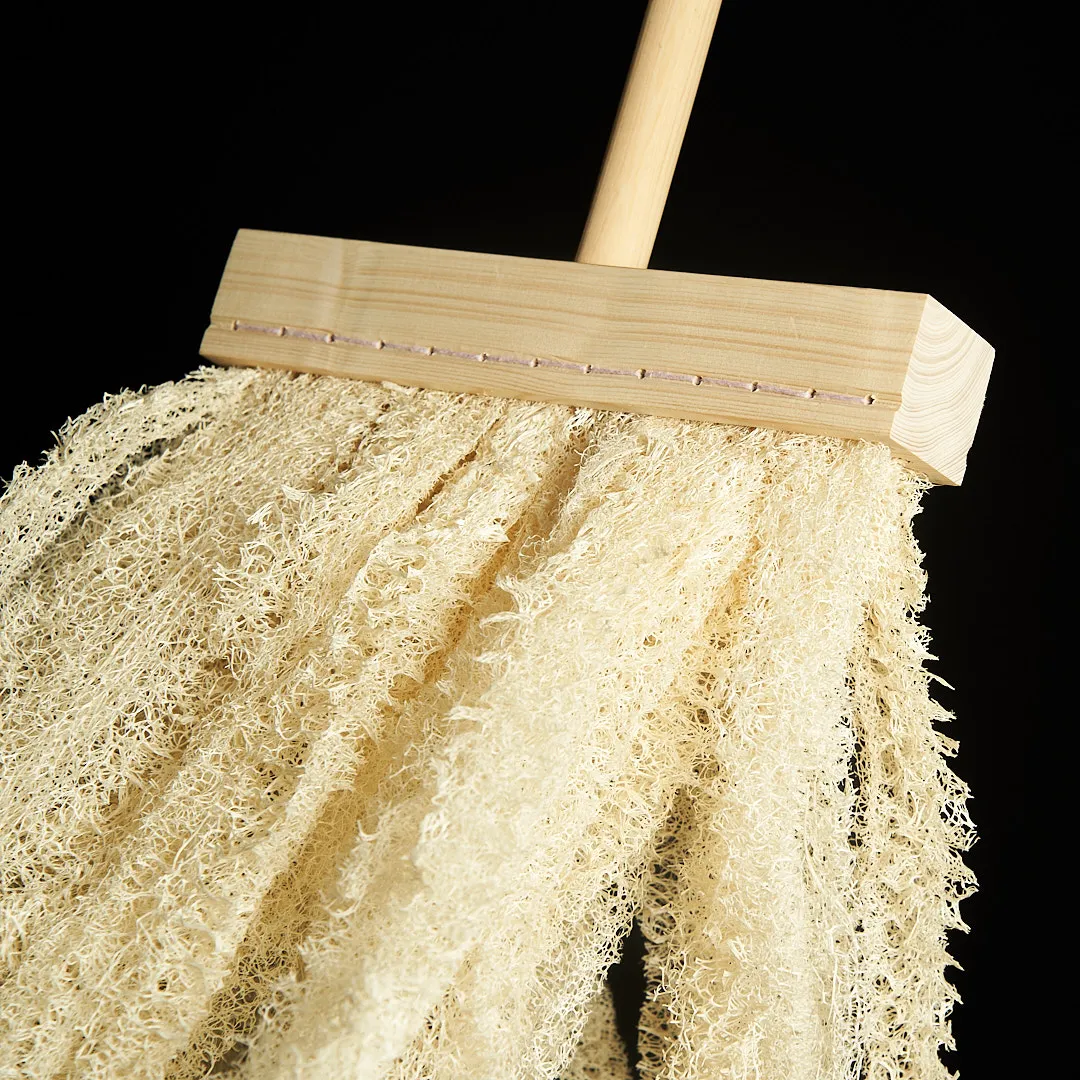
A wooden baseplate was precisely cut to form the foundation of the mop head.
Holes were measured and drilled along the long edges of the baseplate to facilitate attachment of the loofah.
Four layers of loofah were cut, using the wooden baseplate as a template to ensure proper fit and coverage.
The four loofah layers were securely sewn onto the wooden baseplate through the pre-drilled holes, creating the functional mop head.
A swivel set and a wooden rod were assembled to form the handle mechanism.
The assembled swivel set was then glued securely onto the top surface of the baseplate, completing the mop prototype.

Heat-press
Heat-press
Heat-press
Heat-press
Heat-press

Objective

  • To explore the potential for creating visual patterns by combining flattened and unflattened (puffy) sections of loofah.
  • To investigate the effectiveness and ease of flattening loofah material using a heat press.

Materials

  • Loofah plant (whole, outer fibrous layer, various layers; wet and dry)
  • Starch-based spray (material stiffening treatment)
  • Fabric (pressing wet material)
  • Silicone transfer material

Tools

  • Heat press
  • Laser-cut wooden stencils

Methodology

Various configurations and conditions were tested during the heat pressing process:
Whole loofah plants were pressed in both wet and dry states.
The outer layer of the fibrous loofah structure was pressed.
Multiple wet and dry layers of loofah (up to three) were pressed together.
Loofah was pressed directly into laser-cut wooden stencils to create specific forms.
The loofah plant was fused with silicone transfer material in the heat press.
Both untreated loofah and loofah treated with a starch-based spray were pressed.
Wet loofah material was pressed between layers of fabric to manage moisture.
Temperatures ranged from 90℃, 100℃, 120℃, 140℃, 160℃, to 170℃.
Pressing duration was set at 60 seconds and 90 seconds.

Observations & Results

Wet loofah plants pressed into stencils tended to revert to their original shape during the drying process.
Flattening proved more successful and stable when the material was dry prior to pressing.
A temperature of 90℃ was found to be sufficient for effective material flattening.
At temperatures higher than 90℃, the loofah material began to show signs of slight burning and discoloration, turning light brown.
A pressing time of 60 seconds was determined to be sufficient for flattening the material.

Sewing category description

Sewing

Constructing loofah objects through pattern-cutting and hand or machine stitching, treating the material as a textile to build functional, wearable, and assembled forms.

Pressing category description

Pressing

Using hydraulic and heat presses to transform loofah through compression, shaping, flattening, embossing, molding, and testing the material's structural limits under controlled force and temperature.

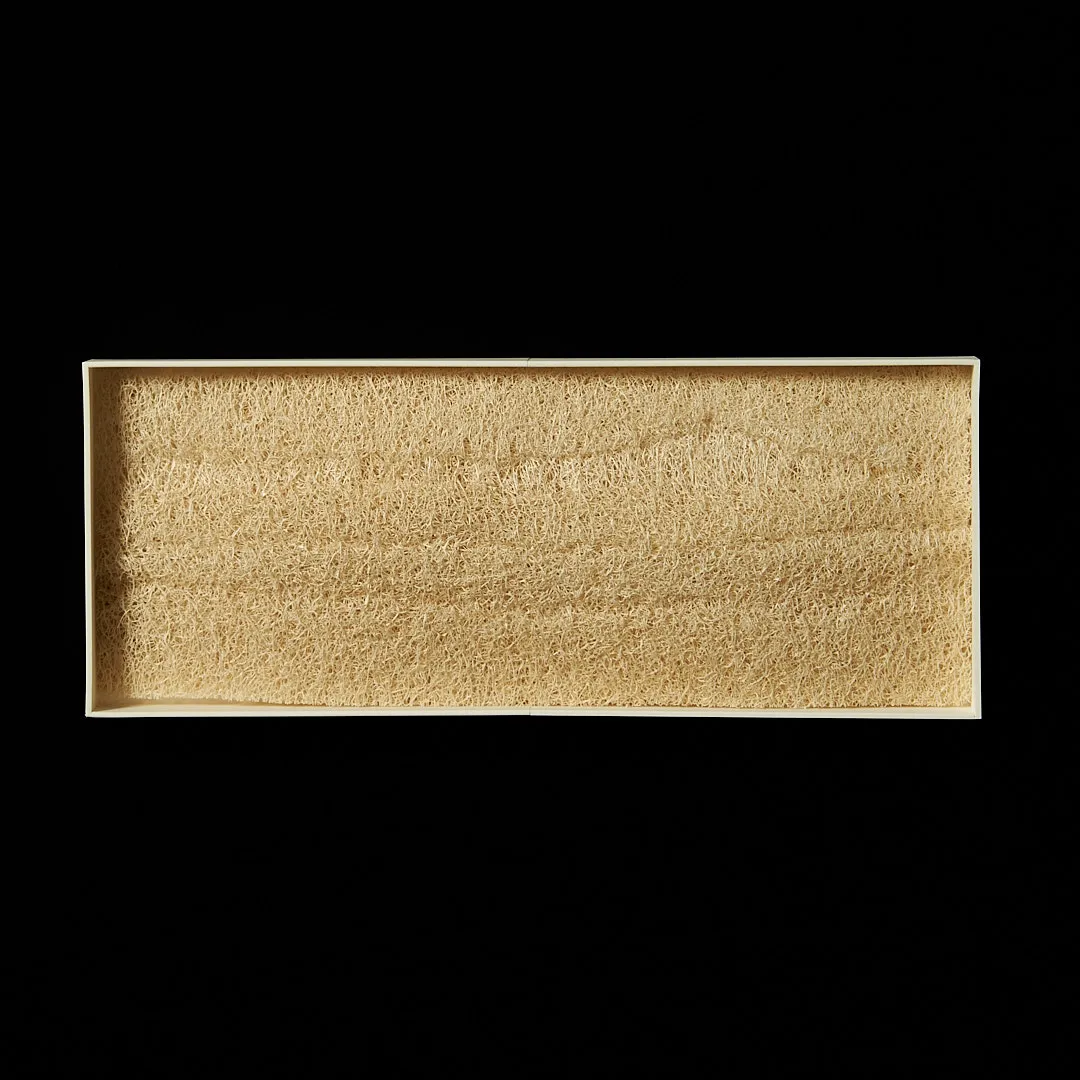
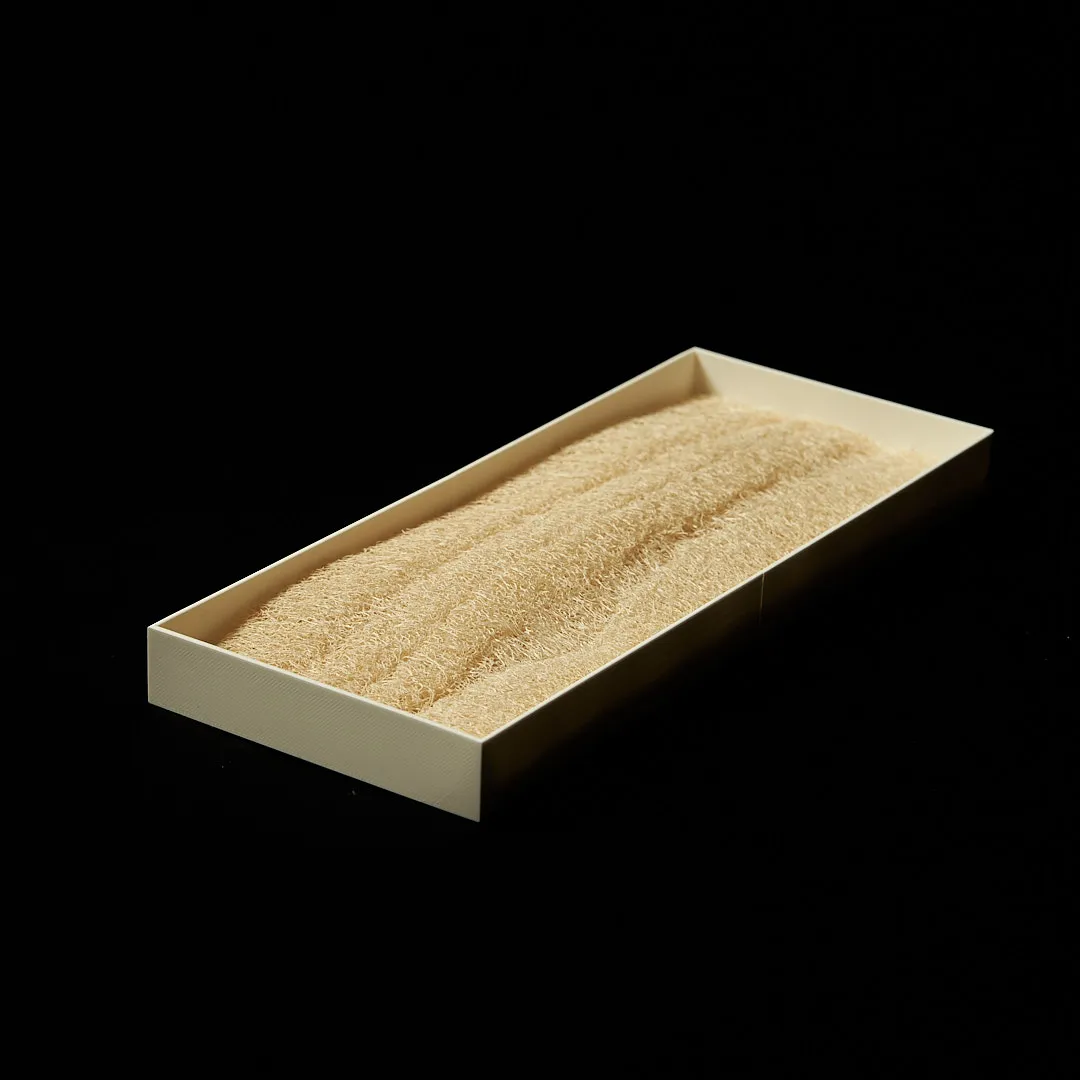
Drip tray

Objective

  • To test the liquid absorption capabilities of flattened loofah material when used as an insert in a drip tray.

Materials

  • 3D printed tray
  • Flattened loofah

Tools

  • Utility knife
  • Heat press
  • FDM 3D printer

Methodology

A tray was designed and produced using a 3D printer.
A piece of flattened loofah was cut to fit precisely within the 3D printed tray using a utility knife.
The loofah insert was then placed into the tray, ready for testing its liquid absorption properties.

Tube

Objective

  • To investigate the potential of loofah, specifically its hollow cross-section, as a protective layer around various objects.

Materials

  • Loofah (cylindrical form)

Tools

  • Utility knife

Methodology

A cross-section slice was cut from a cylindrical loofah.
The inner core of this loofah slice was then carefully cut out, transforming the slice into a hollow, ring-like tube.
This loofah tube was then tested for its protective qualities, specifically by placing it around objects such as a hot beverage cup and fragile items, and also by considering its use as a packaging filler.

Observations & Results

When placed around a cup containing a hot beverage, the loofah tube provided effective protection against heat transfer.
The loofah tube successfully protected fragile objects from bumping into each other, suggesting good shock absorption.
The material proved to be an excellent lightweight and protective filler for packaging during transport.

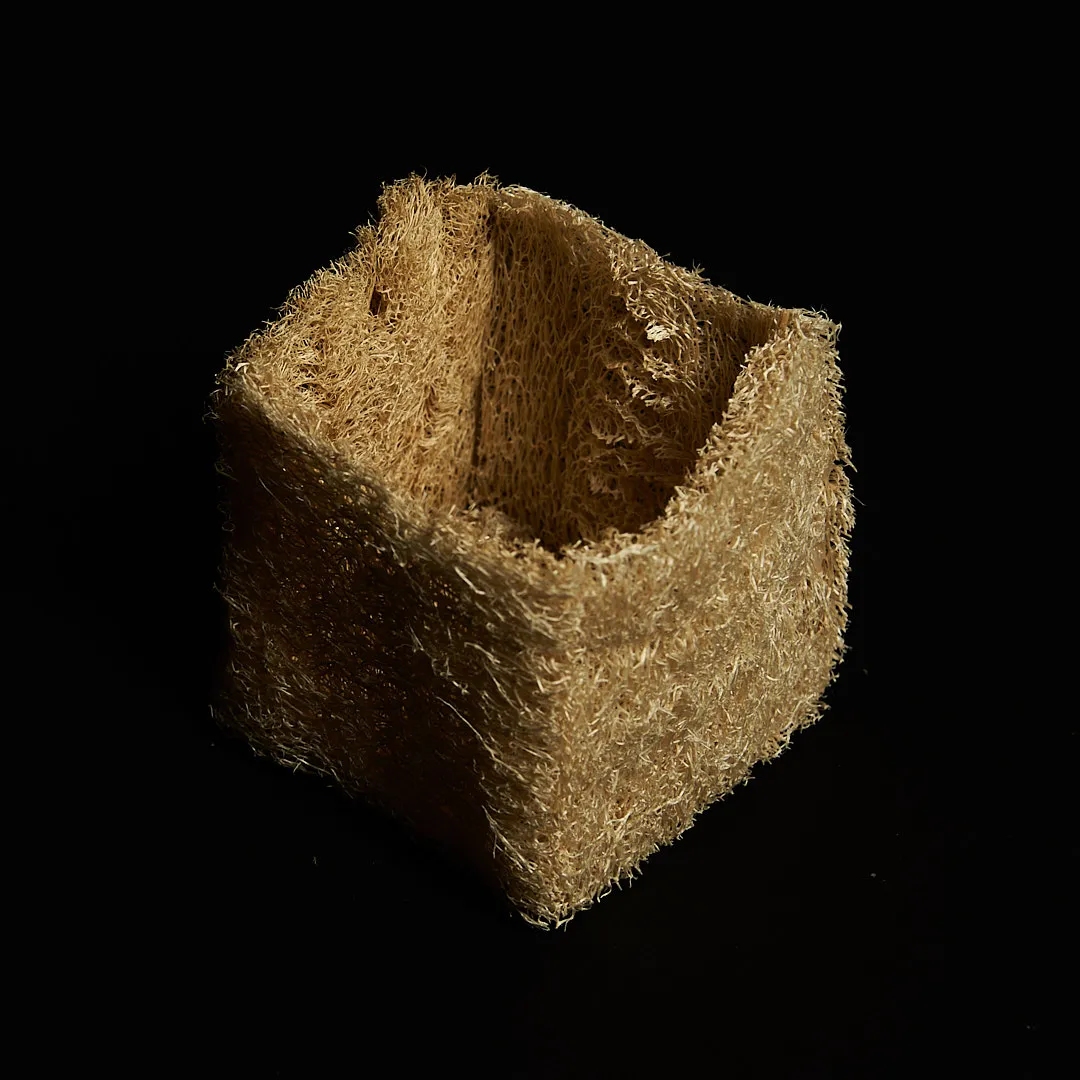
Box

Objective

  • To investigate the possibility of creating a functional storage item, such as a basket or box, from flattened loofah material.
  • To assess the structural integrity and shape retention of a loofah construction assembled with hot glue.

Materials

  • Flattened loofah
  • Hot glue

Tools

  • utility knife
  • Hot glue gun

Methodology

Five identical pieces were cut from flattened loofah material
These loofah pieces were then joined together along their edges using hot glue to form a cube shape, creating an open-top box.

Observations & Results

The assembled loofah box successfully held its intended cube shape.
The prototype was capable of storing small and lightweight items.

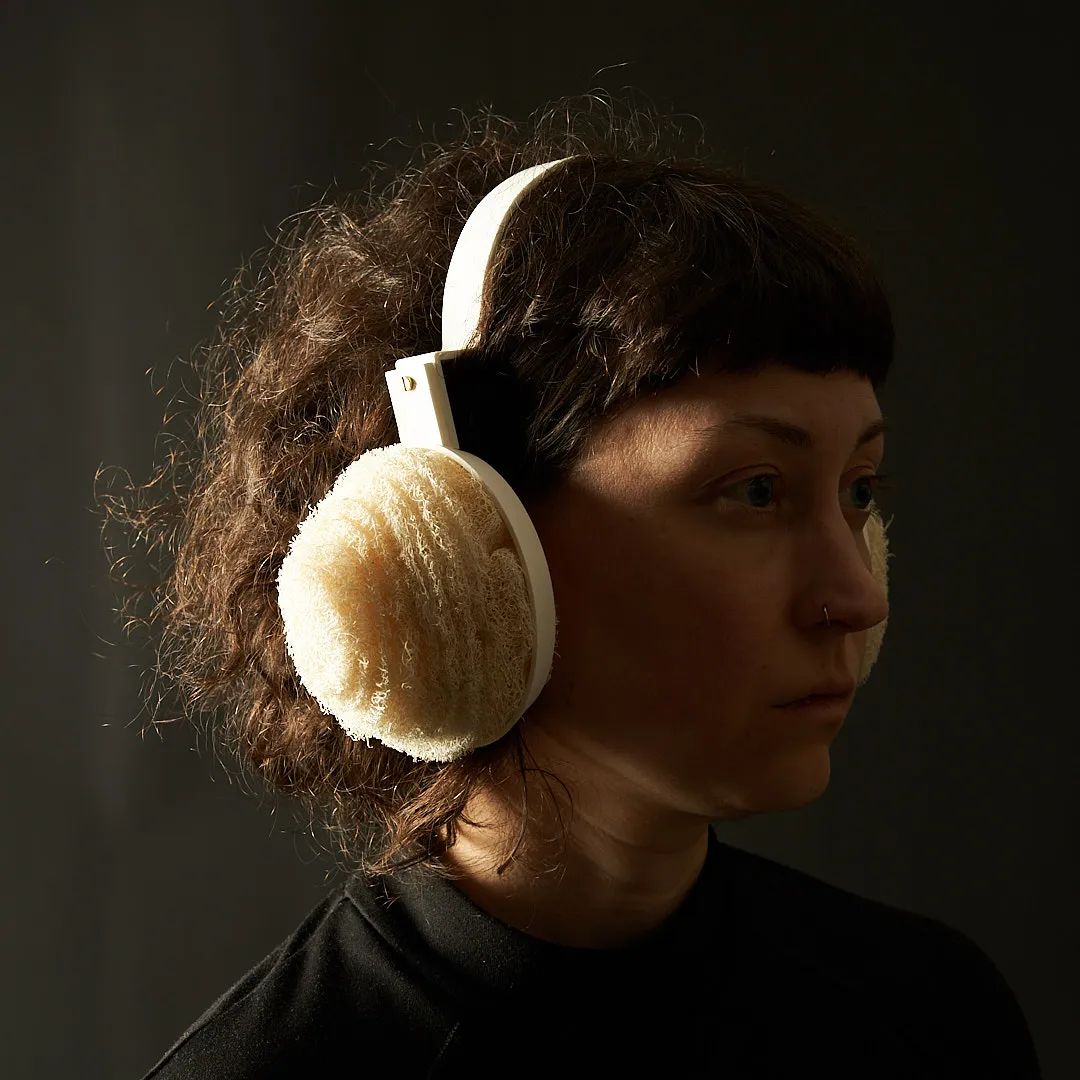
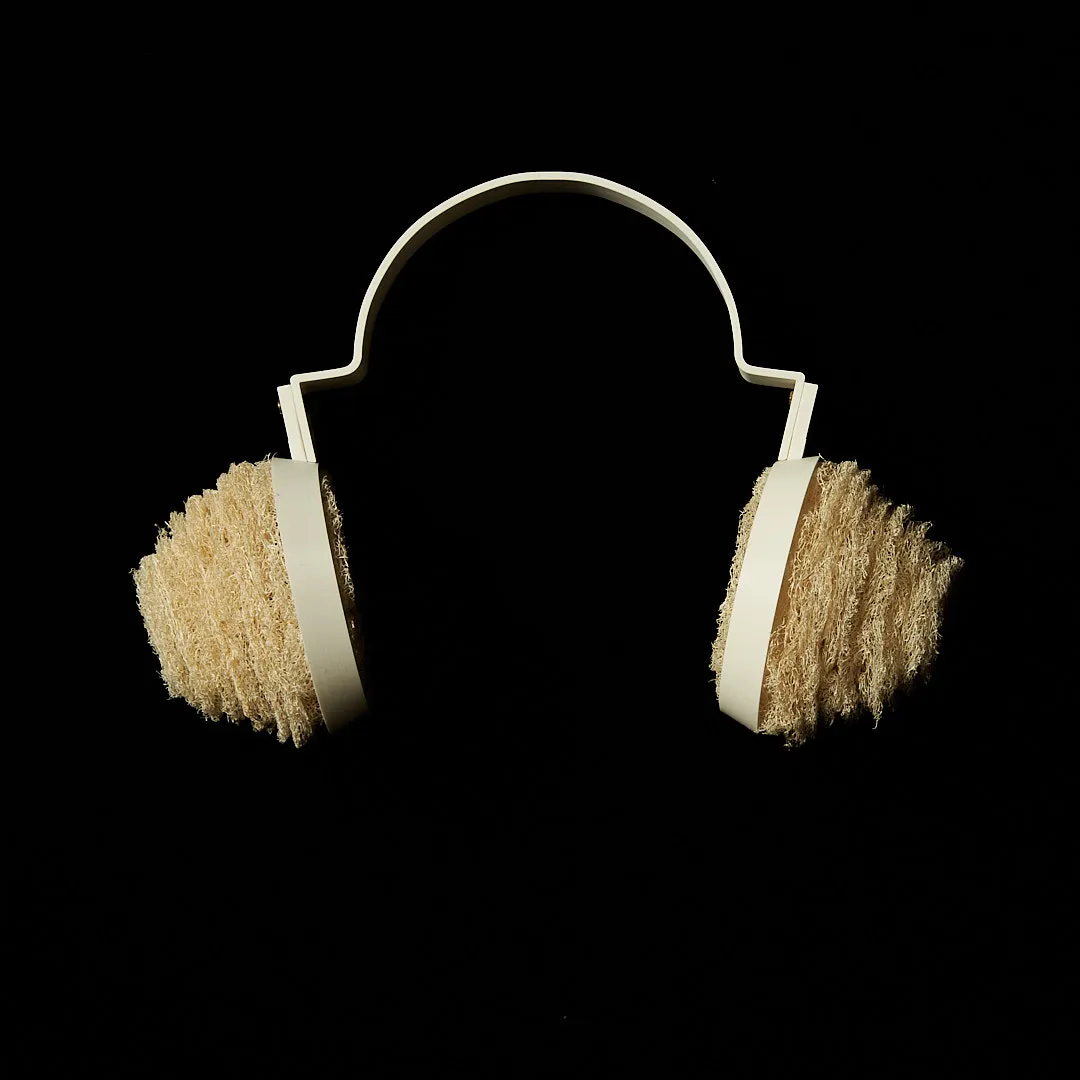
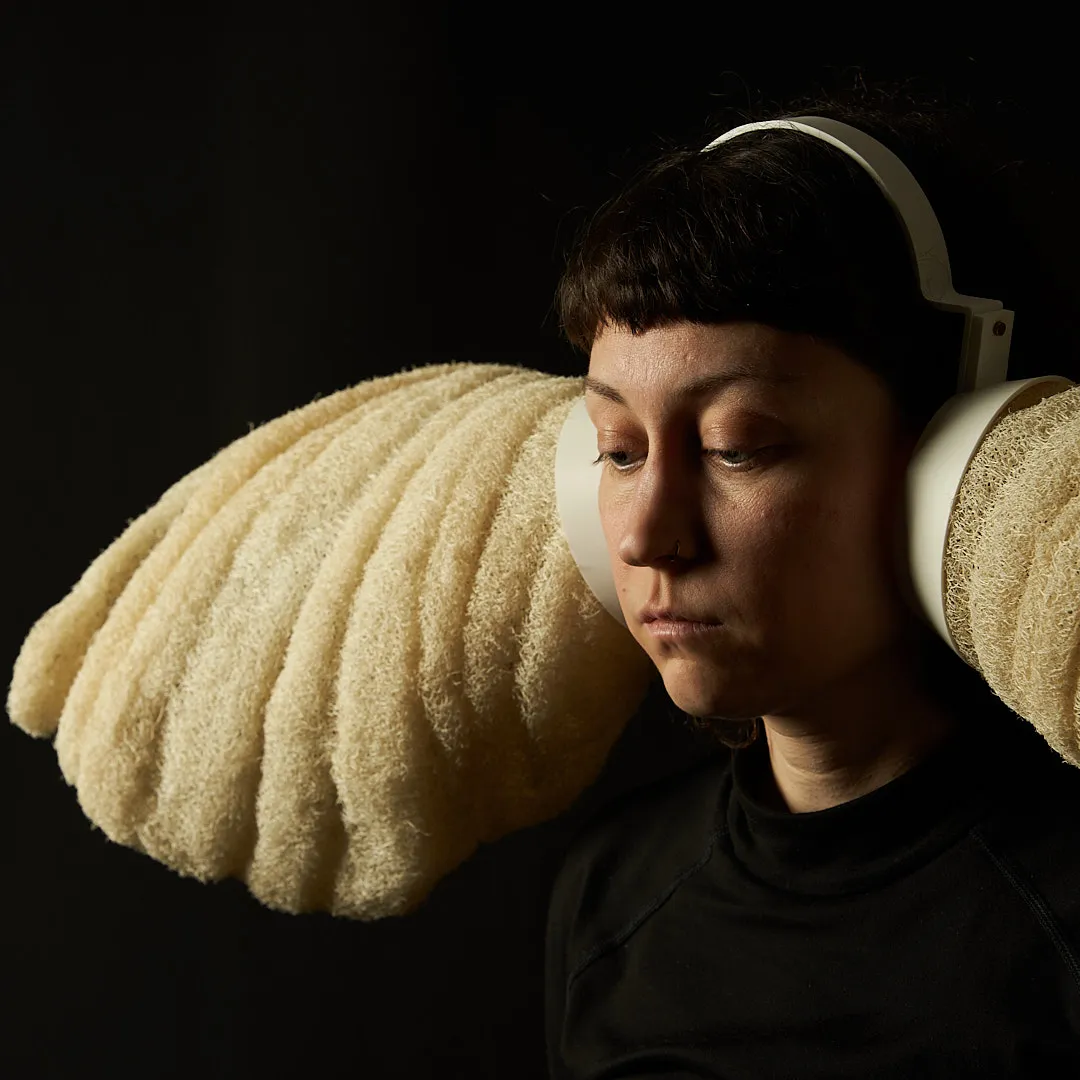
Ear protection

Objective

  • To test the sound absorbency of loofah material when used in a layered configuration.
  • To investigate the feasibility of utilizing loofah to reduce sound intensity entering the ears, through the construction of an ear protection prototype (e.g., earmuffs).

Materials

  • 3D printing filament
  • Loofah (flat oval shapes)
  • Screws and bolts
  • Hot glue

Tools

  • FDM 3D printer
  • Hot glue gun
  • Screwdriver
  • Utility knife
  • 3D modeling software

Methodology

Design for the 3D printed ear shells and headband components was created using 3D software.
These parts were then fabricated using a 3D printer.
The 3D printed components were assembled using screws and bolts to form the structural framework of the ear protection device.
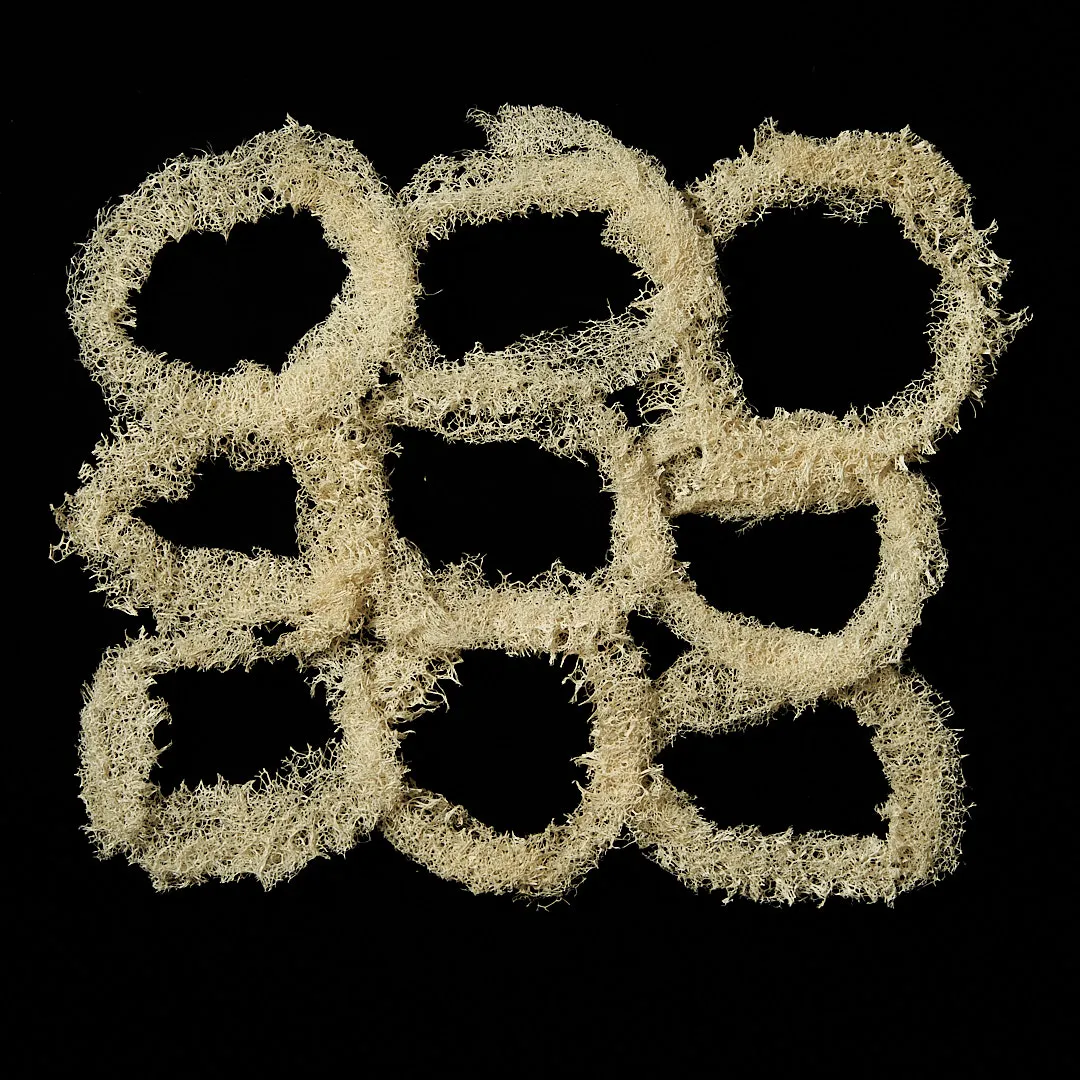
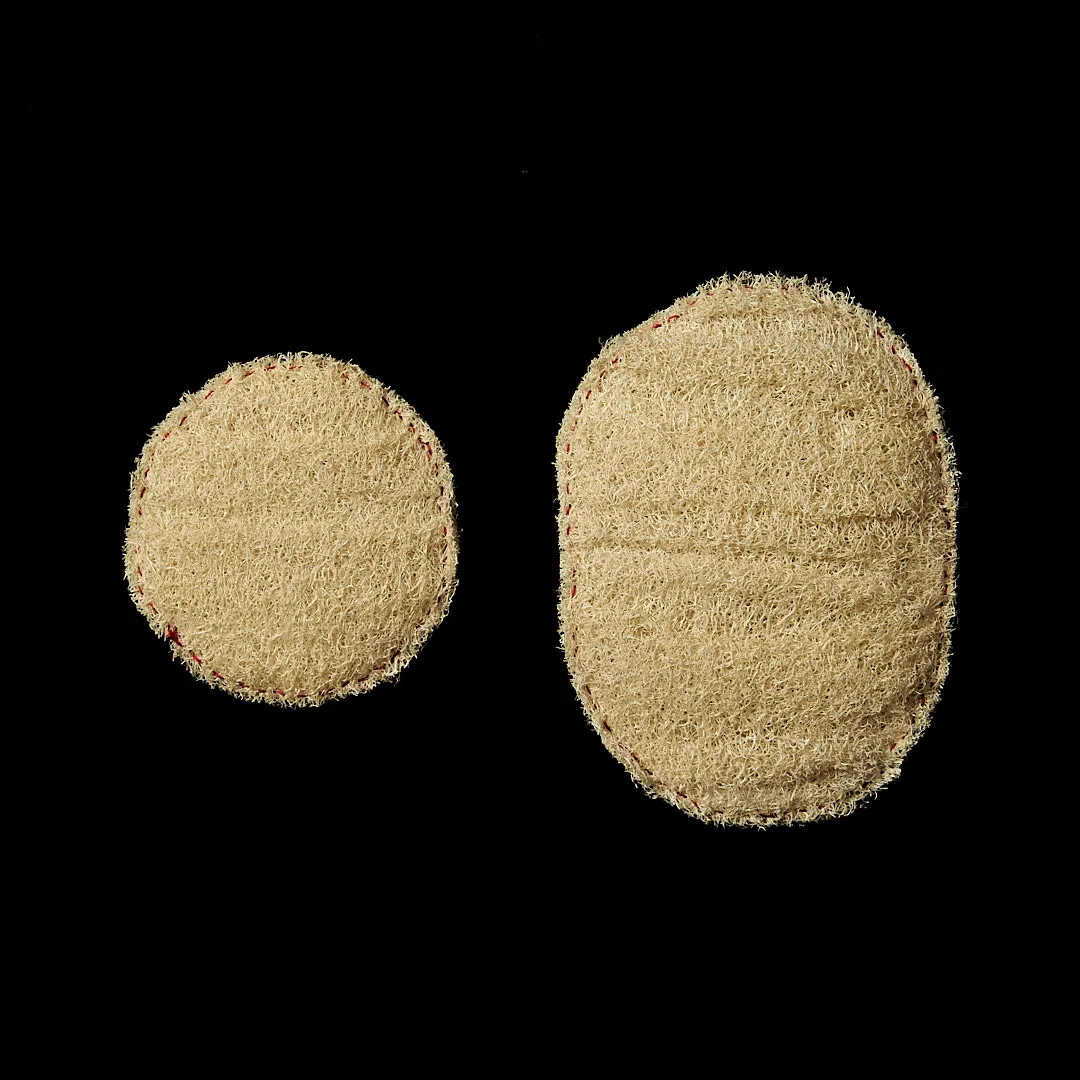
Flat oval shapes were cut from loofah material, intended for layering.
These loofah shapes were stacked and glued together to form a thicker, multi-layered cushion.
Hot glue was applied to the inside of the 3D printed ear shells.
The stacked loofah cushions were then placed into the hot-glued ear shells and pressed into the glue, held until dry to secure the loofah in place.

Ear trumpet

Objective

  • To test the sound absorbency and sound conduction ability of loofah material.
  • To investigate the feasibility of utilizing loofah to improve hearing, specifically through the construction of an ear trumpet prototype.

Materials

  • 3D printing filament
  • Loofah
  • Screws and bolts
  • Hot glue

Tools

  • FDM 3D printer
  • Hot glue gun
  • Screwdriver
  • Utility knife
  • 3D modeling software

Methodology

Design for the 3D printed funnel base and headband components was created using 3D software.
These parts were then fabricated using a 3D printer.
The 3D printed components were assembled using screws and bolts to form the structural framework of the ear trumpet.
The inner core material was cut out from two whole loofah plants.
The loofah inner cores were shaped into a funnel form.
Hot glue was applied to the inside of the 3D printed plastic funnel bases.
The narrower end of the shaped loofah funnels was then inserted into the hot-glued plastic funnel base and held in place until the glue dried and secured the loofah.
Any excess loofah material protruding inside the ear trumpet was trimmed with a utility knife.

Observations & Results

The loofah successfully held the funnel shape, which was determined and supported by the 3D printed funnel base.

Bronze spray paint

Objective

  • To investigate the effectiveness of metallic spray paint for coloring loofah fibers.
  • To assess the uniformity and penetration of spray paint application on loofah material.

Materials

  • Loofah
  • Metallic spray paint (bronze)

Tools

  • spray can

Methodology

A piece of loofah was thoroughly sprayed with bronze metallic spray paint, attempting to cover all surfaces.
The application aimed to observe how well the paint adhered to and penetrated the loofah's fibrous and porous structure.

Observations & Results

It was found to be challenging to color the loofah evenly across its entire surface.
The spray paint did not effectively penetrate into the inner parts of the loofah, resulting in uneven coloring where only the outer fibers received significant paint coverage

Hardened

Objective

  • To investigate the effectiveness of PVA glue in hardening loofah material.
  • To assess whether drenching loofah in PVA glue can increase its overall durability and rigidity.

Materials

  • Loofah
  • PVA glue

Tools

  • None

Methodology

A piece of loofah was completely drenched or saturated with PVA glue.
The loofah was then presumably left to dry naturally, allowing the PVA glue to cure and permeate the fibrous structure.

Observations & Results

Upon drying, the loofah piece exhibited a significant increase in hardness.
The treated loofah became noticeably harder to bend compared to its untreated state.

Curtain

Objective

  • To investigate the potential of flattened loofah to serve as a partition or shading material.
  • To explore how the flexible structure of loofah, particularly when modified, can be utilized in functional applications like movable window blinds.

Materials

  • Wooden lath
  • Thread
  • Flattened loofah

Tools

  • Needle
  • Saw
  • Drill
  • Heat press

Methodology

Two pieces of wooden laths were cut to the desired length. Four holes were drilled at the ends of each lath.
A flat piece of loofah was prepared (pre-flattened using a heat press from previous experiments, as implied by "flattened loofah").
The loofah piece was then folded back and forth in a zig-zag fashion. To achieve neat and flat folds, these folds were pressed using a heat press.
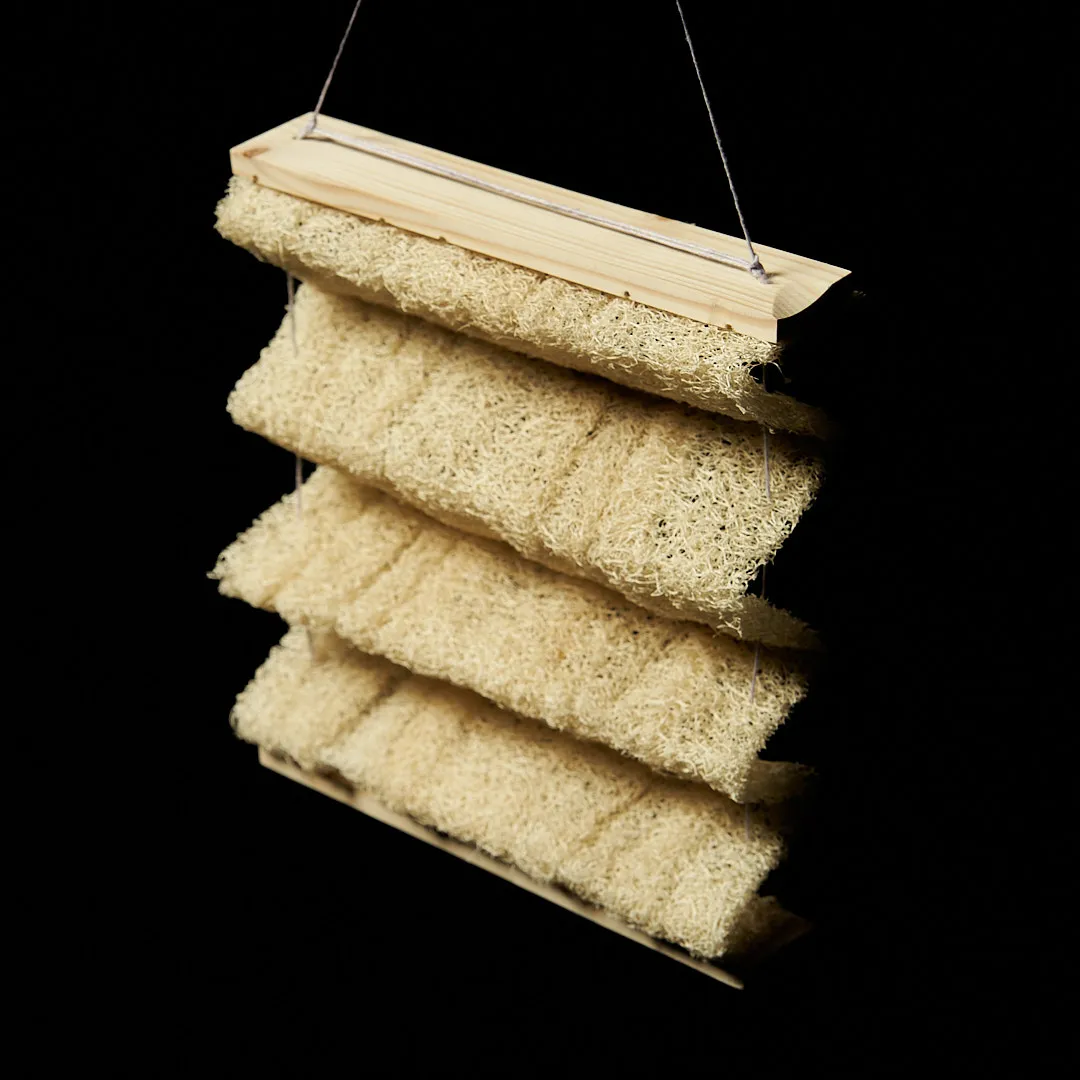
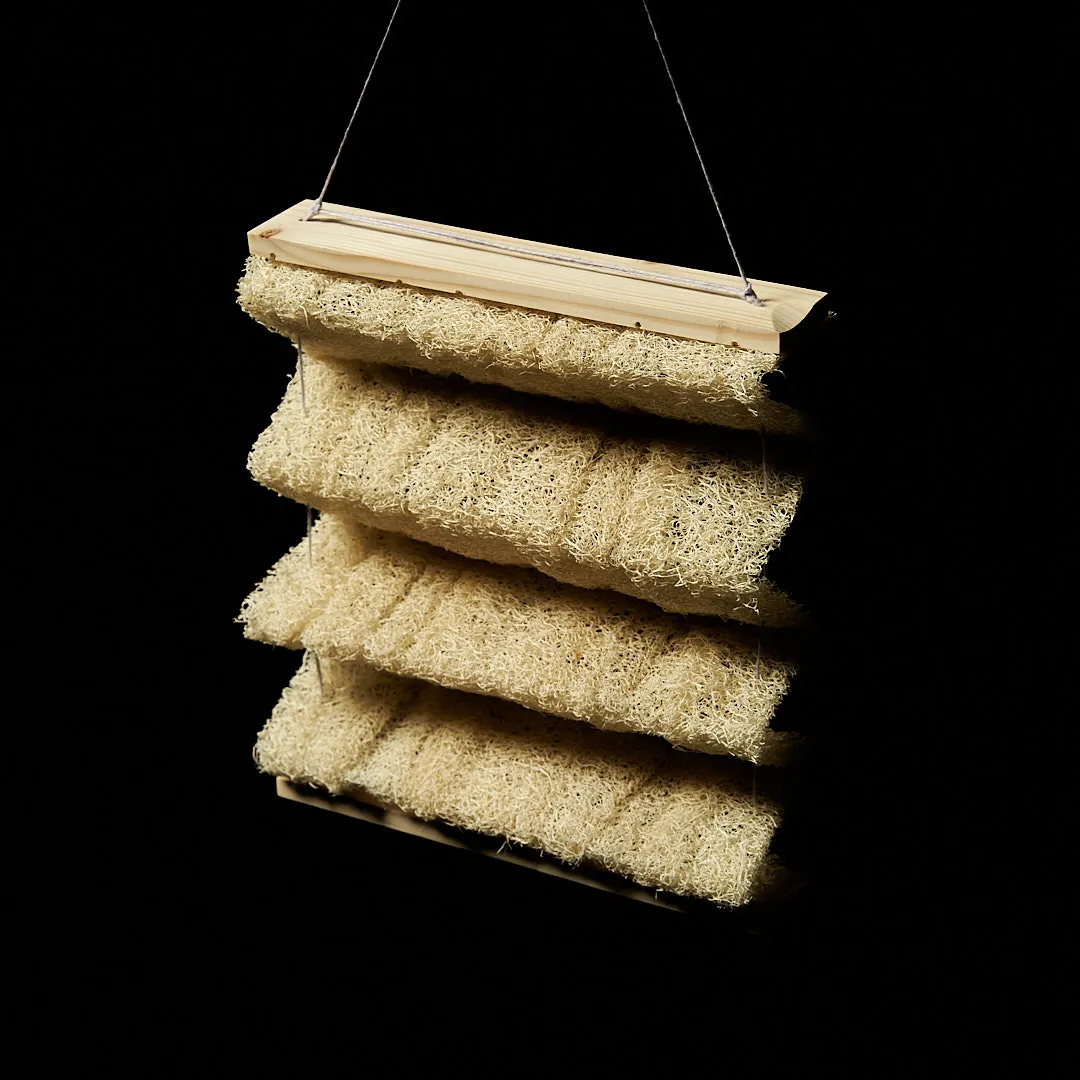
Finally, the folded, zig-zag loofah was sandwiched between the two prepared wooden laths. All components (loofah and laths) were then sewn together, likely through the drilled holes, to form the complete blind structure.

Observations & Results

The loofah material was effectively folded into a zig-zag pattern, with the heat press aiding in creating neat and flat creases.
The completed zig-zag patterned loofah blind demonstrated the ability to be moved up and down, indicating its functional viability as a movable window covering.

Rolled up ball

Objective

  • To investigate the feasibility of creating a cushion material from a whole loofah by rolling it into a ball shape.
  • To test the effectiveness of various glues in bonding loofah fibers.
  • To evaluate the durability and cushioning properties of the rolled loofah structure.

Materials

  • Whole loofah
  • PVA glue
  • Other glues tested: Wood glue, paper glue, superglue, hot glue

Tools

  • None

Methodology

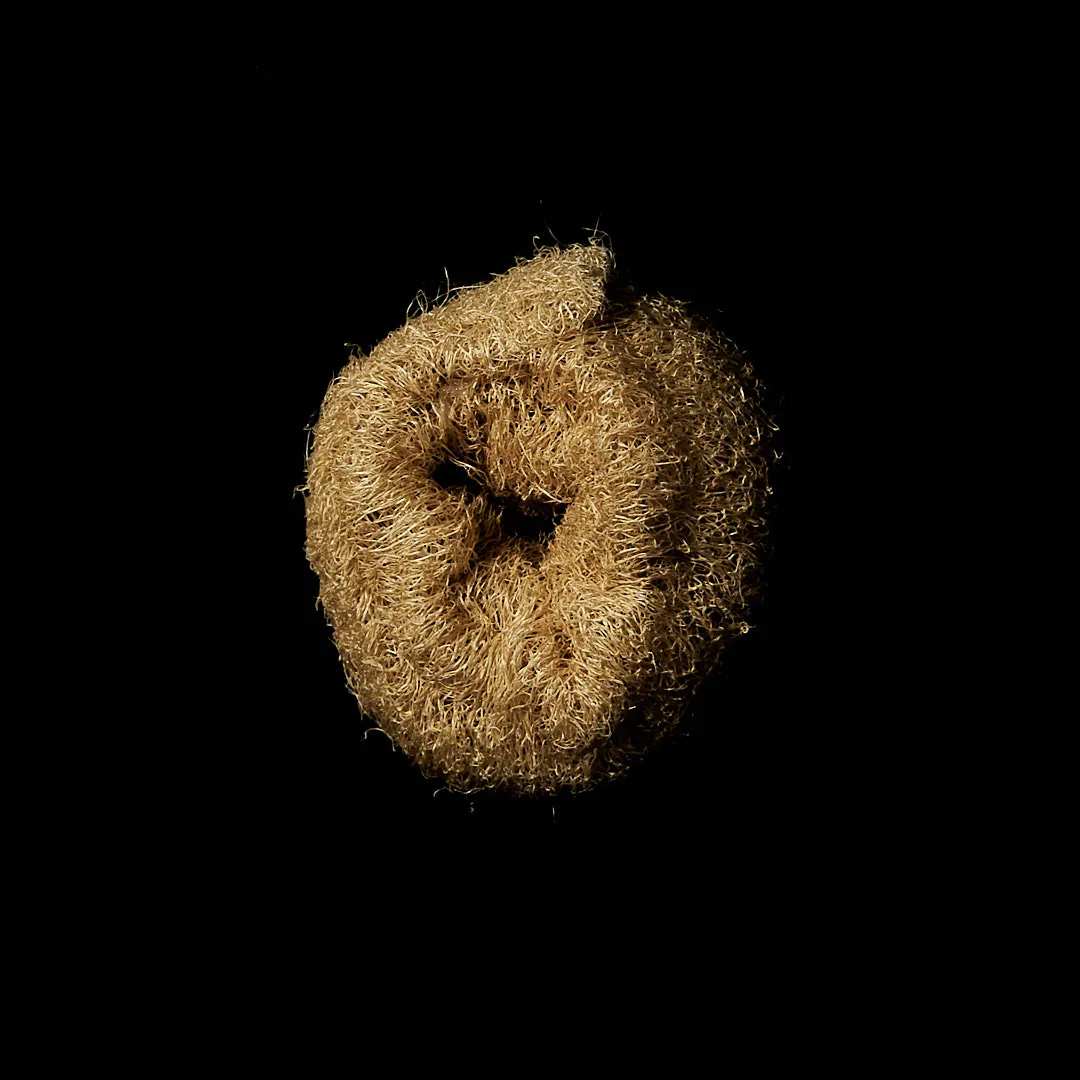
A whole loofah was manipulated by rolling or coiling it to form a compact ball shape.
Glue was applied to the two ends of the loofah, where they would meet in the coiled formation.
The glued ends were then pressed and held together firmly until the adhesive dried, securing the loofah in its ball shape.

Observations & Results

Loofah demonstrated good adhesion with all tested glues, including PVA, wood glue, paper glue, superglue, and hot glue, with bonds holding securely in each case.
The loofah, when rolled up into a ball shape, formed a more durable and bouncy cushion base compared to loofah pieces that were not rolled or compacted.

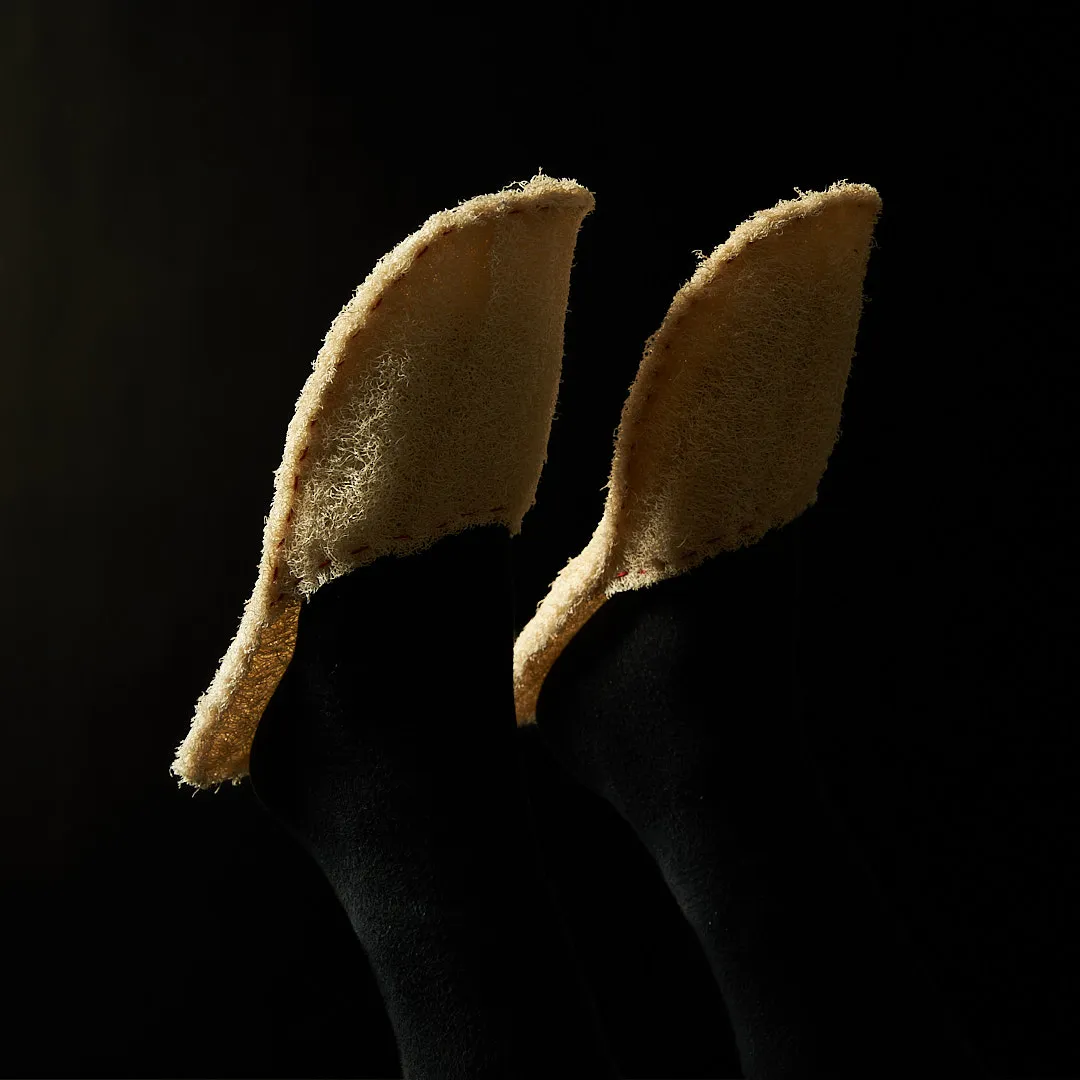
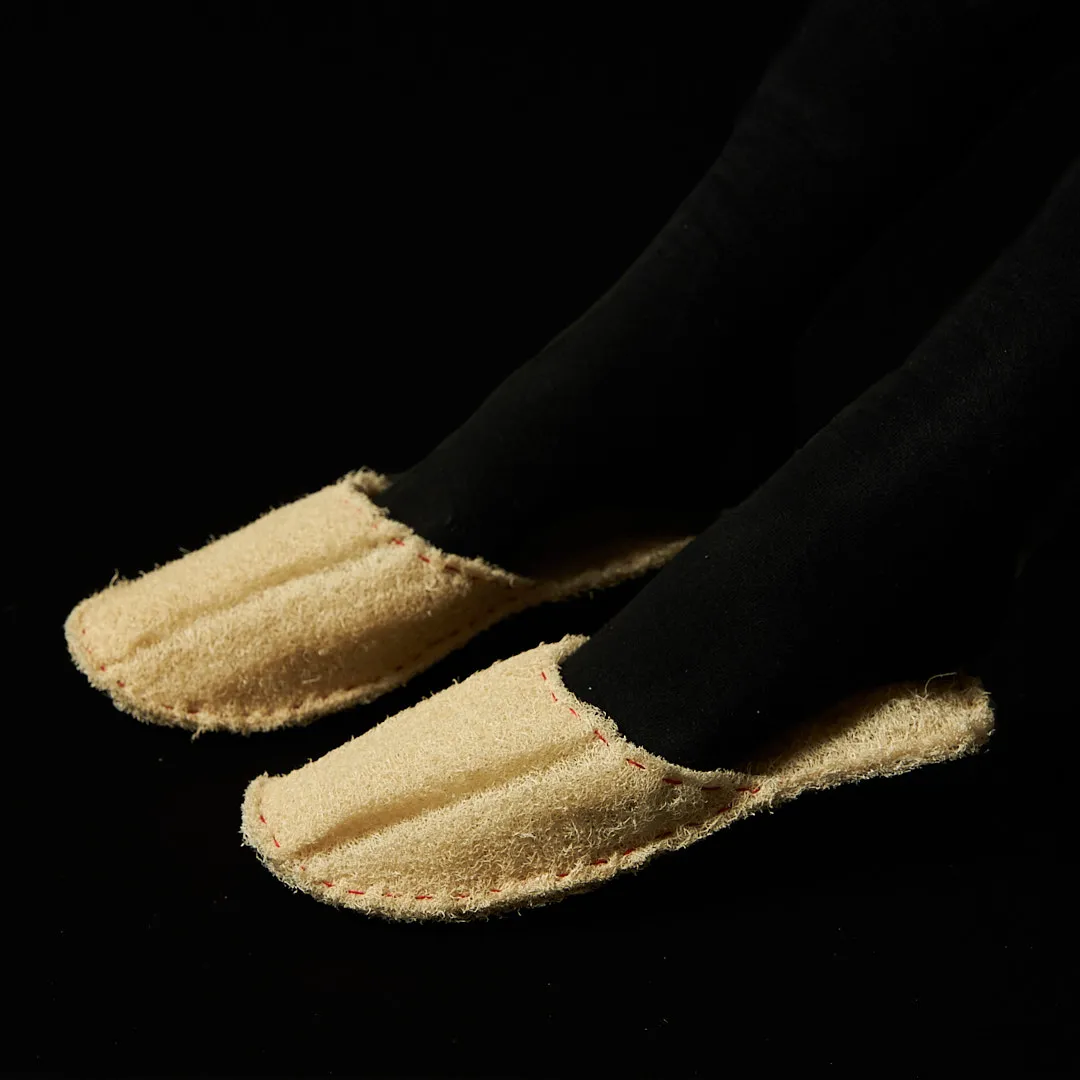
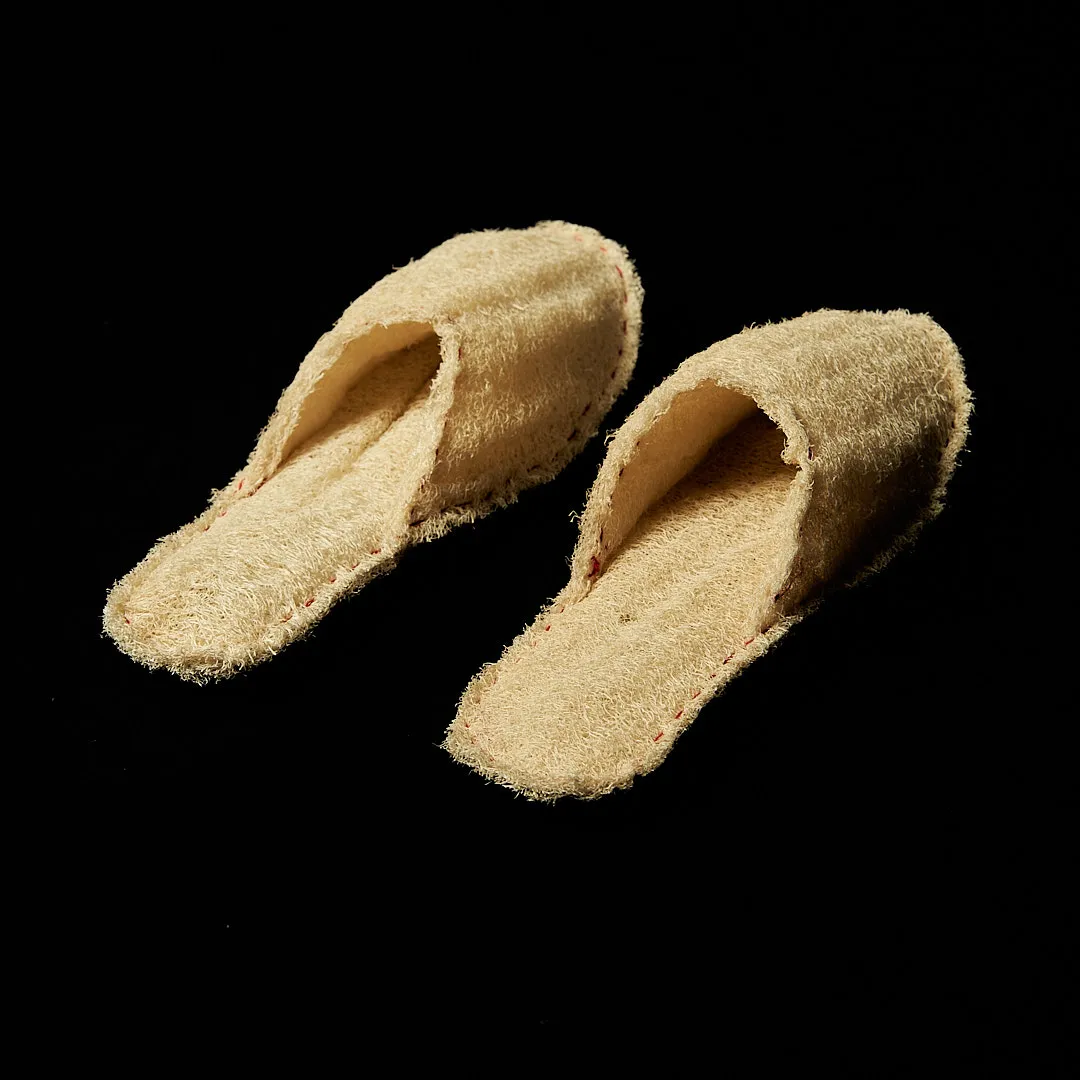
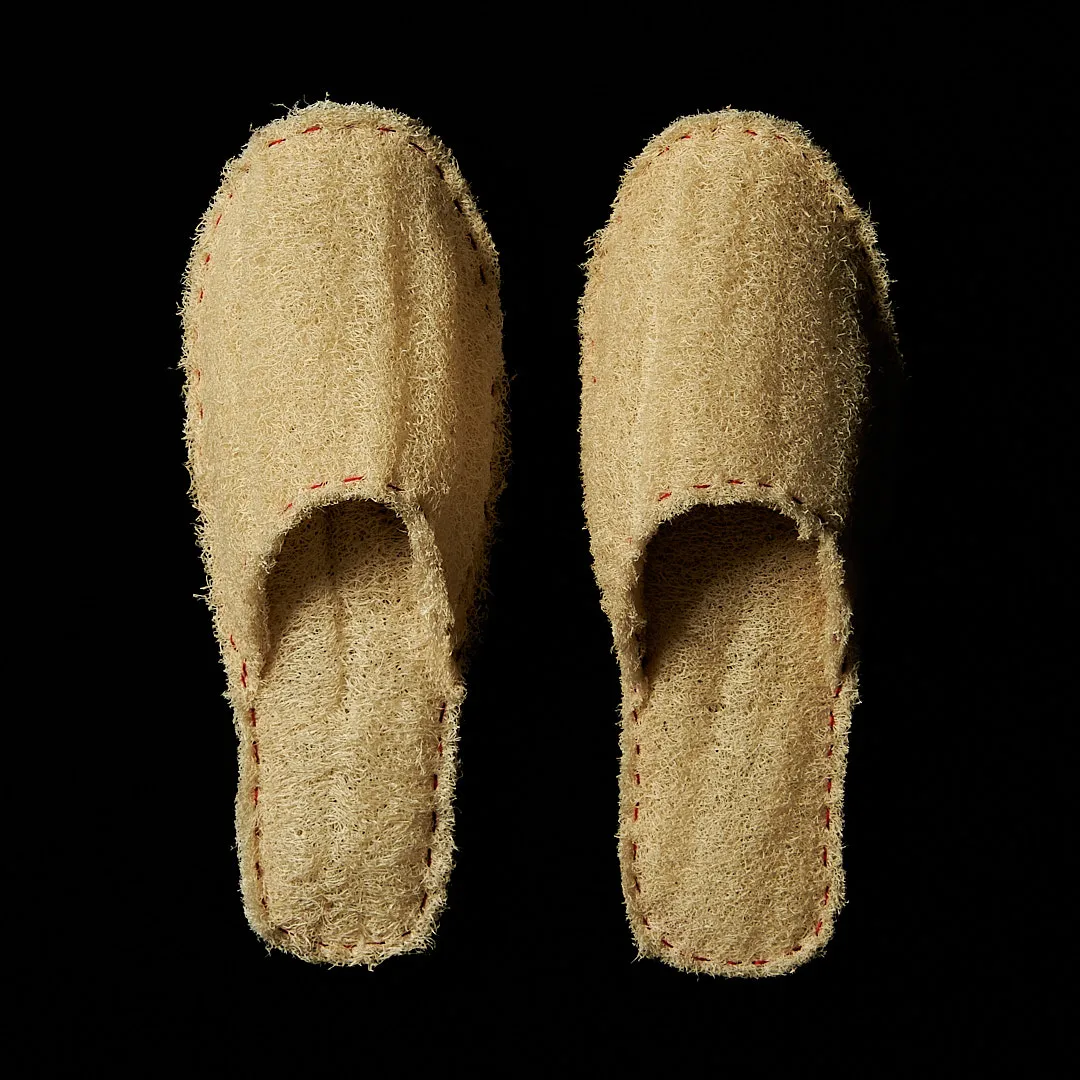
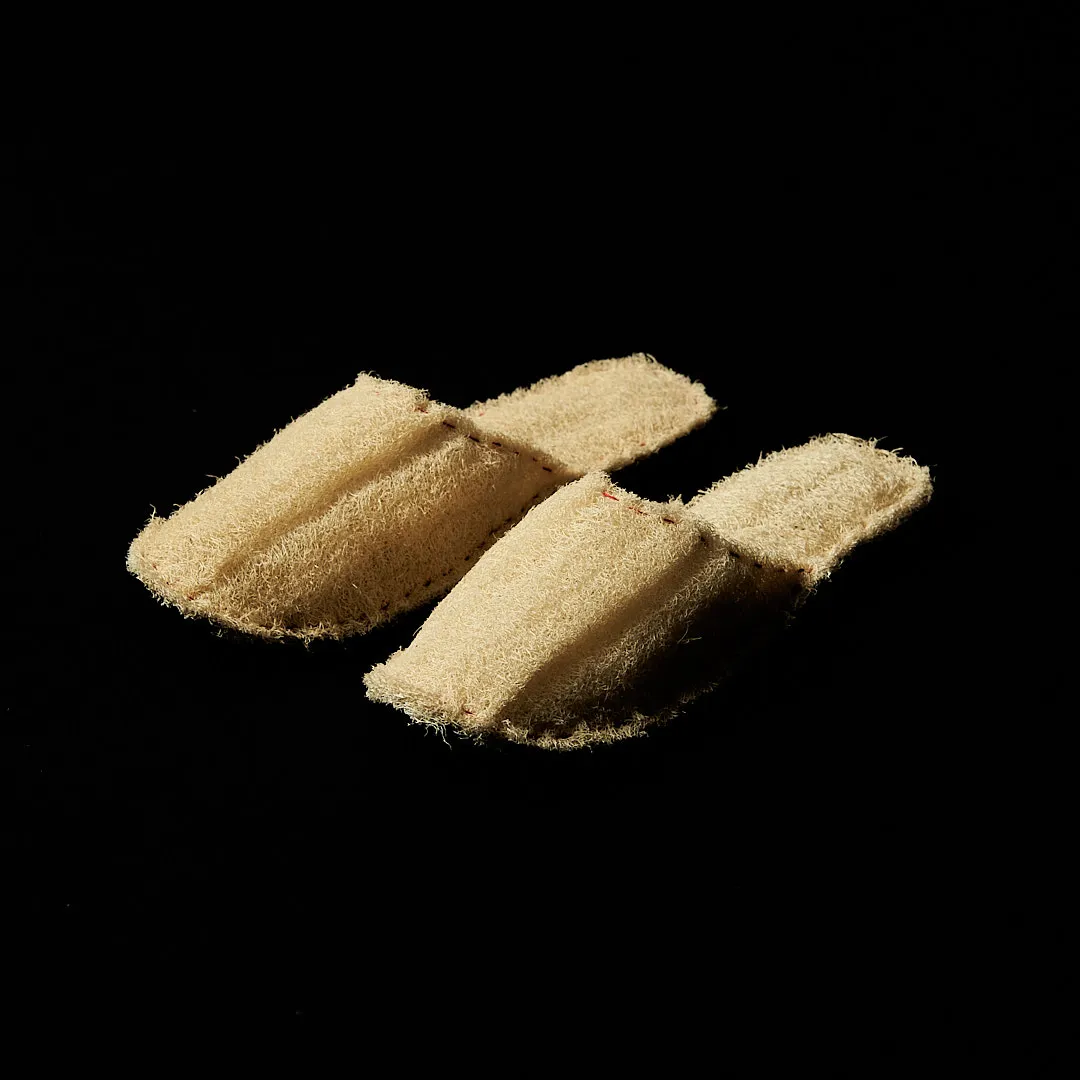
Slippers

Objective

  • To investigate the feasibility of creating complete footwear, specifically home slippers, from loofah material.
  • To determine if loofah can be used to construct well-breathing footwear, leveraging its porous nature.

Materials

  • Dry loofah
  • Thread

Tools

  • Needle
  • Sewing pattern
  • Scissors
  • Heat press

Methodology

A dry loofah plant was prepared by removing its inner core and then flattening it using a heat press.
Components for the slipper (upper and sole parts) were cut out from the flattened loofah material, following a designated sewing pattern, with each part cut twice (presumably for left and right slippers, or inner/outer layers).
The upper parts of the slippers were sewn together.
The sole parts of the slippers were sewn together (likely to create a double-layered sole for comfort/durability).
Finally, the assembled upper parts and sole parts were sewn together to complete the slipper construction.

Observations & Results

The inherent rigidity of the dry loofah was sufficient to maintain a desirable curved shape for the upper part of the slipper after sewing.
The resulting home slipper was found to be comfortable and exhibited good breathability.
It was recommended to wear the slippers with socks, as the loofah material was noted to be "a bit spikey" on direct skin contact.

lavender dye

Objective

  • To investigate the effectiveness of dry lavender flowers as a natural dye for loofah material.
  • To observe any resulting color hue imparted to loofah using a standardized mordant and dye bath process.

Materials

  • Dry lavender flowers (as colorant)
  • Loofah
  • Mordant solution (inferred from standard method)
  • Clean water

Tools

  • Plastic bowl
  • Stainless steel pan
  • Gloves
  • Goggles
  • Mask
  • Wooden stirring spatula

(Note: Precautions are important when dyeing, similar to working with fabrics.)

Methodology

This standardized method was applied for all dyed loofah pieces:
Loofah material was cut into 10x10 cm squares.
The loofah squares were soaked in a mordant solution for a period of 24 hours.
After mordanting, the loofah pieces were thoroughly washed with clean water.
A dye bath was prepared using the dry lavender flowers. The loofah pieces were then introduced into this bath and cooked on low heat with the colorant for 1 hour.
The loofah was allowed to cool down in the dye bath and remained immersed for an additional 24 hours to maximize potential color absorption.
Finally, the dyed loofah pieces were washed extensively with clean water.

Observations & Results

The loofah showed no change in color after the dyeing process with dry lavender flowers.

Thin slice

Objective

  • To evaluate the effectiveness and resulting cut quality of various tools when slicing loofah material.
  • To identify the most suitable tool for achieving clean cuts in loofah, particularly when aiming for thin slices.

Materials

  • Loofah (various forms implied, as different tools are tested)

Tools

  • Utility knife
  • Scissors
  • Knife (general purpose)
  • Band saw
  • Hand saw

Methodology

Pieces of loofah were subjected to cutting using a range of common cutting tools, including a utility knife, scissors, a general knife, a band saw, and a hand saw.
The quality of the resulting cuts was observed and assessed

Observations & Results

Loofah material can be cut with a variety of tools, including scissors, various knives, a band saw, and a hand saw.
The cut quality varied significantly, ranging from very clean to rough, depending on the tool used.
Among the tools tested, the utility knife was determined to be the most suitable for achieving consistently clean cuts in loofah.

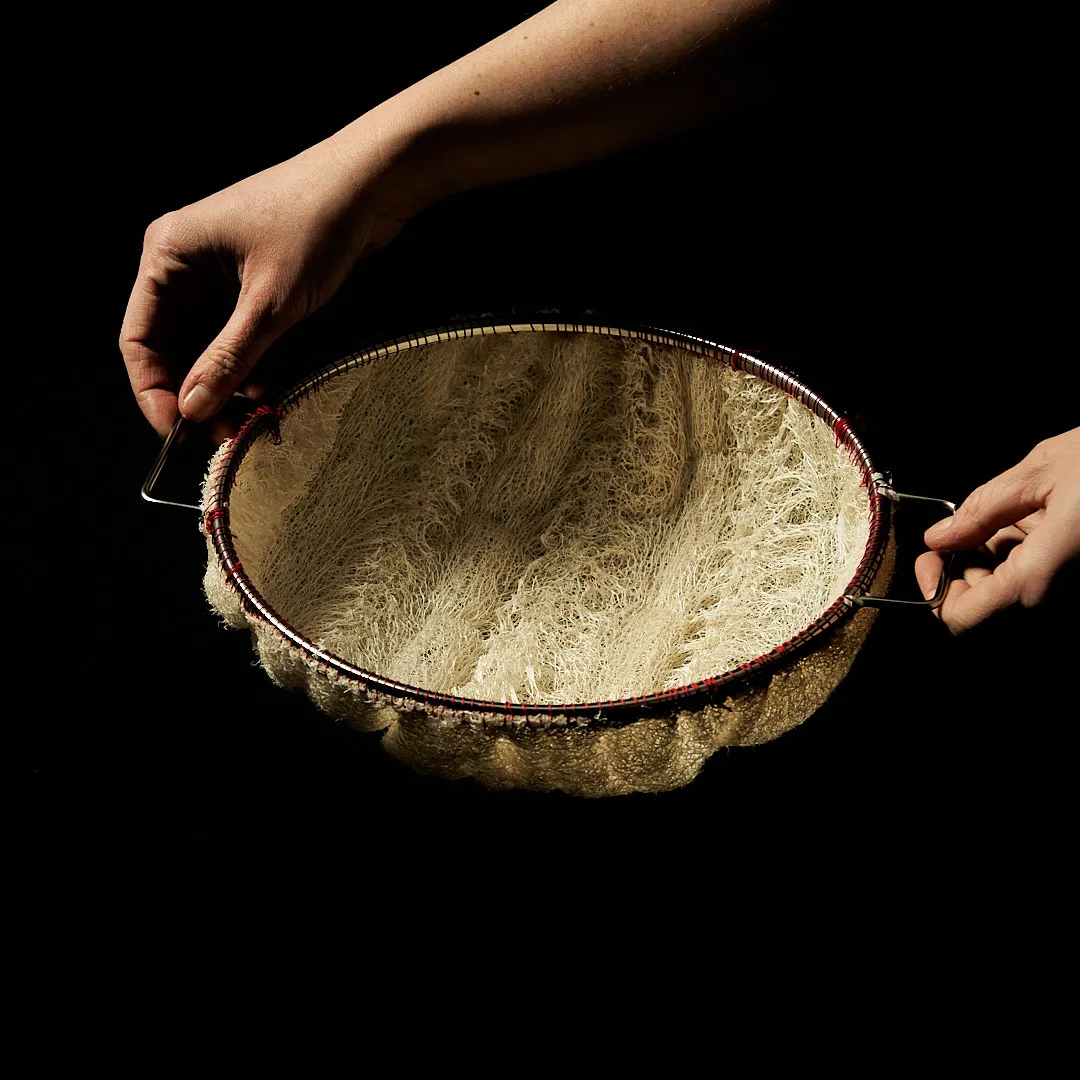
Colander

Objective

  • To investigate the feasibility of utilizing loofah material as a sieve for different materials.

Materials

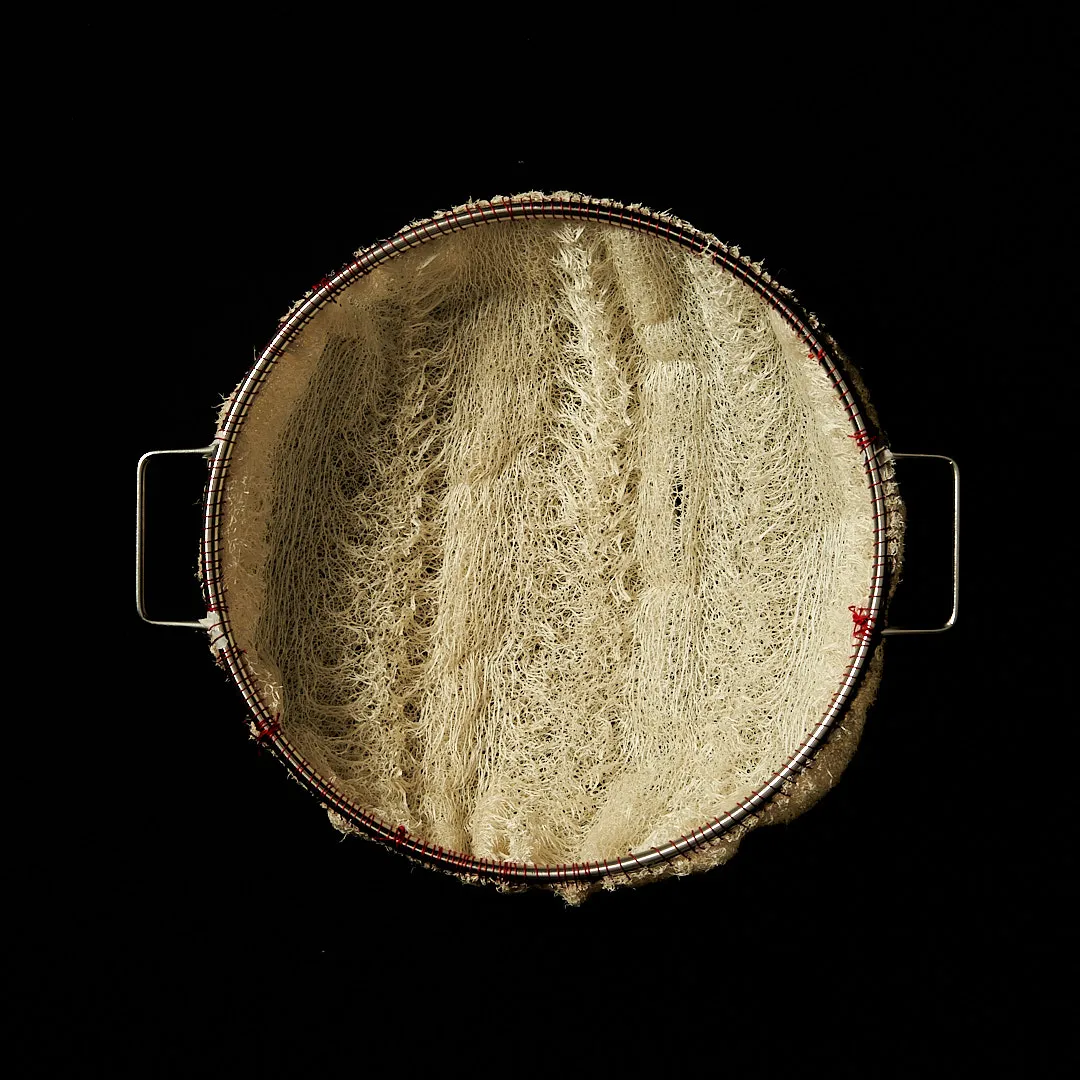
  • Stainless steel frame with handles
  • Flattened loofah
  • Thread

Tools

  • utility knife
  • needle

Methodology

A circular shape was cut from a piece of flattened loofah, ensuring its diameter was larger than that of the stainless steel frame.
The edges of the oversized loofah circle were then carefully tied onto the metal frame, securing the loofah to create the sieve surface within the frame.

Rosemary dye

Objective

  • To investigate the effectiveness of fresh rosemary branches as a natural dye for loofah material.
  • To observe the resulting color hue, vibrancy, and saturation imparted to loofah using a standardized mordanting and dye bath process.

Materials

  • Fresh rosemary branch (as colorant)
  • Loofah
  • Mordant solution
  • Clean water

Tools

  • Plastic bowl
  • Stainless steel pan
  • Gloves
  • Goggles
  • Mask
  • Wooden stirring spatula

(Note: Precautions are important when dyeing, similar to working with fabrics.)

Methodology

This standardized method was applied for all dyed loofah pieces:
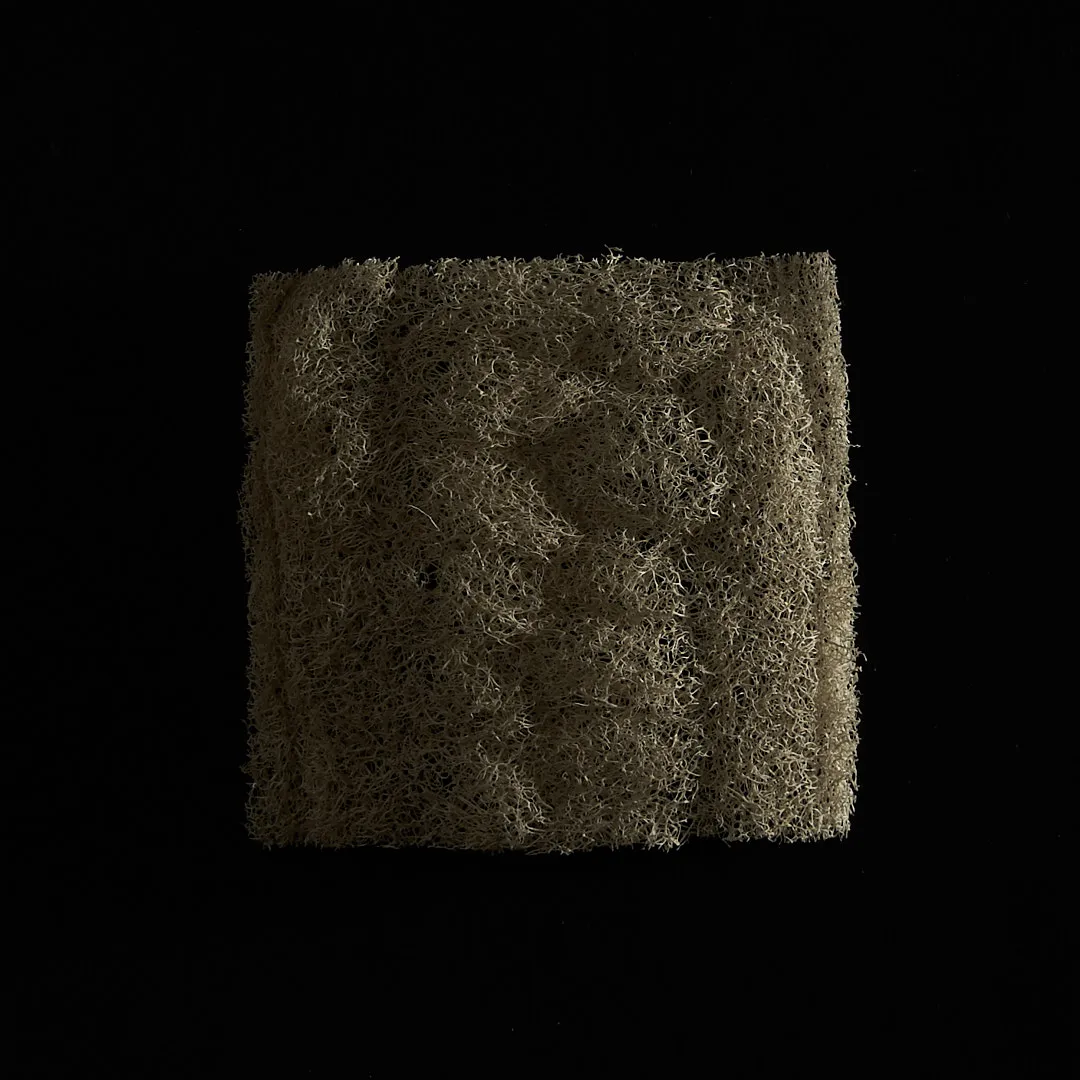
Loofah material was cut into 10x10 cm squares.
The loofah squares were soaked in a mordant solution for a period of 24 hours.
After mordanting, the loofah pieces were thoroughly washed with clean water.
A dye bath was prepared using the fresh rosemary branch. The loofah pieces were then introduced into this bath and cooked on low heat with the colorant for 1 hour.
The loofah was allowed to cool down in the dye bath and remained immersed for an additional 24 hours to maximize color absorption.
Finally, the dyed loofah pieces were washed extensively with clean water to remove any unfixed dye.

Observations & Results

The dyeing process with rosemary branches successfully achieved a dark green hue on the loofah.

Avocado dye

Objective

  • To investigate the effectiveness of avocado seeds as a natural dye for loofah material.
  • To observe the resulting color hue, vibrancy, and saturation imparted to loofah using a standardized mordanting and dye bath process.

Materials

  • Avocado seeds (as colorant)
  • Loofah
  • Mordant solution
  • Clean water

Tools

  • Plastic bowl
  • Stainless steel pan
  • Gloves
  • Goggles
  • Mask
  • Wooden stirring spatula

(Note: Precautions are important when dyeing, similar to working with fabrics.)

Methodology

This standardized method was applied for all dyed loofah pieces:
Loofah material was cut into 10x10 cm squares.
The loofah squares were soaked in a mordant solution for a period of 24 hours.
After mordanting, the loofah pieces were thoroughly washed with clean water.
The avocado seeds were cut into smaller pieces to facilitate dye extraction.
A dye bath was prepared using the cut avocado seeds. The loofah pieces were then introduced into this bath and cooked on low heat with the colorant for 1 hour.
The loofah was allowed to cool down in the dye bath and remained immersed for an additional 24 hours to maximize color absorption.
Finally, the dyed loofah pieces were washed extensively with clean water to remove any unfixed dye.

Observations & Results

The dyeing process with avocado seeds successfully achieved a strong pink hue on the loofah.

Iron oxide dye

Objective

  • To investigate whether the addition of powdered iron oxide to a pomegranate skin dye bath can modify the resulting color on loofah, specifically aiming to create a green hue as suggested by external sources.
  • To observe the final color achieved on the loofah material under these modified dyeing conditions.

Materials

  • Pomegranate skin (as primary colorant)
  • Powdered iron oxide (as color modifier)
  • Loofah
  • Mordant solution
  • Clean water

Tools

  • Plastic bowl
  • Stainless steel pan
  • Gloves
  • Goggles
  • Mask
  • Wooden stirring spatula

(Note: Precautions are important when dyeing, similar to working with fabrics.)

Methodology

This modified dyeing method was applied to loofah pieces:
Loofah material was cut into 10x10 cm squares.
The loofah squares were soaked in a mordant solution for a period of 24 hours.
After mordanting, they were thoroughly washed with clean water.
A dye bath was prepared using pomegranate skin. The loofah pieces were then introduced into this bath and cooked on low heat with the colorant for 1 hour.
Following the initial dyeing period, powdered iron oxide was added directly into the hot dye bath, and the loofah was left in this modified bath for an additional 10 minutes.
The loofah was then allowed to cool down while remaining in the dye bath for a further 24 hours to ensure maximum color setting and reaction.
The final dyed piece was washed extensively with clean water to remove any unfixed dye.

Observations & Results

Adding iron oxide after dyeing with pomegranate could create a green color.
However, the process resulted in a light brown color on the loofah, rather than the expected green.

Broom
Broom
Broom
Bounding
Glasses
Broom
Glasses
Glasses
knot
Turning
Transparent lacquer
Crumble ball
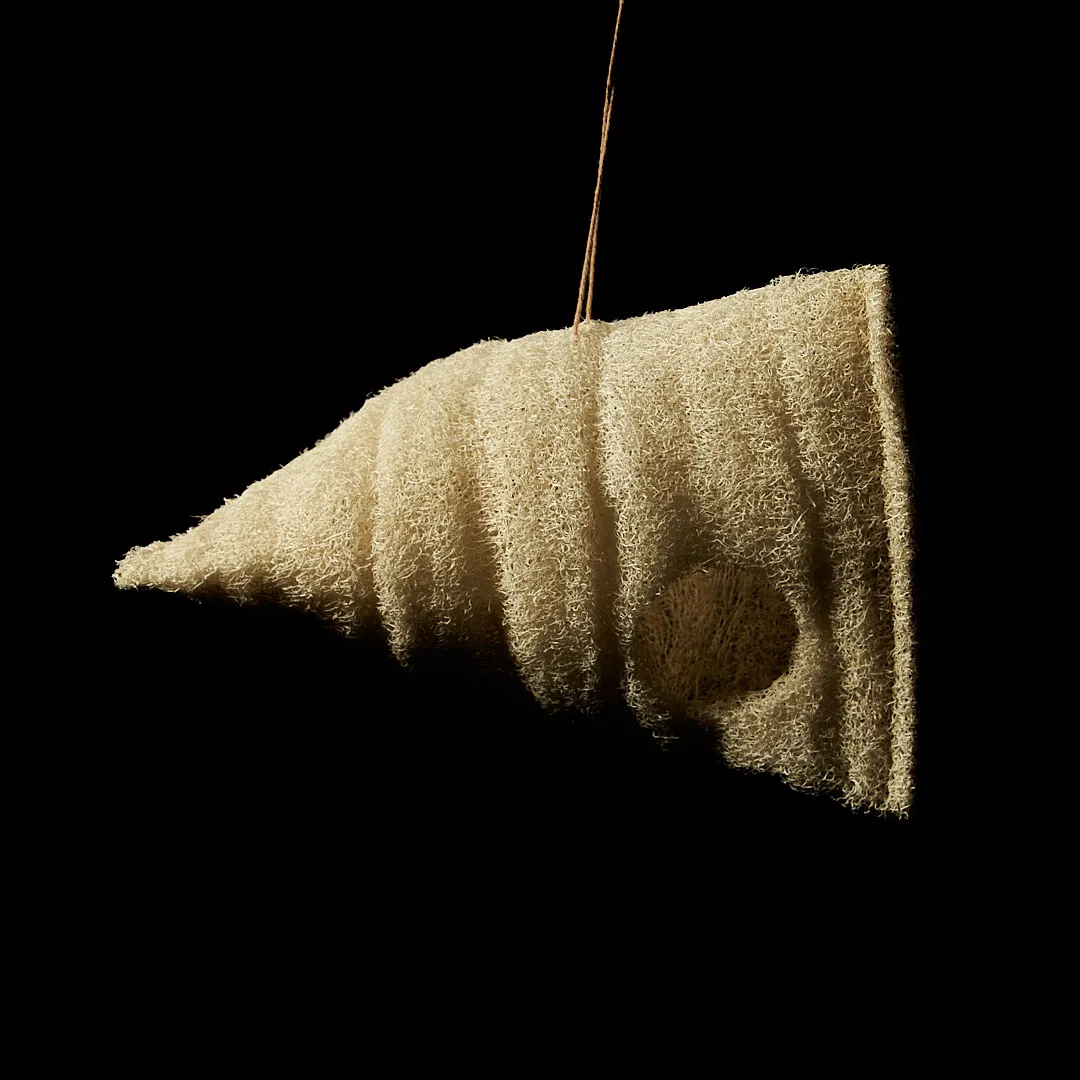
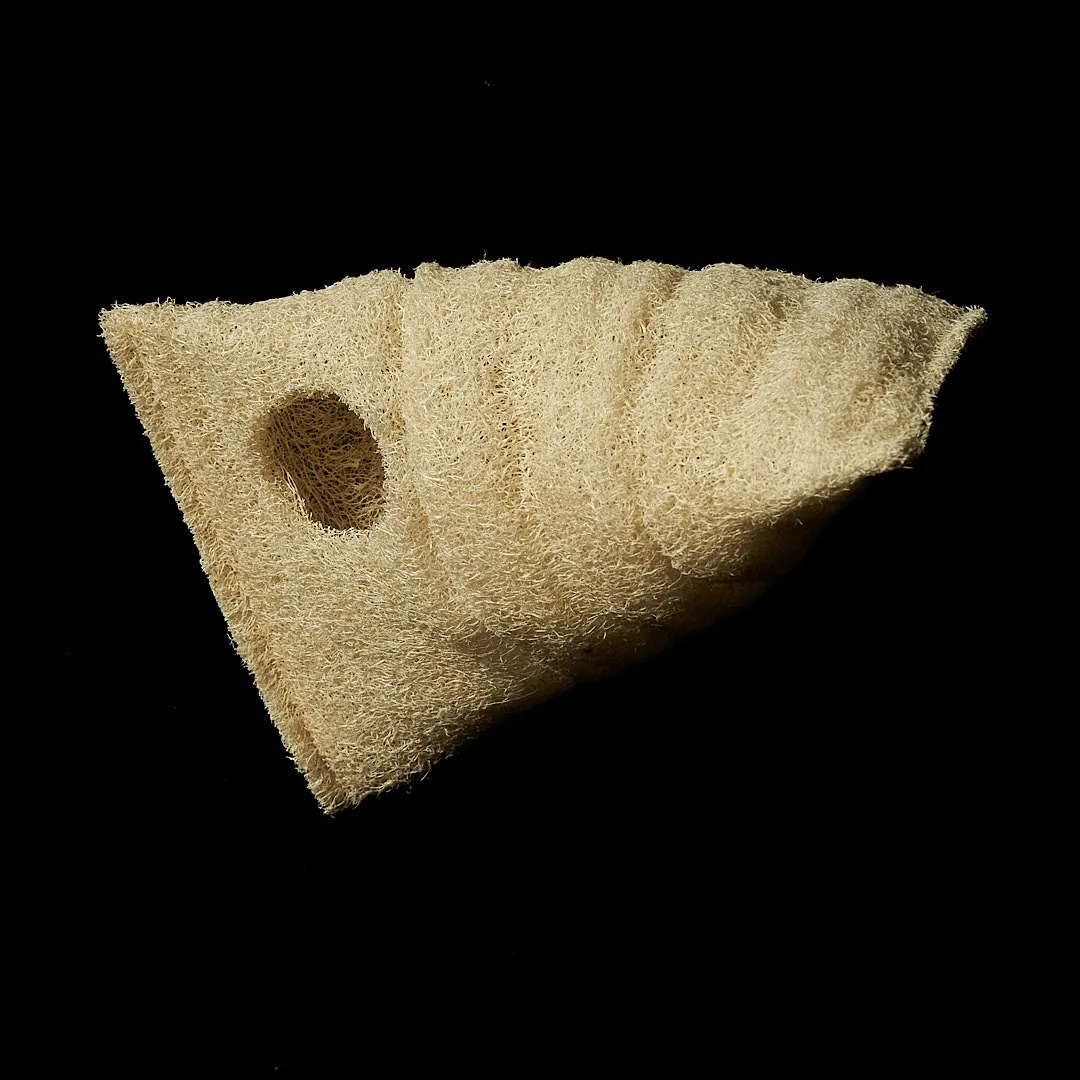
Bird nest
Bird nest
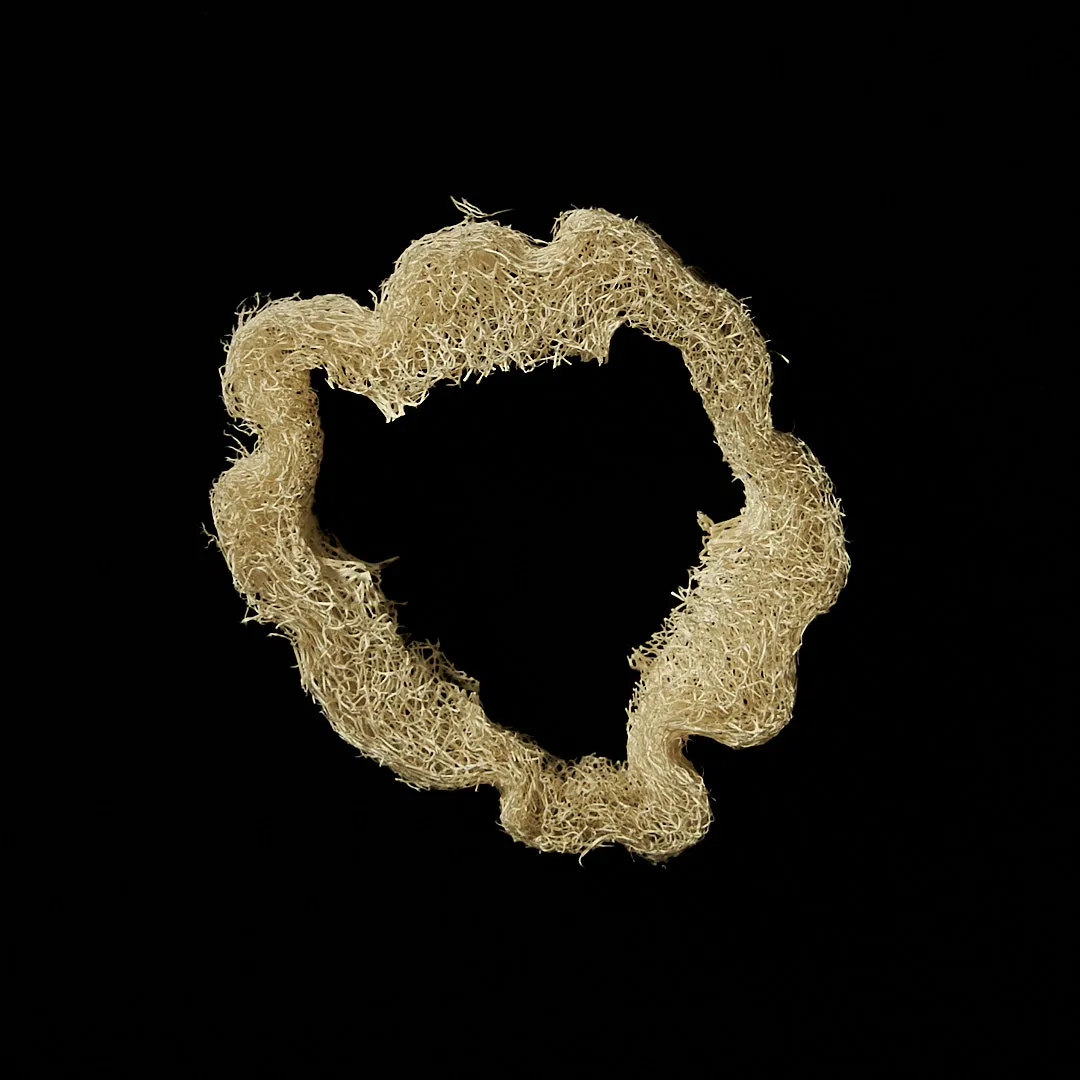
Tube
Drip tray
Drip tray
Ear protection
Box
Ear protection
Ear trumpet
Ear trumpet
Hardened
Curtain
Bronze spray paint
Curtain
Rolled up ball
Slippers
Slippers
Slippers
Colander
Slippers
Slippers
lavender dye
Thin slice
Colander
Rosemary dye
Avocado dye
Iron oxide dye
Aluminium sheet
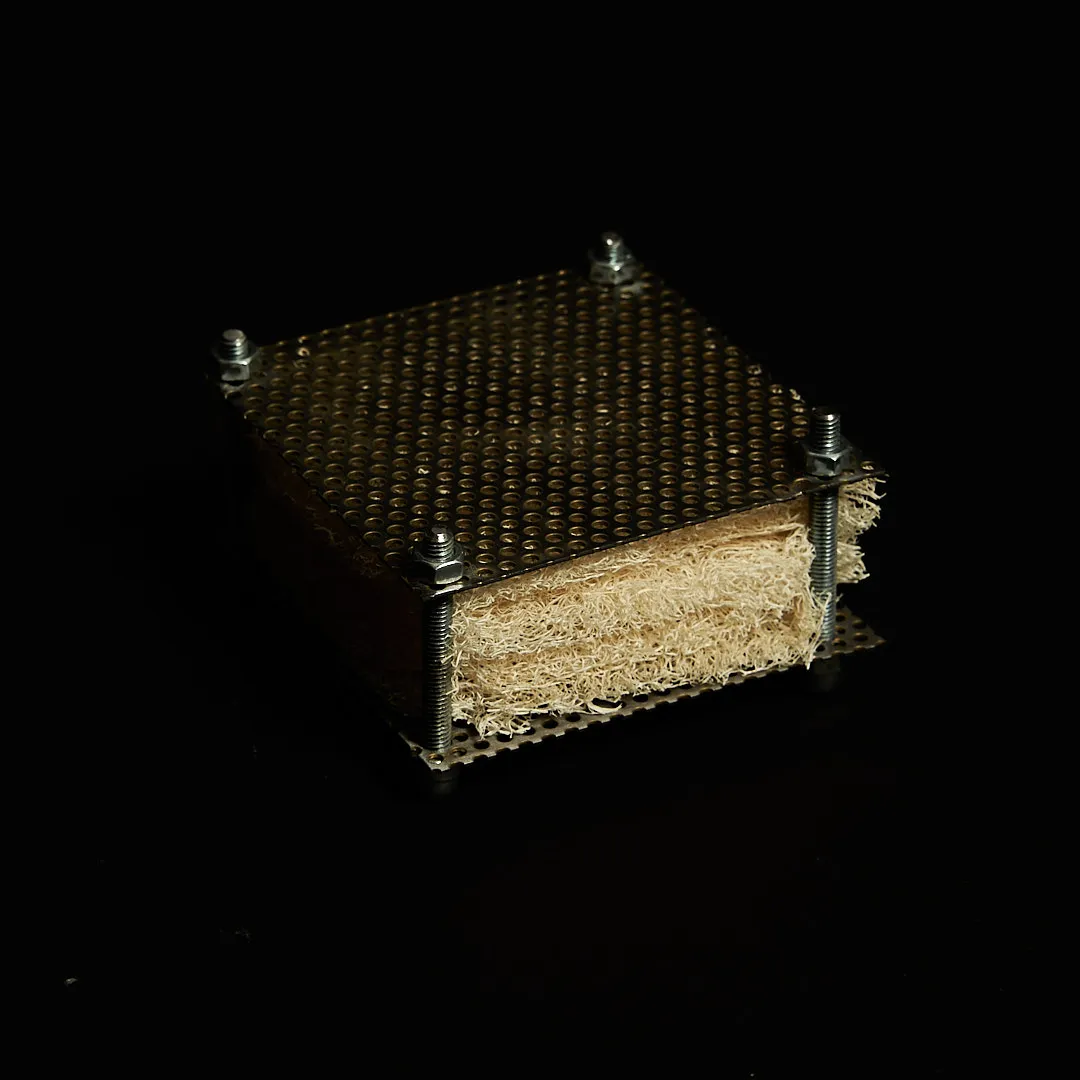
Aluminium sheet
Wooden sheet
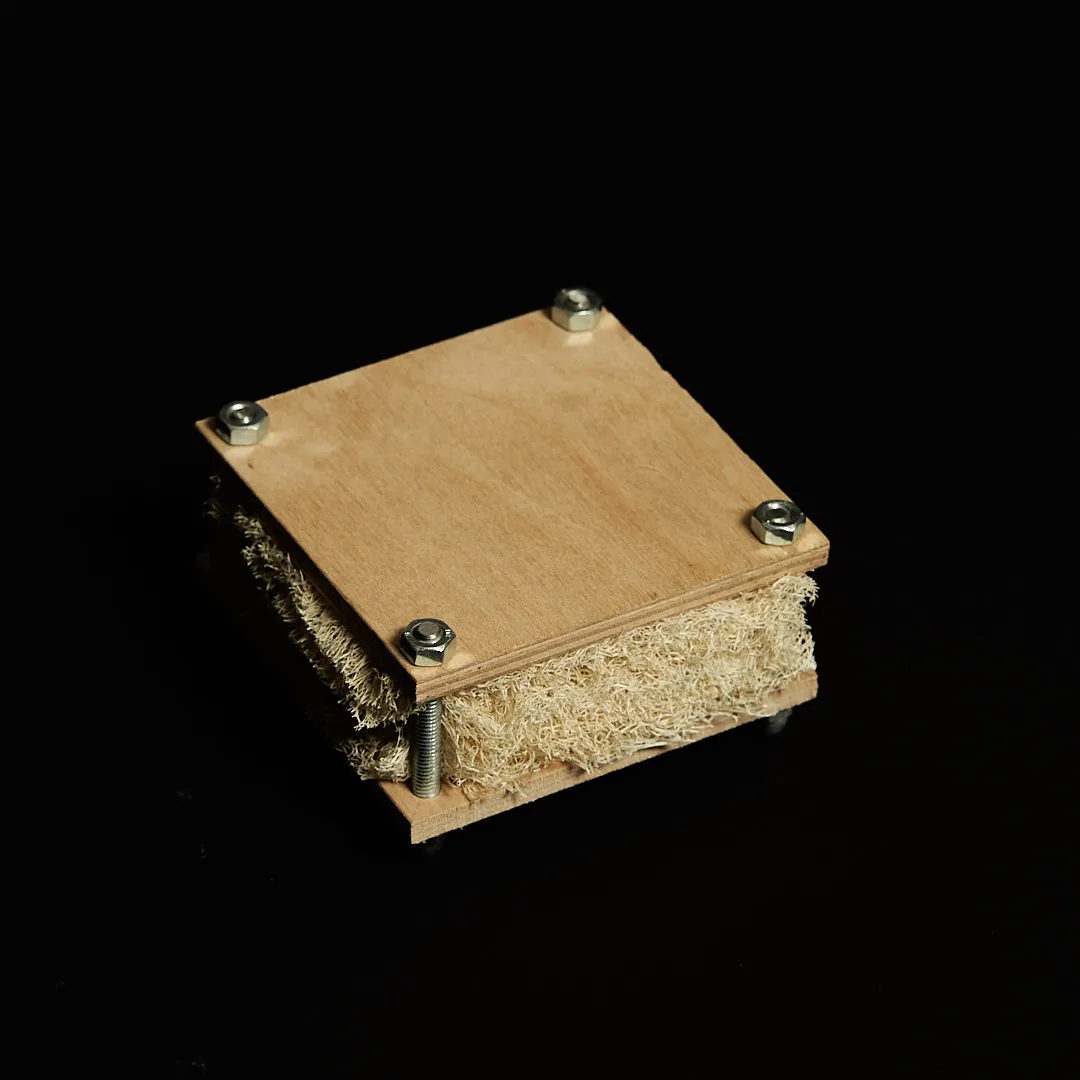
Wooden sheet
Copper sheet
Copper sheet
Stainless steel sheet
Acrylic sheet
Stainless steel sheet
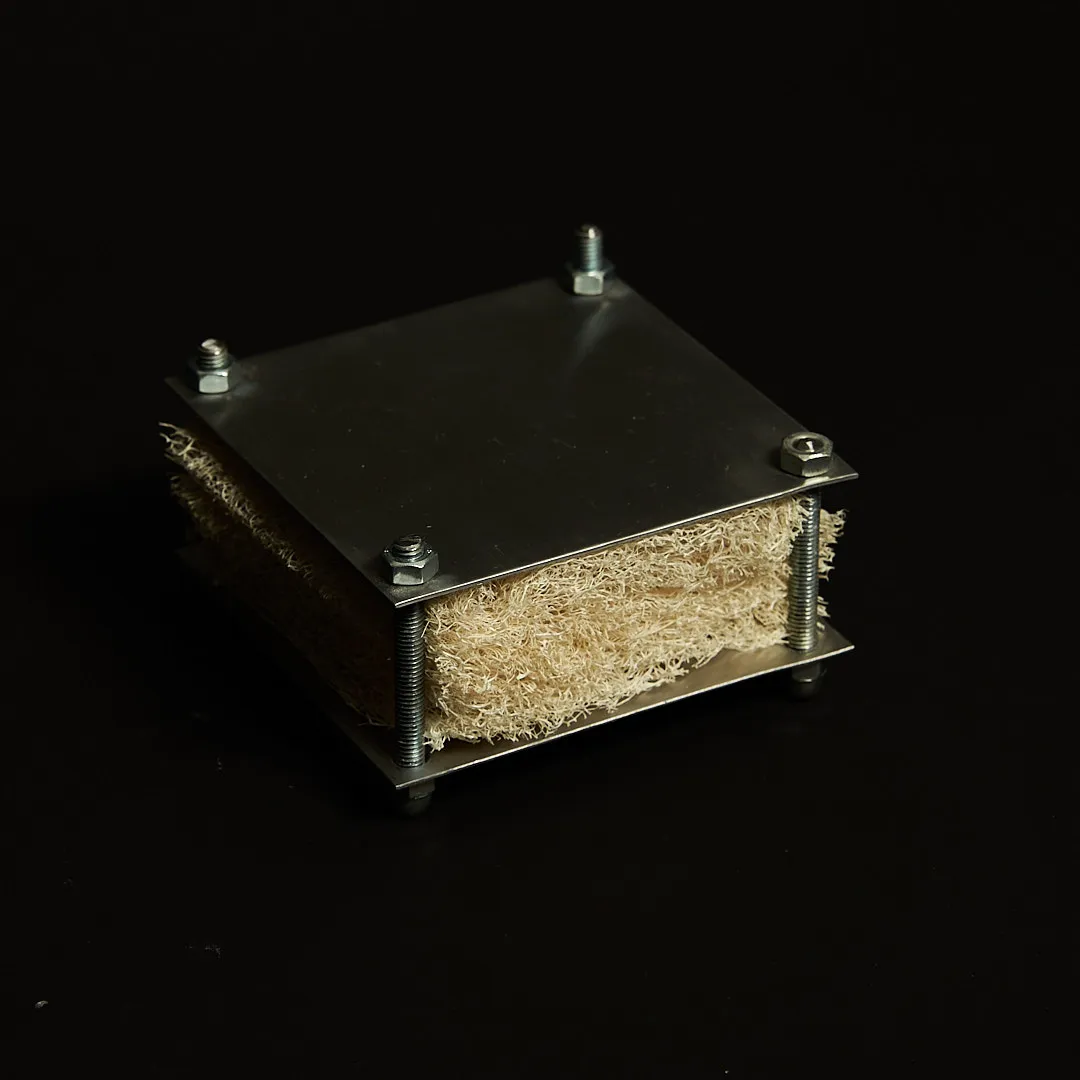
Acrylic sheet
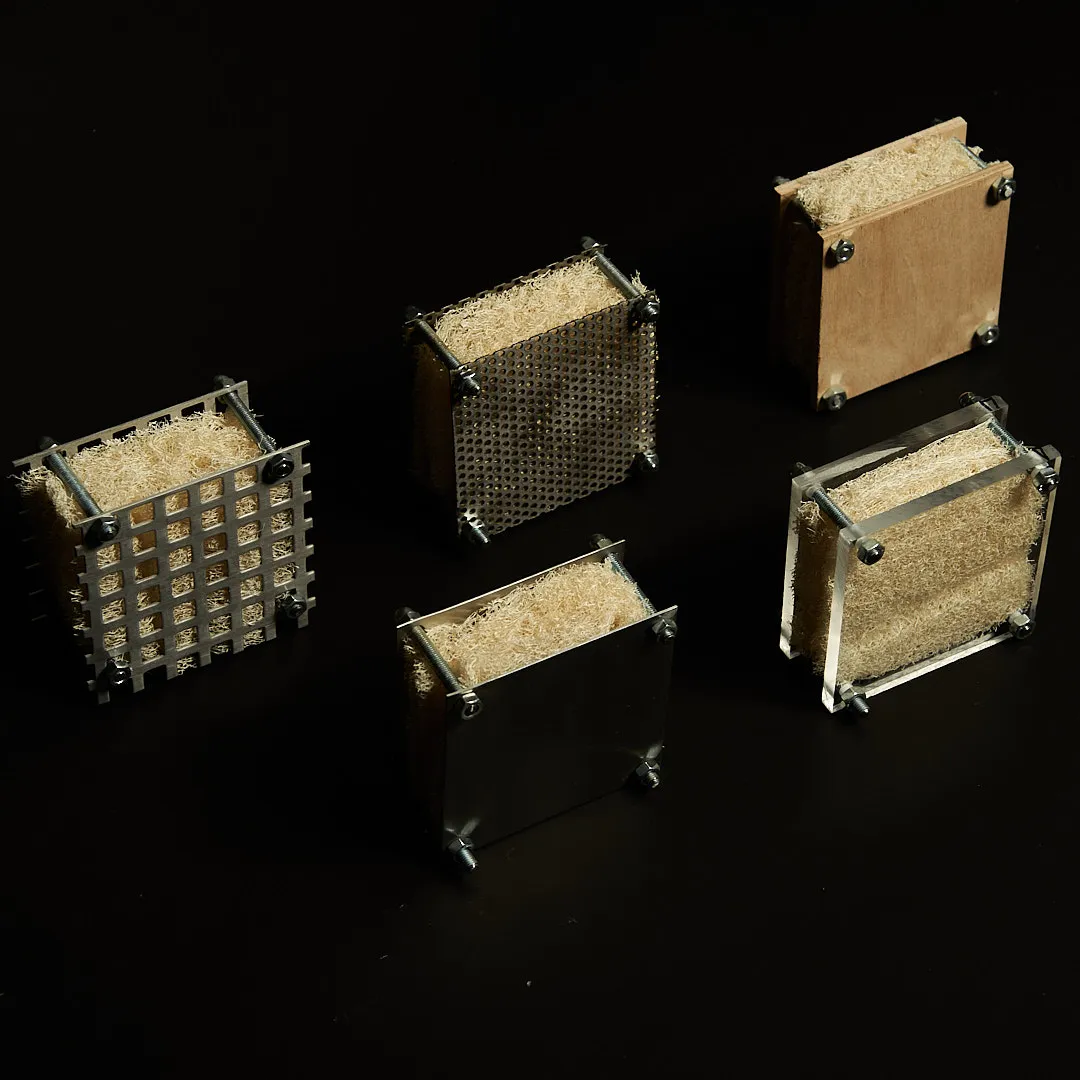
Protection
Protection
Protection
Protection
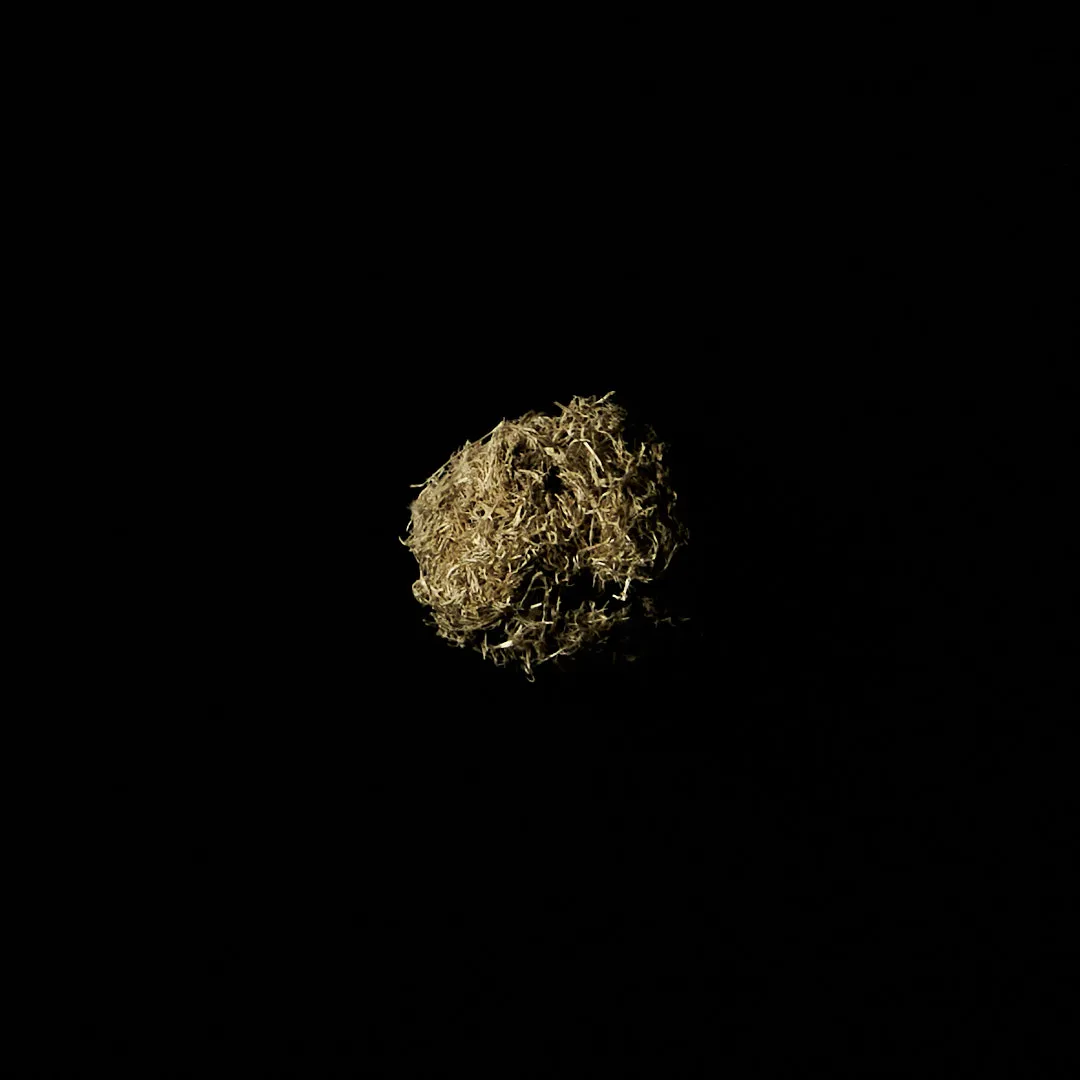
No items found.

Japan

field

research

tap on the buttons to highlight prefectures or on the map to zoom in/out
click on the buttons to highlight prefectures or on the map to zoom in/out

field research

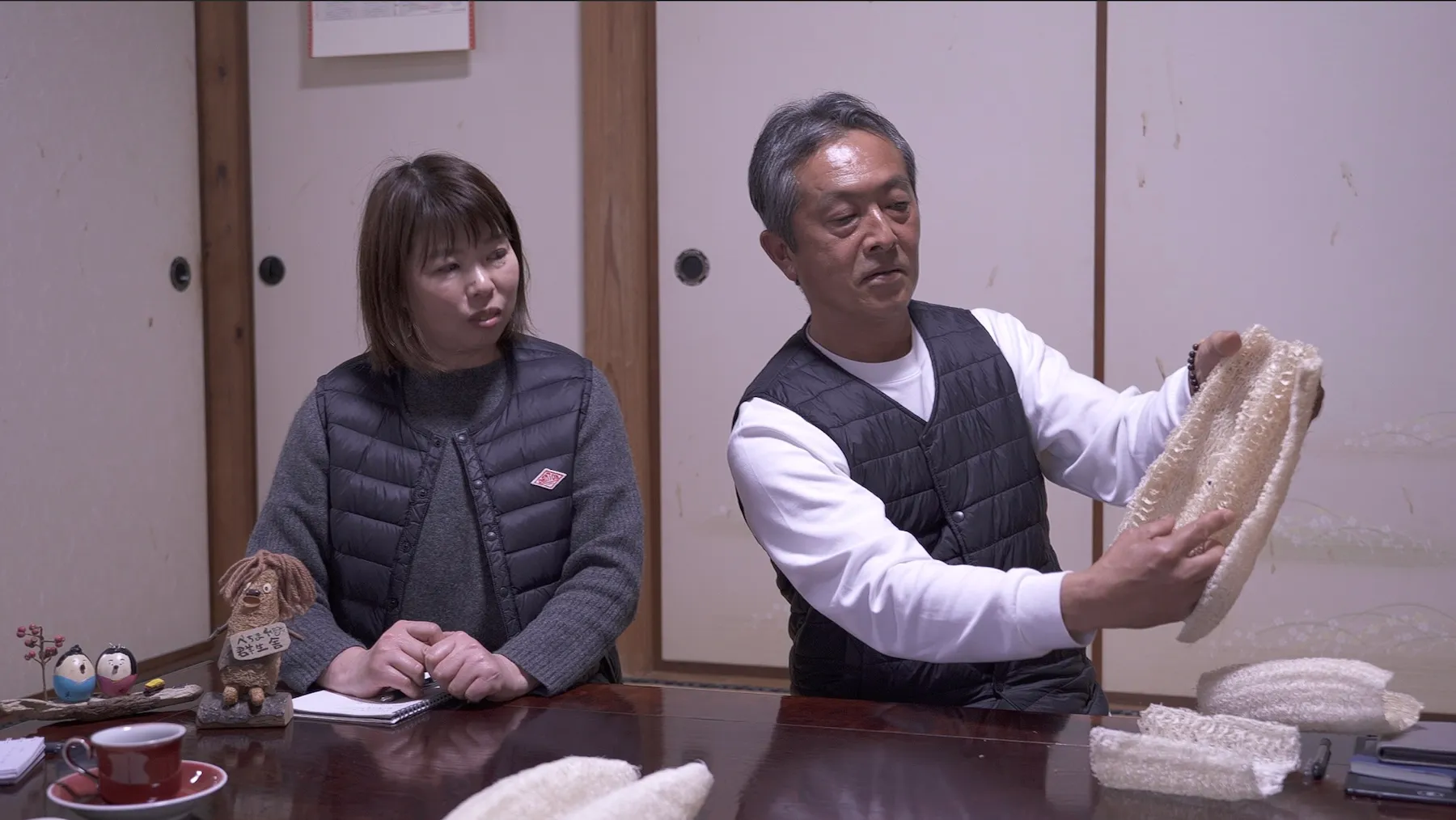
Interview with Akihiro and Ryoko Sagara

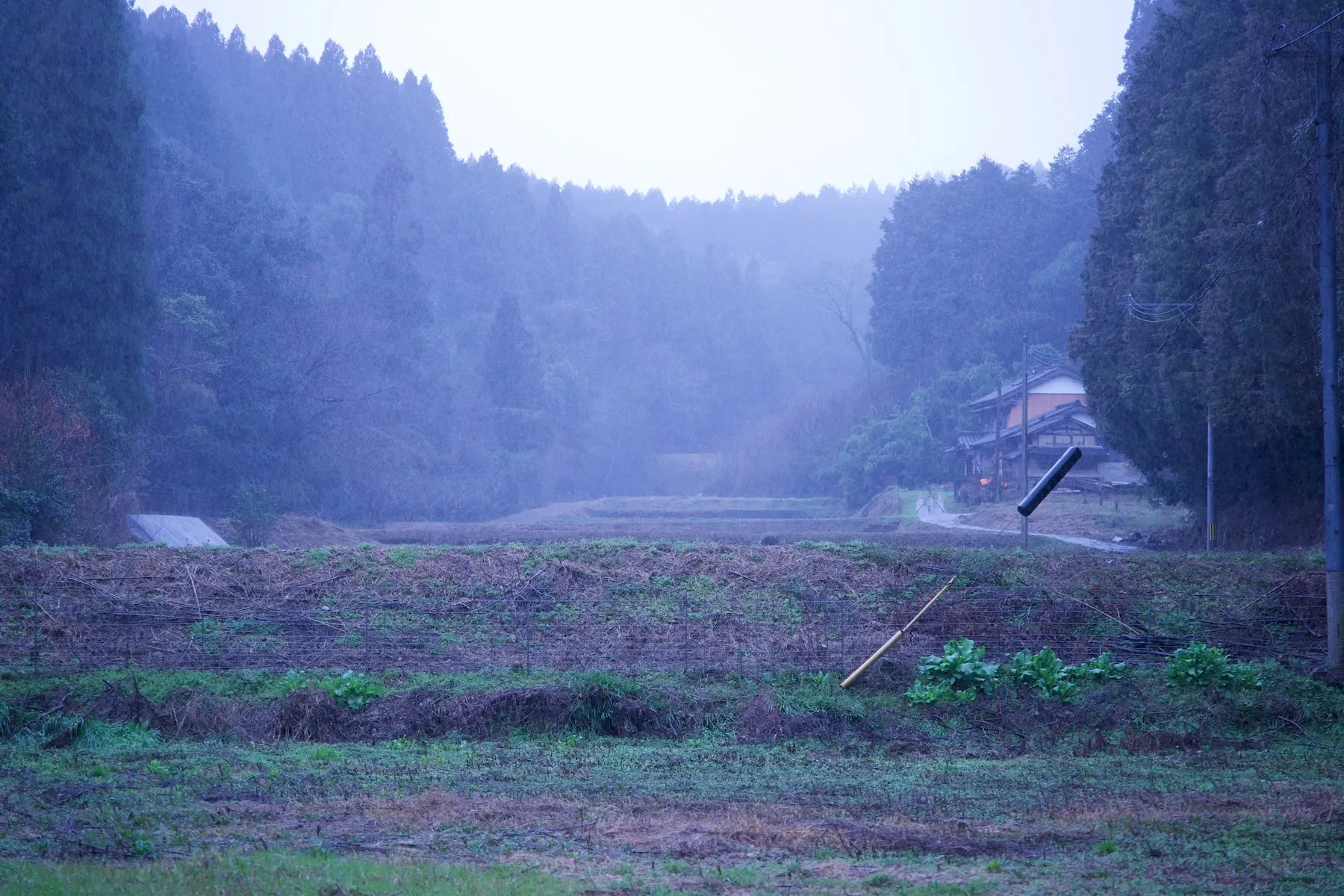
HechimaYa gunSeisha is based in the scenic Satoyama region of Takeo City, Japan, where loofahs are cultivated using sustainable, chemical-free methods. The farm relies on natural water, air, and sunlight to grow its loofahs, which are hand-harvested with care. Their signature product, loofah water, is collected drop by drop from the loofah stems, preserving the essence of nature. The company is dedicated to delivering products that capture the purity and richness of their environment.

Saga, japan
Hechimaya Gunseisha 


Emblem of Saga Prefecture

Can you tell us about how you cultivate loofahs and what makes your method unique?

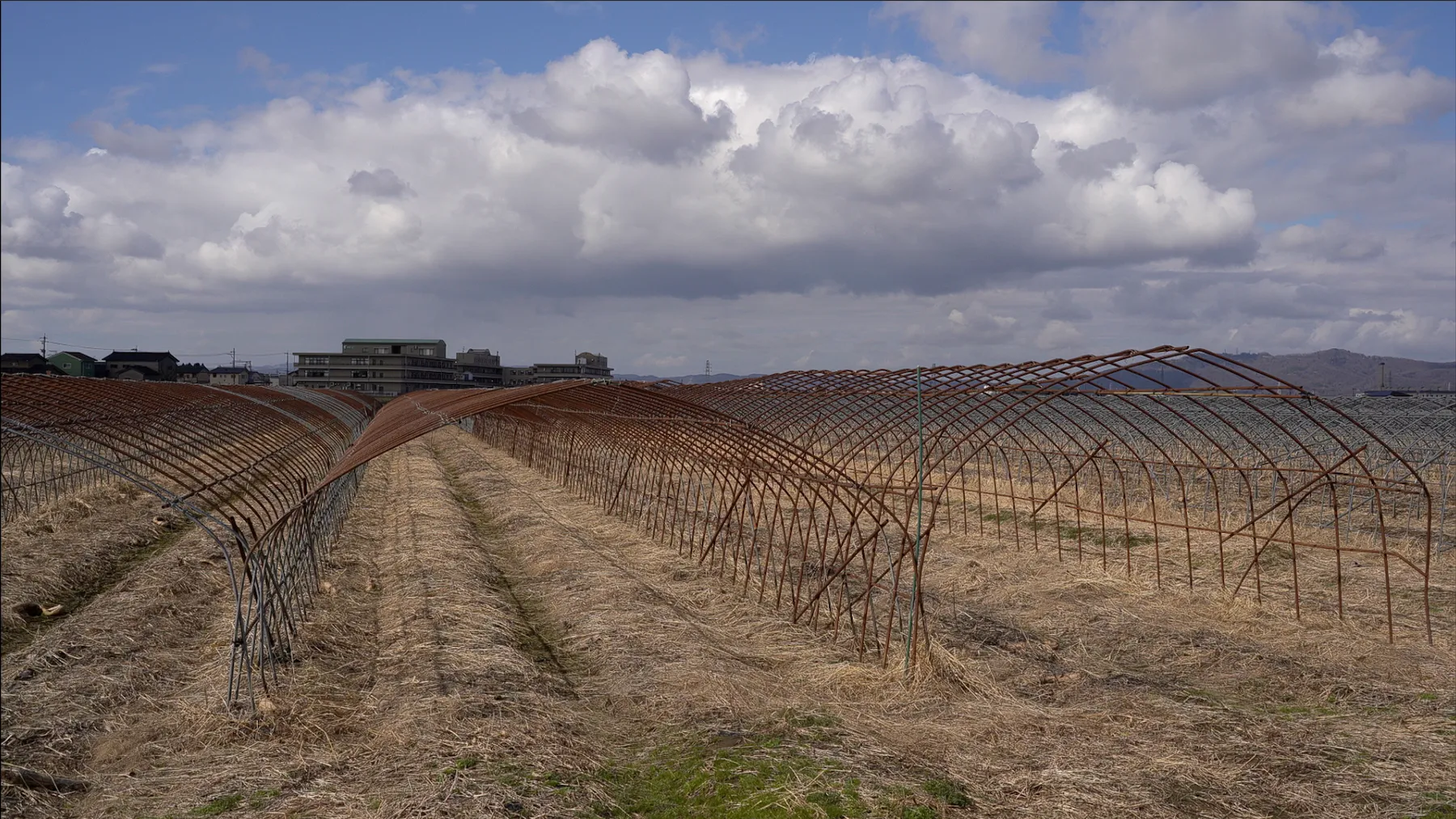
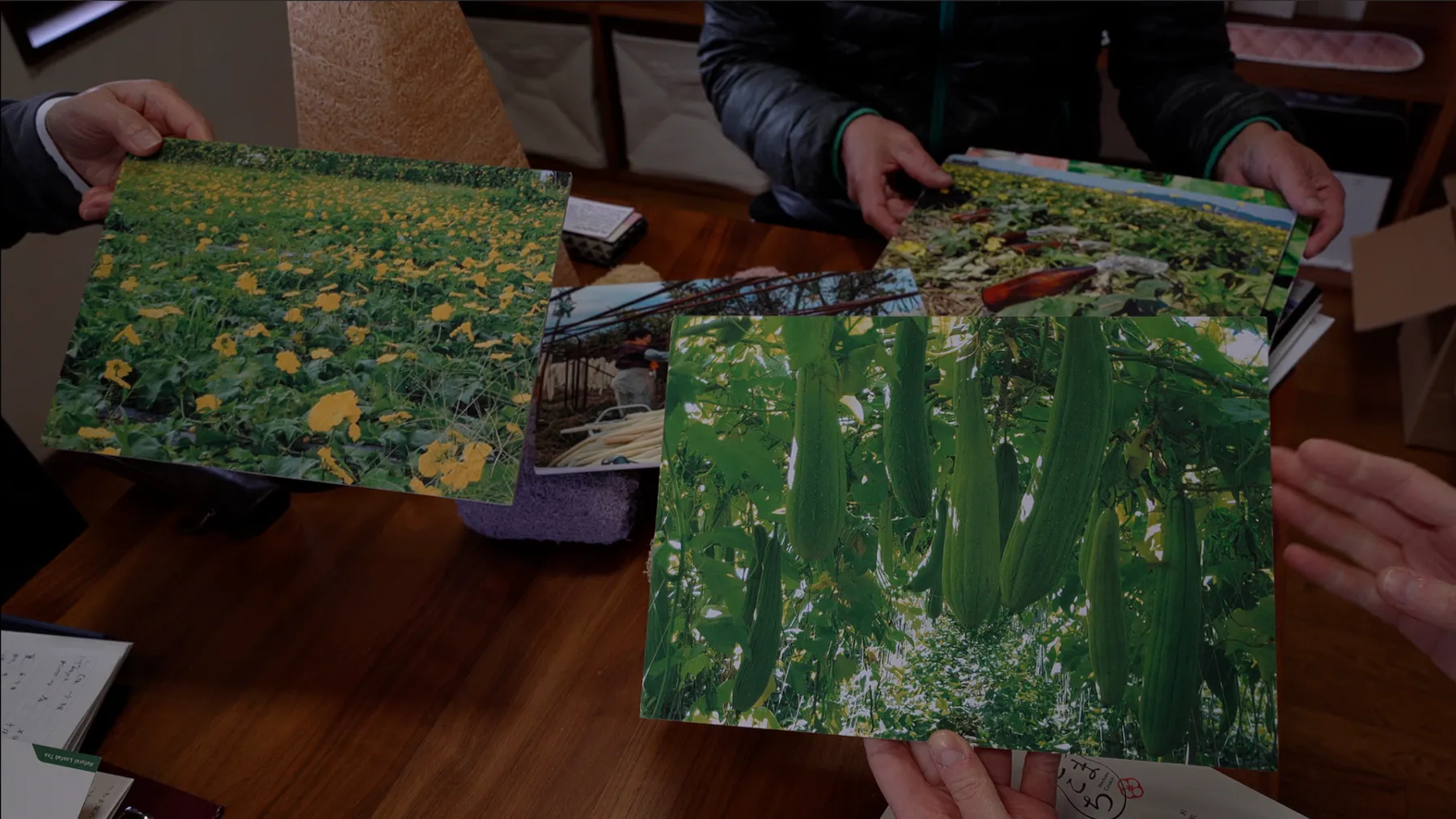
Loofahs are annual plants, and we start soil preparation in late February using a tractor. However, after that, everything is done manually. Our fields are located in Takenaga, a region known for its clean water, indicated by the presence of fireflies. We avoid chemical fertilizers and pesticides, instead relying on natural composting methods such as fallen leaves and frost to enrich the soil. The winter season is particularly crucial, as it helps maintain soil health through natural fermentation processes.

What environmental considerations are important in your farming approach?

We emphasize minimal human intervention, allowing plants to grow in harmony with nature. Our loofah farming follows a cyclical approach, where soil nutrients are replenished by replacing topsoil with fresh, uncontaminated earth from mountain valleys. We also use lime made from oyster shells to enhance soil fertility. Loofahs thrive in sunlight, and long periods of rain pose the biggest challenge to their cultivation.

How did you get started with loofah farming?

It started with a personal need. When our child was born, we suffered from sensitive skin and spent a fortune on organic skincare products. A chance encounter with loofah water at a hot spring in Fukuoka revealed its beneficial properties, inspiring us to revive an abandoned family field. Initially, we gave away our loofah-based products as gifts, which sparked nostalgia among elderly locals. Encouraged by positive feedback, we began selling at a local market, leading to the start of our business.

What challenges did you face in building your business?

The first 11 years were incredibly tough. Unlike conventional farmers who relied on large agricultural cooperatives for distribution, we focused on selling directly to organic and natural markets, slowly expanding our reach. In the beginning, we had no income, but we persisted, believing that a shift towards plastic-free, sustainable products would eventually come.

How does loofah farming differ globally, and what have you learned from other countries?

We researched loofah cultivation worldwide and found stark differences in production methods. In some countries, particularly China and Thailand, loofahs were heavily processed using bleach and chemicals. Determined to off er a purer alternative, we refined our production to maintain loofah’s natural qualities.

Besides skincare, in what other ways can loofahs be used?

Loofahs have numerous applications. They can be used as sponges, toothbrushes for pets, natural scrubbing tools, and even as crafting materials. We also educate children on growing loofahs, integrating them into traditional crafts like doll-making. Culinary uses are also significant—loofah leaves can be made into tempura, and their flowers and seeds are edible, commonly consumed in Thailand, Vietnam, and Indonesia.

How do you balance tradition with modern needs, and what is your vision for the future?

Loofahs have a deep historical connection to Japan, dating back to the Edo and Muromachi periods when they were used for scrubbing, oil extraction, and household tools. We see our work as a revival of these traditions, ensuring that valuable knowledge is not lost. With increasing global interest in reducing plastic waste and promoting eco-friendly alternatives, we believe loofahs have a crucial role to play in shaping a more sustainable future.

What keeps you motivated despite the challenges?

Despite the hard work, we find joy in our unique lifestyle. Our philosophy is simple: "Make it fun, make it fun!" Encouraging each other along the way, we continue to cultivate loofahs with passion and purpose.

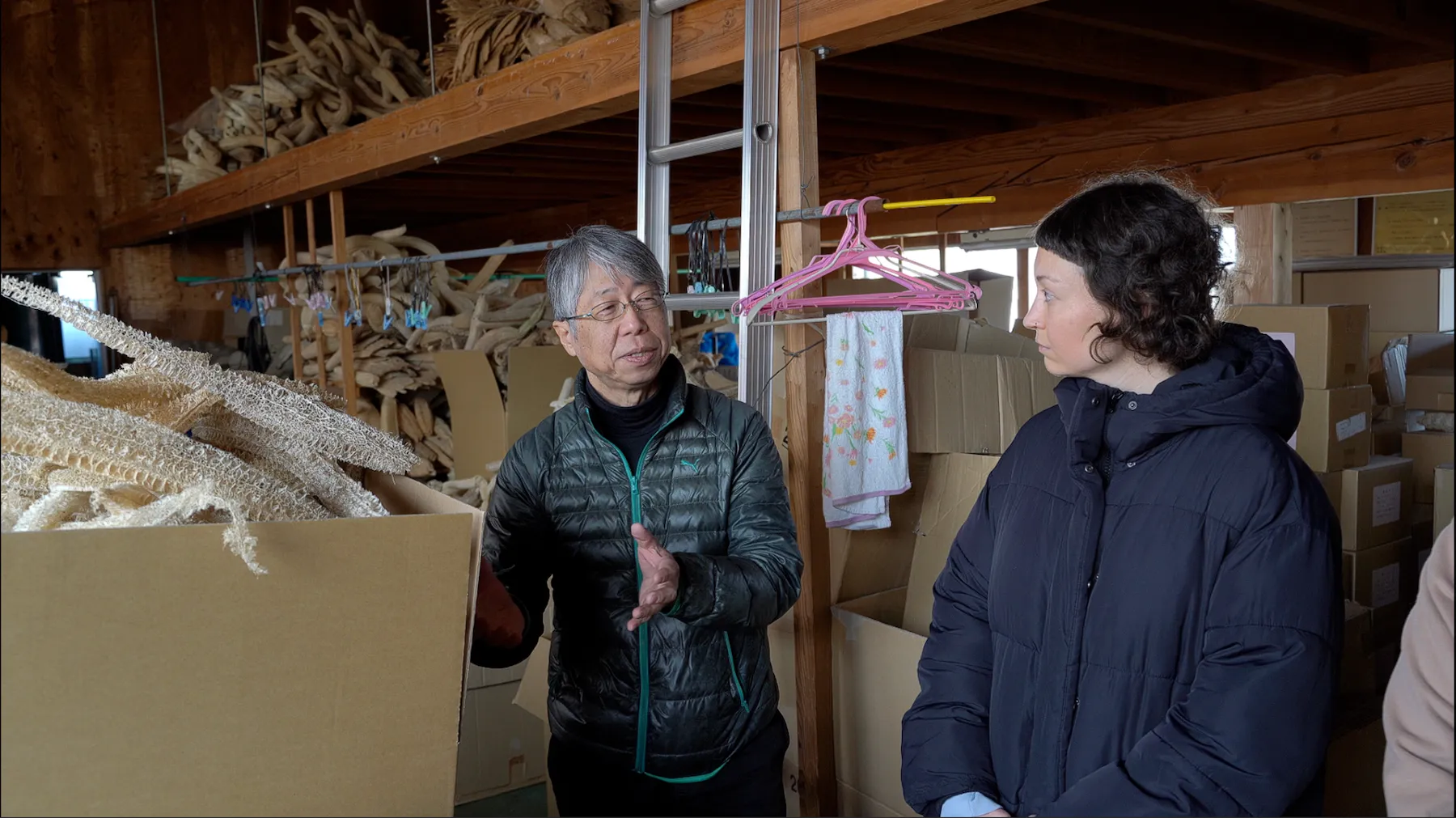
Interview with takita hidenari

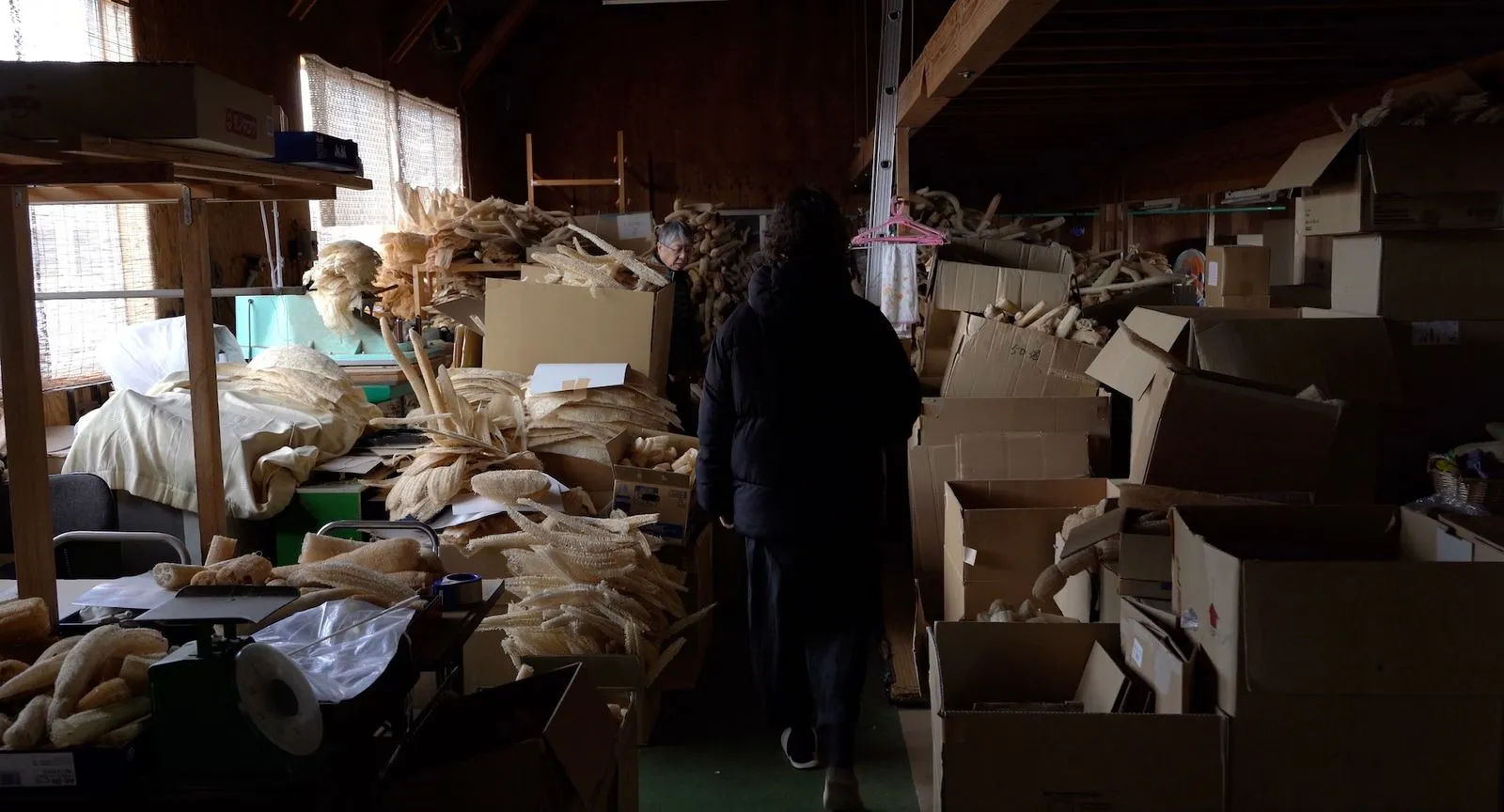
Hechima cocochi is a loofah farm located in Toyama, Japan, known for cultivating loofah plants (hechima) for various uses.
The farm focuses on loofah production, including harvesting and processing the fibers for everyday applications.
It also serves as a site for exploring traditional farming practices related to the cultivation of loofah in the region.

Toyama, Japan
Hechima cocochi 


Emblem of toyama Prefecture

Could you please introduce yourself and how Hechima Sangyo and loofah cultivation were started?

Right now, I primarily grow loofahs. However, I originally come from a farming background, and besides loofah cultivation, I also grow rice. Loofah farming started here because the environment is well-suited for it, and over time, it became my main focus.

What does a typical day look like for you?

The farming season starts around April. The work varies depending on the day, but generally, the morning begins around 8 a.m. with seed planting. This work continues until about noon. In the afternoon, we prepare the fields and make arrangements for planting seedlings. During summer, as the vines grow longer, we tie them to pipes to train them. Weeding is another major task during June and July. Harvesting takes place between September and October when the loofahs turn from green to yellow, indicating full ripeness.

Can you tell us a little about the history of loofah cultivation in Japan?

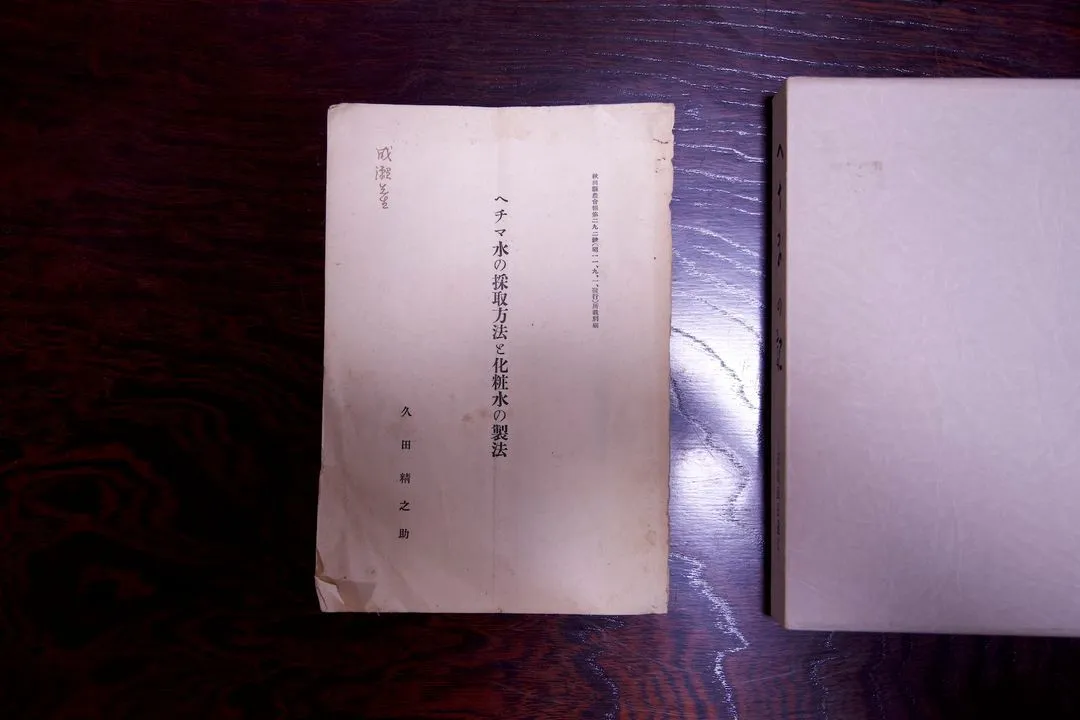
It is said that loofahs were first introduced to Japan from China during the early Edo period. Historically, they were used in many ways—mainly for personal care, such as body scrubbing, but also for extracting loofah water, which was widely used as a cosmetic by women during the Edo period.

What are the main requirements for successfully growing loofah plants? What makes Imizu ideal for their cultivation?

Loofahs thrive in warm climates, as they originally come from Southeast Asia. Toyama, where I grow them, gets very hot in the summer, making it a suitable place for cultivation. The soil here is rich in clay, which retains moisture well, and we are fortunate to have abundant groundwater, which is crucial for the plants’ water needs.

What does a typical day look like for you?

The farming season starts around April. The work varies depending on the day, but generally, the morning begins around 8 a.m. with seed planting. This work continues until about noon. In the afternoon, we prepare the fields and make arrangements for planting seedlings. During summer, as the vines grow longer, we tie them to pipes to train them. Weeding is another major task during June and July. Harvesting takes place between September and October when the loofahs turn from green to yellow, indicating full ripeness.

How do weather patterns and climate affect loofah cultivation?

Loofahs love sunlight and warm temperatures. Their worst enemy is prolonged rain, which can affect growth. In Japan, climate change has led to increasingly hot summers. While this has been challenging for some crops, loofahs actually benefit from the heat.

Since you started growing loofah, how has climate change affected cultivation?

Compared to 40 years ago, summers have become much hotter and last longer. However, because loofahs are well-suited for tropical environments, they have adapted well to these changes. In that sense, the warming climate has not been a major obstacle.

How is loofah used today?

The most common use is for natural sponges. However, loofah water is also extracted for skincare, and in some regions, people eat loofahs when they are still young and tender.

Do you know about traditional uses of loofah in Japan?

Yes, in the past, loofahs were an essential household item. They were used for body scrubbing, dishwashing, and even as a component in traditional medicine. In places like Okinawa and Kagoshima, people have long eaten young loofahs as a summer vegetable.

Are there any new or innovative uses for loofah?

Recently, people have been experimenting with dyeing loofahs using plant-based dyes such as indigo.

What are some of the challenges you face as a loofah farmer?

The biggest challenge is that fewer people are entering agriculture, and existing farmers are aging. Loofah farming itself is not particularly difficult, but finding young people to take up this work is a growing concern.

Have there been any recent innovations in loofah cultivation or its uses?

One of the significant changes has been the shift towards natural farming. We have been practicing pesticide-free loofah cultivation for over 40 years. There is also renewed interest in natural farming techniques, where we minimize soil disturbance and let crops grow as naturally as possible.

How does loofah cultivation connect with Japanese culture and traditions?

Loofahs have been a familiar and essential plant in Japan for centuries. Their multipurpose use, from skincare to household cleaning, has made them a staple in many homes.
Traditionally, every part of the loofah plant was used—nothing was wasted.
Loofahs have even been referenced in Japanese poetry. The poet Masaoka Shiki, who was known for his contributions to modern haiku, wrote about loofahs while bedridden in his final years.

How do you imagine the future of loofah cultivation in Japan?

I hope more young people get involved in farming. For loofah cultivation to continue, it needs to be seen as a viable way to make a living. Agriculture in Japan has long been focused on rice, which requires expensive machinery and significant investment. Loofah farming, by contrast, is more accessible and could off er a sustainable path for future generations.

Thank you for sharing your insights. Is there anything else you would like to add about loofah cultivation and your experience?

Until now, we have mainly focused on loofahs for everyday use, but we are starting to explore more artistic and design-oriented applications. Recently, we have collaborated with designers from Tokyo to create unique loofah-based objects. I believe that by expanding its uses, we can further integrate loofah into modern life.
We also work with schools, providing loofahs for science classes. Students get to observe the growth process and even use the loofahs they helped cultivate. These small initiatives help keep traditional knowledge alive while making farming more engaging for younger generations.
In the end, I want to see loofah farming continue and grow, both as a sustainable agricultural practice and as a cultural legacy. Thank you for your interest in our work!

Contact
hello@56hrs.comInstagram: 56.hours